

How Jacket Cuts and Textures Create Standout Everyday Looks
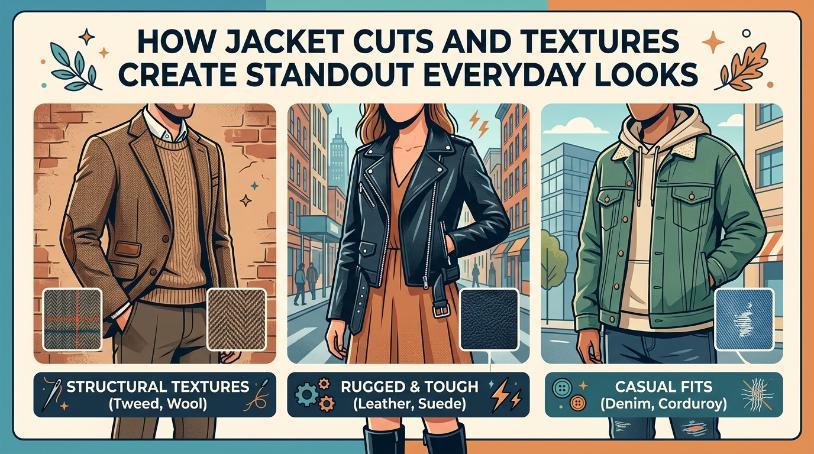
A great everyday outfit rarely depends on wearing the loudest or most expensive piece in the wardrobe. More often, it comes down to choosing garments with the right structure, texture, proportion, and visual character. Jackets are especially powerful because they can transform an otherwise simple combination of jeans, trousers, sneakers, or boots into a complete look.
The cut of a jacket determines how it interacts with the body, while its texture influences how the entire outfit feels visually. A clean bomber can make casual clothing look sharper. A heavily textured outer layer can add depth to a neutral outfit. A bold color can become the focal point of an otherwise understated combination. These details work together to create personality without making everyday dressing complicated.
Understanding how jacket construction and fabric characteristics influence an outfit makes it easier to build versatile combinations. Instead of treating outerwear as something added only for warmth, you can use it as a styling tool that defines the mood, silhouette, and balance of your entire appearance.
Why Jacket Cuts Matter in Everyday Outfits
Jacket cuts are essentially the blueprint of an outer layer. They determine whether a garment sits close to the torso, creates additional volume, emphasizes the shoulders, or introduces a relaxed silhouette. Even when two jackets share a similar color, their cuts can produce completely different results.
A cropped jacket, for example, can visually lengthen the appearance of the legs because the hem finishes higher on the body. A longer jacket creates more vertical coverage and can give an outfit a streamlined appearance. Meanwhile, an oversized silhouette adds volume and works particularly well with relaxed streetwear and contemporary casual styling.
When choosing a jacket for daily use, consider how the cut works with the clothing already in your wardrobe. A versatile outer layer should complement your existing proportions rather than forcing you to rebuild every outfit around it.
- Bomber cuts: Compact, casual, and easy to pair with denim, chinos, and sneakers.
- Relaxed cuts: Provide room for layering and suit contemporary casual wardrobes.
- Cropped cuts: Create a defined waistline and can visually elongate the lower body.
- Structured cuts: Add polish and make casual outfits appear more refined.
- Reversible designs: Provide two visual identities in one garment, increasing styling flexibility.
Texture Adds Depth to Simple Clothing
Texture is one of the easiest ways to make an outfit visually interesting without relying on complicated patterns. A completely monochromatic outfit can still look sophisticated when different surface finishes are combined thoughtfully.
Consider the difference between smooth nylon, brushed cotton, distressed denim, quilted fabric, suede, and heavyweight canvas. Each material catches light differently and communicates a different sense of style. Smooth fabrics often feel sleek and modern, while rugged materials can create a heritage-inspired or workwear aesthetic.
Texture becomes especially useful when wearing neutral colors. Black, gray, beige, navy, olive, and white can sometimes appear flat when every garment has a similar surface. Introducing a textured jacket gives the outfit a visual anchor while keeping the overall color palette restrained.
The trick is balance. If the jacket already has a highly distinctive texture, the rest of the outfit can remain relatively simple. This prevents competing visual elements from making the final look feel unnecessarily busy.
Using Color as the Outfit's Focal Point
Color is another major factor in creating memorable everyday looks. A jacket does not necessarily need an elaborate graphic or unusual construction to stand out. Sometimes a carefully chosen color is enough to make a familiar silhouette feel completely different.
Red is a particularly effective example because it immediately attracts attention. A red outer layer can become the centerpiece of an outfit built around black jeans, dark trousers, white sneakers, or neutral accessories. The result feels intentional while requiring relatively little styling effort.
For a more restrained approach, earthy shades such as olive, rust, tan, brown, and muted orange provide visual warmth without dominating the entire outfit. Deep navy and charcoal offer similar versatility while maintaining a more understated appearance.
| Jacket Color | Styling Character | Easy Pairings |
|---|---|---|
| Black | Minimal, versatile, modern | Denim, gray trousers, white sneakers |
| Red | Bold, energetic, attention-grabbing | Black denim, charcoal, neutral basics |
| Olive | Rugged, relaxed, utilitarian | Khaki, denim, cream, brown footwear |
| Navy | Classic, polished, adaptable | Chinos, jeans, white or gray basics |
| Tan | Warm, casual, heritage-inspired | Dark denim, white shirts, earth tones |
Making Statement Jackets Wearable Every Day
A statement jacket should not be confused with an impractical jacket. The strongest statement pieces are often garments that retain everyday functionality while introducing a distinctive color, print, texture, or detail.
For example, festive or culturally inspired outerwear can bring personality to an otherwise basic wardrobe. A adidas chinese new year jacket can serve as a visually expressive layer when paired with understated pieces. Keeping the accompanying clothing simple allows the jacket's design to remain the focus rather than competing with it.
The same principle applies to graphic jackets, embroidered outerwear, varsity-inspired pieces, and jackets featuring contrasting panels. When the outer layer contains several attention-grabbing details, clean trousers and uncomplicated footwear create a more balanced appearance.
This approach also makes statement outerwear easier to incorporate into multiple settings. A distinctive jacket can work for casual social occasions, weekend outings, concerts, travel days, and relaxed dinners when the rest of the outfit is adjusted appropriately.
Reversible Jackets: Two Looks from One Silhouette
Versatility has become increasingly important in everyday wardrobes. Consumers often want garments that can be styled in several ways rather than pieces that work for only one specific aesthetic. Reversible jackets answer that need by providing two distinct surfaces within a single construction.
One side may offer a minimalist appearance suitable for routine outfits, while the reverse can introduce a stronger color, pattern, or contrasting finish. This makes the jacket particularly useful for travel because it expands outfit possibilities without requiring additional outerwear.
The key is to treat each side as a separate styling option. Rather than simply flipping the garment whenever you want variety, consider which side works best with the rest of the clothing, footwear, and accessories you are wearing.
A coach men's reversible bomber jacket illustrates how the classic bomber silhouette can become even more adaptable through reversible construction. A familiar cut combined with two wearable surfaces gives the wearer additional options while preserving the casual character that makes bomber jackets so popular.
How Bomber Jackets Balance Structure and Comfort
The bomber jacket remains one of the most reliable choices for everyday dressing because its proportions naturally sit between relaxed and structured. Ribbed cuffs and hems typically create a defined silhouette, while the body provides enough room for layering.
That balance makes bombers effective across different style categories. With a T-shirt and sneakers, the result is uncomplicated casualwear. Add a knit sweater and heavier footwear, and the same jacket becomes suitable for colder transitional weather. Pairing it with chinos can introduce a slightly more polished feel without losing its relaxed character.
Fit is particularly important with bomber jackets. A jacket that is excessively tight can restrict layering and make the silhouette appear awkward. One that is excessively large can overwhelm the wearer unless oversized proportions are deliberately part of the outfit.
Look for shoulder seams that sit naturally, sleeves that provide comfortable movement, and a hem that complements your proportions. The ideal fit should leave enough room for a base layer without creating unnecessary bulk.
Red Outerwear and the Psychology of Contrast
Bright outerwear demonstrates how contrast can change the perception of an entire outfit. A red jacket immediately draws the eye, so the simplest way to style one is to create a controlled visual environment around it.
Black and charcoal are particularly effective because they allow red to become the dominant color. White can also work well, especially in footwear or a simple T-shirt, because it introduces brightness without competing with the jacket.
For a more adventurous approach, red can be combined with muted greens, navy, brown, or cream. The important consideration is saturation. When multiple highly saturated colors appear together, they can compete for attention. Pairing a vivid jacket with softer supporting tones usually creates a more sophisticated result.
A red carhartt jacket can therefore function as more than a seasonal outer layer. Its color can become the central styling element, while the rest of the outfit provides a neutral foundation that lets the jacket stand out naturally.
Layering Different Textures Without Creating Visual Clutter
Layering is where texture becomes particularly powerful. Wearing several garments together creates opportunities to combine contrasting surfaces, but each layer should have a clear purpose.
A smooth cotton T-shirt under a slightly textured bomber provides subtle contrast. A knitted sweater beneath a structured jacket creates a stronger tactile relationship. Denim, canvas, fleece, leather, and technical fabrics can also be combined when their weights and proportions are carefully considered.
A practical layering strategy is to build from lighter and softer materials toward heavier and more structured outer layers. This creates physical comfort while maintaining a visually logical progression.
- Start with a comfortable base layer. Choose a T-shirt, lightweight shirt, or thin knit that sits smoothly against the body.
- Add controlled texture. Introduce a sweater, overshirt, or other mid-layer when weather permits.
- Use the jacket as the final visual anchor. Let its cut, color, or texture define the overall silhouette.
- Keep accessories purposeful. Select footwear, bags, hats, or watches that complement rather than compete with the jacket.
- Check proportions before leaving. Make sure the combined layers do not create excessive bulk around the shoulders, waist, or sleeves.
Matching Jacket Proportions with Different Bottoms
The lower half of an outfit has a major influence on how a jacket's cut is perceived. A cropped bomber can work especially well with straight-leg or relaxed trousers because the higher hem creates visual separation between the upper and lower body.
Longer or more relaxed jackets may pair naturally with slimmer trousers, although contemporary styling also allows oversized layers with wide-leg bottoms. The goal is not to follow one rigid rule but to understand how volume is distributed throughout the outfit.
Jeans remain an obvious companion for casual jackets, but chinos, cargo trousers, tailored pants, and technical trousers can each create different impressions. Changing the bottom can make the same jacket feel more rugged, refined, athletic, or fashion-forward.
Choosing Jacket Details That Add Personality
Small construction details can have a surprisingly large effect on everyday style. Pockets, zippers, ribbed trims, collars, stitching, patches, embroidery, and contrasting panels all contribute to a jacket's identity.
Functional details are particularly valuable because they combine visual interest with practical utility. A well-designed pocket can add dimension while providing useful storage. A ribbed collar can reinforce a classic bomber aesthetic. Contrast stitching can emphasize the construction and create a more rugged appearance.
- Collars: Influence whether a jacket appears sporty, refined, or traditional.
- Hardware: Zippers, snaps, and buckles can add either understated polish or industrial character.
- Pockets: Introduce visual structure while improving functionality.
- Ribbing: Helps define bomber silhouettes and adds tactile contrast.
- Embroidery and patches: Provide personality and can create cultural, vintage, or streetwear references.
- Contrast panels: Break up large surfaces and create stronger visual proportions.
Building a Practical Jacket Rotation
Rather than collecting numerous jackets that perform nearly identical roles, a practical wardrobe benefits from variety in silhouette, texture, and visual intensity. A small rotation can cover a surprisingly wide range of everyday situations.
One lightweight neutral jacket can handle routine errands and casual outfits. A textured or utility-focused jacket can provide a rugged alternative. A bold-colored or graphic piece can serve as the statement option. Finally, a more polished outer layer can bridge the gap between casual and smart-casual occasions.
This approach reduces wardrobe repetition while preventing unnecessary purchases. Each jacket should ideally introduce something different, whether that difference comes from color, material, construction, seasonality, or silhouette.
| Jacket Type | Best Style Role | Ideal Wardrobe Companions |
|---|---|---|
| Classic Bomber | Everyday casual | Jeans, tees, sneakers |
| Textured Jacket | Visual depth | Neutral trousers, simple knitwear |
| Bold-Colored Jacket | Statement styling | Black, gray, cream, dark denim |
| Reversible Jacket | Maximum versatility | Multiple casual and travel outfits |
| Utility Jacket | Rugged functionality | Cargo trousers, denim, boots |
Common Jacket Styling Mistakes to Avoid
Even an excellent jacket can look out of place when the proportions or supporting pieces are poorly matched. One common mistake is wearing too many statement elements simultaneously. A patterned jacket, colorful trousers, bold sneakers, and oversized accessories can quickly create visual competition.
Another issue is ignoring fabric weight. A lightweight jacket layered over a very bulky sweater may feel restrictive, while a heavy outer layer over a thin summer outfit can appear visually disproportionate.
Fit should also be considered independently from trends. Oversized silhouettes can look intentional when the proportions are controlled, but simply purchasing a jacket several sizes too large does not automatically produce a contemporary look.
Finally, do not overlook maintenance. Texture and color only enhance an outfit when the garment is clean and well cared for. Following washing, storage, and fabric-specific care instructions helps preserve the original appearance and structure of the jacket.
A Simple Formula for Creating Standout Everyday Looks
Creating a strong everyday outfit does not have to involve extensive planning. Start by deciding which element should attract the most attention. If the jacket is the focal point, keep the remaining pieces relatively controlled.
Next, consider proportion. Make sure the jacket's length and volume work with the trousers or jeans. Then introduce one or two textural contrasts. Finally, use footwear and accessories to reinforce the overall mood.
This formula works because it creates hierarchy. The eye has a clear starting point, while the supporting garments provide balance. Whether the jacket is colorful, heavily textured, oversized, cropped, or reversible, the same principles can be adapted to suit individual preferences.
Frequently Asked Questions (FAQs)
How can I make a simple jacket outfit look more interesting?
Focus on texture, proportion, and contrast. Pairing a textured jacket with simple clothing, introducing a contrasting fabric, or choosing a distinctive jacket color can make a basic outfit look significantly more considered.
What jacket cut is most versatile for everyday wear?
The bomber jacket is one of the most adaptable choices because its balanced proportions work with jeans, chinos, sneakers, boots, T-shirts, and knitwear. A neutral color makes it even easier to incorporate into different outfits.
Can a bold-colored jacket be worn regularly?
Yes. The easiest approach is to pair bold outerwear with neutral supporting pieces. Black, gray, white, cream, navy, and dark denim can provide a restrained foundation that allows the jacket to remain the focal point.
How many textures should an outfit contain?
There is no fixed limit, but two or three clearly differentiated textures are usually enough to add depth without creating unnecessary visual noise. Consider the weight and visual intensity of each material as well as its surface texture.
Are reversible jackets practical for travel?
They can be particularly useful for travel because one garment provides two styling options. Choosing a reversible design with complementary sides can increase outfit variety while reducing the amount of outerwear that needs to be packed.
Make Your Everyday Jacket Work Harder
The right jacket can do far more than complete an outfit. Its cut can reshape proportions, its texture can introduce depth, and its color can establish an unmistakable focal point. By understanding these elements, you can turn versatile outerwear into one of the most valuable components of an everyday wardrobe.
Instead of chasing complicated styling formulas, focus on selecting jackets that offer genuine versatility and complement the clothes you already wear. Experiment with silhouettes, combine contrasting textures, and let distinctive colors or details provide personality when you want your outfit to stand out.
Start with one jacket that fills a genuine gap in your wardrobe, learn how to style it across different combinations, and build from there. With thoughtful cuts, purposeful textures, and balanced proportions, everyday dressing can become both easier and far more distinctive.

 English
 Arabic
 French
 Spanish
 Portuguese
 Deutsch
 Turkish
 Dutch
Dutch
 Italiano
 Russian
 Romaian
 Greek
Greek
 ไทย
ไทย