


Characteristics of a Mentally Healthy Person in High-Conflict Teams
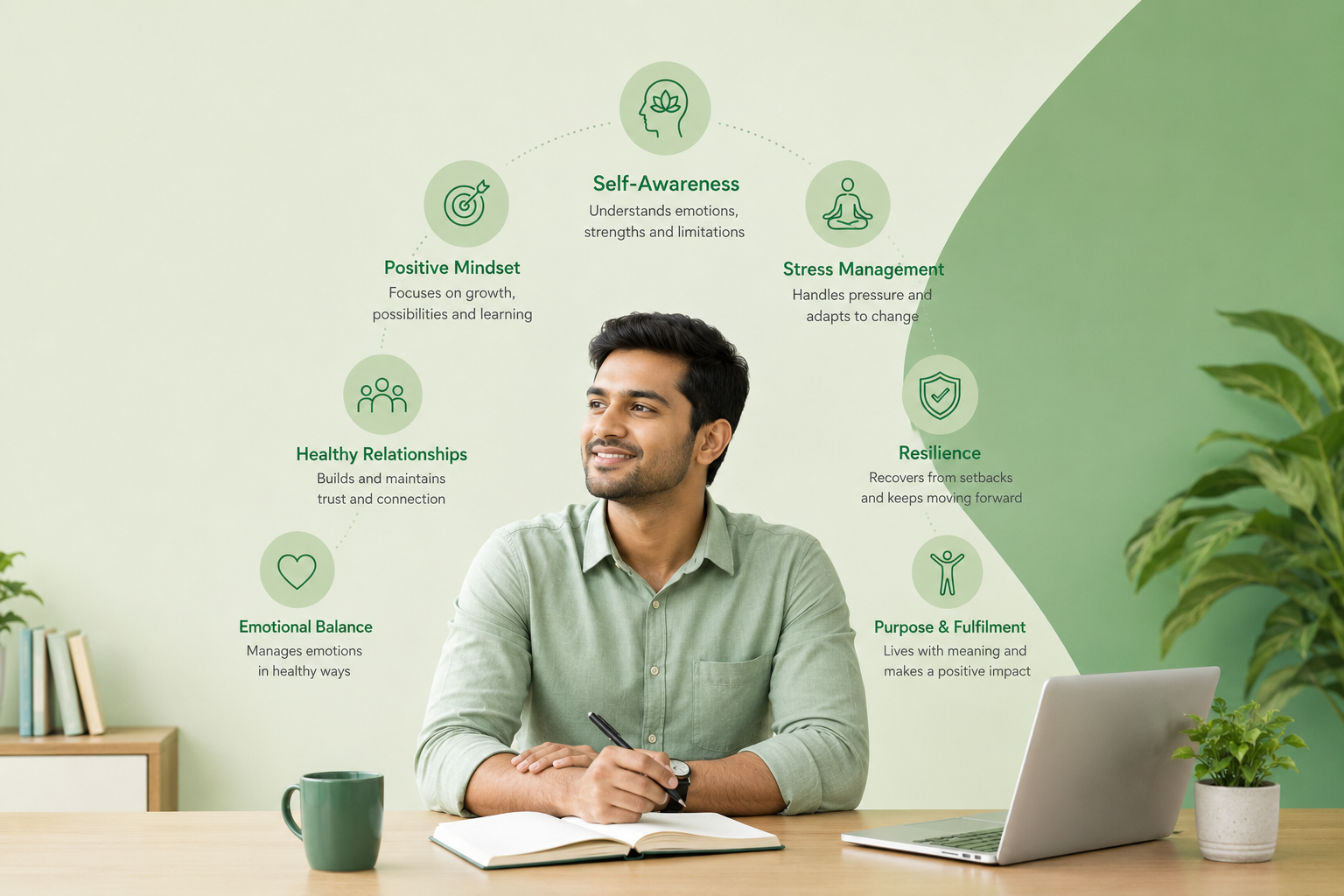
Some teams navigate genuine, recurring interpersonal conflict clashing working styles, competing priorities, personality friction that no amount of process improvement fully eliminates. Examining the Characteristics of a Mentally Healthy Person specifically within this challenging context reveals which qualities matter most when conflict, rather than harmony, is the ongoing reality a team must work within.
Why High-Conflict Teams Test Mental Health Differently
Ordinary workplace mental health guidance often assumes a baseline of reasonable interpersonal harmony, with occasional friction as the exception. High-conflict teams instead require individuals to sustain their wellbeing while navigating recurring tension as a persistent feature of their daily working reality, placing particular demand on specific psychological qualities.
Characteristics That Matter Most in This Context
Emotional Regulation Under Sustained Provocation
In high-conflict environments, the ability to notice rising frustration or defensiveness and respond deliberately rather than reactively becomes especially valuable, given how much more frequently this skill gets tested compared to lower-conflict team settings.
A Realistic, Non-Personalised View of Conflict
Individuals who can interpret recurring conflict as largely reflecting structural or interpersonal dynamics, rather than internalising it as a personal failing or attack, tend to sustain better wellbeing than those who take each instance of friction as a reflection of their own worth or competence.
Resilience Specifically Calibrated to Repeated, Not Single, Setbacks
Unlike resilience following a single significant setback, functioning well in a high-conflict team requires a form of sustained resilience the capacity to recover repeatedly, week after week, rather than a one-time bounce-back from an isolated difficult event.
Clear, Assertive Boundary-Setting
The ability to assert reasonable boundaries declining to engage with clearly unproductive conflict, calmly disengaging from escalating exchanges protects individual wellbeing in ways that pure conflict-avoidance or excessive accommodation typically cannot sustain over time.
Genuine Perspective-Taking Without Self-Erosion
Being able to genuinely understand a colleague's perspective during conflict, without this understanding coming at the cost of one's own legitimate position or wellbeing, represents a particularly demanding but valuable balance in high-conflict contexts specifically.
What This Means for Individuals Navigating Such a Team
Distinguishing What's Within Your Control
Focusing energy on your own responses and boundaries, rather than attempting to control or fix colleagues' behaviour directly, tends to preserve wellbeing more effectively than sustained, often futile efforts to change others' conduct.
Seeking Support Outside the Conflict Itself
Given how draining sustained interpersonal conflict can be, deliberately seeking support and perspective from people outside the immediate team a mentor, a trusted colleague elsewhere, or professional support — helps prevent the conflict from becoming one's only frame of reference.
Recognising When It's Genuinely Beyond Individual Coping
Some high-conflict team dynamics reflect genuine dysfunction requiring structural or managerial intervention rather than individual coping alone recognising this distinction matters, since expecting personal resilience alone to resolve a genuinely toxic team dynamic sets an unreasonable, unsustainable expectation.
What Managers and Organisations Should Do
Not Relying Solely on Individual Resilience
Organisations should avoid treating high-conflict team dynamics purely as something individual employees should personally manage through resilience alone, recognising that Psychological Safety in Teams ultimately requires structural and managerial attention to underlying causes.
Addressing Root Causes of Recurring Conflict
Investigating whether recurring conflict stems from unclear role definition, competing incentive structures, or genuine interpersonal incompatibility helps identify whether the appropriate response is team-level intervention rather than expecting individuals to simply cope indefinitely.
Providing Genuine Mediation or Facilitation Support
Where conflict has become entrenched, bringing in genuine, skilled mediation or facilitation support, rather than expecting the team to resolve deep-seated tension independently, reflects appropriate organisational responsibility for team functioning.
Conclusion
Examining the Characteristics of a Mentally Healthy Person within high-conflict team contexts highlights the particular value of sustained emotional regulation, non-personalised interpretation of friction, and clear boundary-setting — qualities tested far more intensely in this environment than in lower-conflict settings. Individuals navigating such teams benefit from focusing on what's within their control while recognising when genuine organisational intervention, not personal resilience alone, is what a dysfunctional team dynamic actually requires.

 English
 Arabic
 French
 Spanish
 Portuguese
 Deutsch
 Turkish
 Dutch
Dutch
 Italiano
 Russian
 Romaian
 Portuguese (Brazil)
 ไทย
ไทย