


How Negative Reviews Can Hurt Your Business (And What to Do)
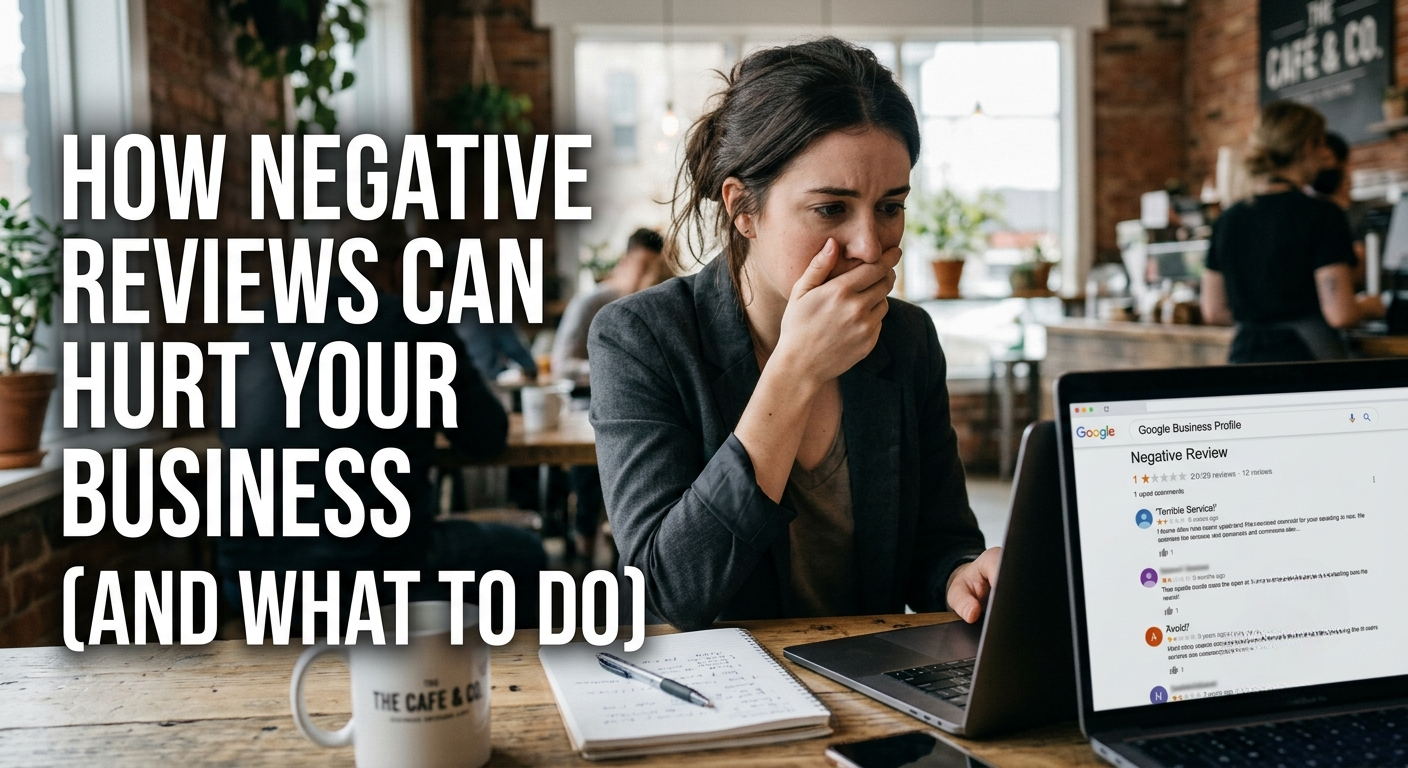
Online reviews have become one of the strongest influences on purchasing decisions in today's digital marketplace.
A single negative review can shape public perception long before a customer visits a website or contacts a business.
Understanding how reviews affect trust and knowing how to respond can protect both reputation and long-term growth.
Why Online Reviews Matter More Than Ever
Before making a purchase, most consumers search online to understand other customers' experiences. Whether choosing a local restaurant, moving company, law firm, or digital agency, reviews often become the deciding factor.
According to BrightLocal's Local Consumer Review Survey, the majority of consumers regularly read online reviews before choosing a local business. Positive feedback builds confidence, while repeated negative experiences can quickly discourage potential customers.
Search engines also pay attention to reviews. Google considers review quality, review frequency, and overall ratings as signals that help determine local search visibility. Although reviews are only one ranking factor, they contribute to credibility and user engagement.
For businesses looking to strengthen their digital presence, working with trusted agencies such as Online Boost can help build sustainable marketing strategies that improve visibility while maintaining a strong online reputation.
The Hidden Cost of Negative Reviews
Negative reviews rarely affect only one sale. Their impact often extends across several areas of a business.
Reduced Customer Trust
Trust is difficult to earn and easy to lose.
Research from Spiegel Research Center found that displaying authentic customer reviews significantly increases purchase likelihood, but consistently poor ratings have the opposite effect.
When potential customers notice recurring complaints regarding:
-
Customer service
-
Product quality
-
Delivery delays
-
Hidden fees
-
Poor communication
they often choose competitors without making further inquiries.
Lower Conversion Rates
Visitors who hesitate because of poor reviews rarely become paying customers.
Even businesses with excellent products may struggle if recent reviews create uncertainty. Modern consumers compare multiple options within minutes, making first impressions increasingly important.
A handful of unresolved complaints can significantly reduce inquiry rates, online bookings, and sales conversions.
Damage to Brand Reputation
Online reputation extends beyond review websites.
Negative experiences often spread through:
-
Google Reviews
-
Facebook
-
Yelp
-
Reddit discussions
-
Industry forums
-
Social media platforms
One dissatisfied customer may reach hundreds or even thousands of potential buyers through social sharing.
How Negative Reviews Affect SEO
Many business owners focus only on ratings without realizing the SEO implications.
Search engines aim to provide users with trustworthy businesses.
Several review-related factors influence local search performance:
-
Review quantity
-
Average star rating
-
Freshness of reviews
-
Customer engagement
-
Owner responses
-
Review diversity across platforms
Businesses that actively engage with customers often demonstrate stronger credibility than those ignoring feedback entirely.
Consistent responses also signal that the business values customer experience.
Not Every Negative Review Is Bad
Surprisingly, having only perfect reviews may not always appear authentic.
Consumers often become skeptical when every review is five stars with no criticism.
A healthy review profile usually includes:
-
Positive experiences
-
Constructive criticism
-
Balanced customer opinions
-
Professional business responses
Authenticity builds confidence.
Potential customers are often more interested in how a business resolves problems than whether problems ever occur.
How Businesses Should Respond to Negative Reviews
Responding properly can transform an unhappy customer into a loyal one.
The response should remain calm, professional, and solution-oriented.
Respond Quickly
Customers appreciate businesses that acknowledge concerns promptly.
A delayed response may suggest the business ignores customer feedback.
Whenever possible:
-
Thank the reviewer
-
Acknowledge the concern
-
Avoid arguments
-
Offer to continue the conversation privately
Stay Professional
Negative reviews sometimes contain emotional language.
Businesses should never respond emotionally.
Professional replies demonstrate maturity and show future customers that the company values respectful communication.
Investigate Before Responding
Not every complaint tells the full story.
Internal verification helps determine:
-
Whether the customer actually purchased
-
What happened during the transaction
-
Which team members were involved
-
Possible solutions
Accurate information leads to better responses.
Encourage More Positive Reviews
The best defense against occasional negative reviews is maintaining a steady flow of genuine positive feedback.
Satisfied customers are often willing to leave reviews—they simply need a reminder.
Businesses can encourage reviews by:
-
Sending follow-up emails
-
Sharing review links after purchases
-
Asking politely after successful service
-
Making the review process simple
-
Thanking customers for their feedback
Review generation should always follow platform guidelines and never involve fake or incentivized reviews.
Reputation Management Is a Long-Term Strategy
Online reputation requires continuous attention rather than occasional fixes.
Monitoring review platforms regularly allows businesses to identify recurring issues before they become larger problems.
Many growing businesses also rely on professional reputation management services to organize review monitoring, improve customer communication, and develop structured strategies for maintaining a trustworthy digital presence without relying on reactive measures alone.
Consistency often produces stronger long-term results than responding only when problems appear.
Learn From Customer Feedback
Every review provides valuable business intelligence.
Patterns in customer feedback often reveal opportunities for improvement.
Common themes may include:
-
Slow response times
-
Confusing pricing
-
Website usability issues
-
Shipping delays
-
Communication problems
-
Staff training needs
Addressing recurring issues improves both customer satisfaction and future reviews.
Businesses that actively learn from feedback generally strengthen customer loyalty over time.
Building a Reputation Customers Trust
Strong reputations are built through consistent customer experiences rather than marketing alone.
Customers value transparency, accountability, and businesses willing to improve.
A trustworthy company typically:
-
Delivers consistent service
-
Communicates honestly
-
Resolves complaints professionally
-
Encourages genuine customer feedback
-
Continuously improves operations
Over time, these practices create stronger relationships with customers and reinforce long-term credibility.
Final Thoughts
Negative reviews are an unavoidable part of doing business, but they do not have to define a company's reputation. Businesses that respond professionally, address legitimate concerns, and consistently deliver quality service often turn criticism into opportunities for improvement.
Rather than viewing negative feedback as a setback, successful organizations treat it as valuable insight that strengthens customer trust, enhances operational performance, and supports sustainable business growth. In an increasingly competitive digital marketplace, managing online reputation proactively is no longer optional—it is an essential part of building a resilient and respected brand.

 English
 Arabic
 French
 Portuguese
 Deutsch
 Turkish
 Dutch
Dutch
 Italiano
 Russian
 Romaian
 Portuguese (Brazil)
 Greek
Greek
 ไทย
ไทย