


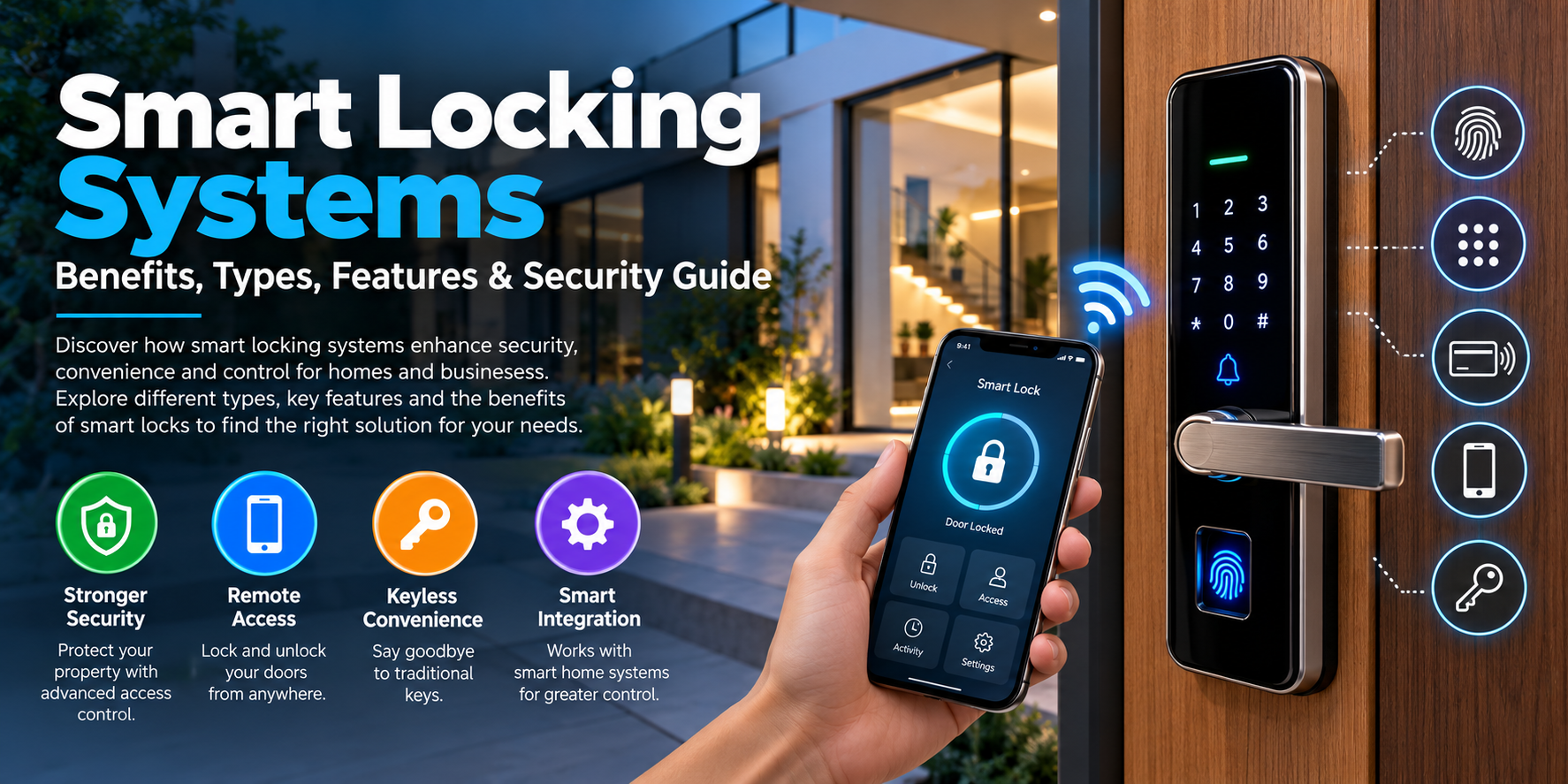
Smart Locking Systems: Benefits, Types, Features & Security Guide
Introduction
Security technology has transformed how residential and commercial properties are protected. Traditional locks have long been used to secure doors and restrict unauthorised access, but modern security requirements demand greater flexibility, convenience, and control. Smart locking systems offer an advanced alternative by combining electronic locking mechanisms with digital access management.
Smart locking systems allow property owners to lock, unlock, and monitor doors using smartphones, PIN codes, biometric identification, or electronic credentials. These systems provide greater control over property access while reducing dependence on physical keys.
From residential properties to commercial offices, smart locks are becoming an increasingly important part of modern security infrastructure. Understanding their functionality, benefits, and security features can help property owners choose the right solution for their needs.
What Are Smart Locking Systems?
Smart locking systems are electronic security devices that control access to doors without relying exclusively on traditional mechanical keys. They use technologies such as Bluetooth, Wi-Fi, biometric authentication, RFID, and digital keypads to verify authorised users.
Unlike conventional door locks, smart locks can support remote access management, automatic locking, temporary access permissions, and activity monitoring.
Many smart locking systems can also integrate with broader security infrastructure, including CCTV cameras, alarm systems, intercoms, and access control platforms.
These capabilities make smart locks suitable for homeowners, landlords, property managers, and businesses that require secure and convenient access management.
How Do Smart Locking Systems Work?
Smart locking systems operate through electronic authentication and locking mechanisms. When an authorised user attempts to access a property, the system verifies their credentials before activating the locking mechanism.
For example, a smartphone-enabled smart lock may use Bluetooth communication to recognise an authorised mobile device. Once authentication is successful, the electronic mechanism releases the door lock.
Other systems use PIN codes, biometric scanners, or contactless access cards to provide entry.
Some smart locks connect to cloud-based platforms through Wi-Fi or dedicated gateways. These connections allow authorised administrators to manage access permissions remotely, receive notifications, and review access activity.
However, remote operation depends on the specific device, its connectivity, and the availability of power or battery support.
Types of Smart Locking Systems
Different smart locking technologies are available to suit various residential and commercial security requirements.
Keypad Smart Locks
Keypad smart locks allow users to access a property by entering a numerical PIN code. These systems eliminate the need to distribute traditional keys and provide a practical solution for properties with multiple authorised users.
Administrators can often create temporary or individual access codes for employees, visitors, or contractors.
Keypad systems are commonly used in offices, rental properties, residential buildings, and commercial premises.
Biometric Smart Locks
Biometric smart locks authenticate users through unique physical characteristics, most commonly fingerprints.
These systems provide convenient access because users do not need to carry keys or remember PIN codes.
Fingerprint recognition can be particularly useful in residential properties and controlled business environments. However, biometric technology requires appropriate data protection safeguards and reliable authentication mechanisms.
Bluetooth Smart Locks
Bluetooth smart locks communicate with compatible smartphones or authorised devices over short distances.
Users can unlock doors through a mobile application or, on supported models, through proximity-based authentication.
Bluetooth technology can provide local access without requiring a continuous internet connection.
These systems are particularly suitable for homeowners who want smartphone-based access control.
Wi-Fi Smart Locks
Wi-Fi-enabled smart locks provide connected features that may include remote unlocking, access notifications, and integration with other security devices.
Property managers can use compatible applications to monitor entry activity and manage permissions from different locations.
However, network security is essential because connected locking devices can introduce cybersecurity risks if improperly configured.
RFID Smart Locks
RFID smart locks use electronic cards, key fobs, or compatible credentials to authenticate authorised users.
These systems are widely associated with hotels, offices, apartment buildings, and commercial access control environments.
RFID access systems can simplify credential management because lost cards may be deactivated without replacing the entire locking mechanism.
Benefits of Smart Locking Systems
Improved Access Control
One of the most important advantages of smart locking systems is improved control over property access.
Traditional keys can be copied, misplaced, or distributed without proper authorisation. Smart locks allow administrators to assign individual digital credentials and remove access when necessary.
This capability is especially valuable for businesses with changing staff, contractors, and visitors.
Remote Locking and Unlocking
Compatible smart locking systems allow authorised users to lock and unlock doors remotely.
For example, a business owner may grant temporary access to an approved maintenance contractor without travelling to the premises.
Remote access features can also help homeowners verify whether a door has been secured.
These functions depend on suitable connectivity and secure authentication.
Reduced Dependence on Physical Keys
Lost physical keys can create inconvenience and security concerns, particularly when locks need to be replaced.
Smart locking systems reduce dependence on conventional keys by supporting digital credentials, PIN codes, and biometric authentication.
Nevertheless, some models retain mechanical backup keys or other emergency entry methods.
Access Monitoring and Activity Records
Many advanced smart locking systems maintain access logs showing when credentials were used.
For commercial properties, these records can support security investigations and help administrators review unusual access activity.
Monitoring capabilities vary between manufacturers and should be assessed alongside applicable privacy and data protection requirements.
Integration With Security Systems
Smart locks can operate alongside CCTV surveillance, intrusion alarms, and electronic access control systems.
For example, a compatible access control platform may connect door activity with CCTV footage, helping security personnel investigate incidents more effectively.
Integration allows businesses to develop a coordinated approach to physical security.
Smart Locking Systems for Residential Properties
Smart locking systems provide homeowners with greater flexibility in managing household security.
Families can assign separate credentials to household members, allowing individuals to enter without sharing physical keys.
Temporary digital access may also be provided to trusted visitors, cleaners, or maintenance professionals.
Some connected locks send notifications when doors are unlocked or when particular access credentials are used.
Smart locks can also support automatic locking functions that help reduce the risk of doors being accidentally left unsecured.
However, a smart lock cannot compensate for weak doors, unsuitable hardware, or poor installation. Effective residential security requires the entire door assembly to be appropriately protected.
Smart Locking Systems for Commercial Buildings
Commercial properties often require more sophisticated access management than residential environments.
Offices, warehouses, retail stores, and shared workplaces may need to control access across multiple doors and user groups.
Smart locking systems can allow managers to assign individual permissions based on job responsibilities, schedules, or authorised areas.
For example, an employee may receive access to the main office entrance while restricted areas remain accessible only to approved personnel.
When integrated into a suitable access control platform, these systems can help streamline employee credential management and support security oversight.
Businesses must also consider emergency evacuation, fire safety, accessibility, and relevant building requirements when selecting electronic locking equipment.
Important Security Features to Consider
Encryption and Authentication
Secure communication between smart locks, mobile applications, and management platforms is essential.
Modern systems should use strong encryption and reliable authentication methods to reduce the risk of unauthorised digital access.
Multi-factor authentication for administrative accounts can provide additional protection.
Automatic Locking
Automatic locking allows compatible devices to secure doors after a defined period or when certain conditions are met.
This feature can reduce accidental security lapses, particularly in busy households and commercial properties.
Battery Monitoring and Emergency Access
Many smart locks operate using internal batteries.
Low-battery alerts can help users replace batteries before operation is affected.
Property owners should also examine emergency access methods, such as backup keys, external power options, or other manufacturer-supported procedures.
Tamper Detection
Some smart locking systems include sensors or monitoring functions that identify suspicious activity.
Depending on the model, users may receive alerts following repeated unsuccessful authentication attempts or detected tampering.
These features provide additional awareness but do not make a lock resistant to every physical or digital attack.
How to Choose the Right Smart Locking System
Choosing the right smart locking system requires careful consideration of the property's security needs, access requirements, and existing infrastructure.
A residential property may benefit from a simple keypad or smartphone-controlled lock. In comparison, a commercial building with multiple employees may require centralised credential management and detailed access records.
Door compatibility is another important factor. Not every smart lock works with every door, frame, cylinder, or multipoint locking mechanism.
Buyers should also evaluate battery performance, connectivity requirements, software update policies, manufacturer support, and recognised security certifications.
For UK properties, relevant hardware standards and third-party certifications may help identify suitable products, depending on the door and application.
Professional assessment is particularly important when electronic locking systems are installed on fire doors, emergency exits, or other safety-critical entrances.
Installation and Maintenance of Smart Locking Systems
Proper installation is essential for reliable smart lock performance.
An incorrectly fitted locking mechanism may create alignment problems, reduce security, or interfere with normal door operation.
Professional installers can assess door compatibility, configure authentication settings, and test system operation.
Regular maintenance should include checking batteries, inspecting mechanical components, reviewing access permissions, and installing legitimate manufacturer firmware updates.
Businesses should periodically deactivate unused credentials and confirm that former employees or contractors no longer have access.
A documented maintenance process helps keep electronic locking systems dependable over time.
Are Smart Locking Systems Better Than Traditional Locks?
Smart locking systems offer additional convenience and access management capabilities compared with traditional mechanical locks.
However, neither technology is automatically more secure in every situation.
A high-quality mechanical lock installed on a strong door may provide excellent physical protection. A poorly configured smart lock, meanwhile, can introduce additional digital vulnerabilities.
The most effective solution combines reliable physical locking hardware, secure authentication, appropriate installation, and consistent maintenance.
For properties requiring flexible access management, a properly selected smart locking system can provide meaningful operational advantages.
The Future of Smart Locking Systems
Smart locking technology continues to evolve as manufacturers develop more advanced authentication and connectivity features.
Emerging developments include improved biometric recognition, interoperable smart home connectivity, and more sophisticated access management platforms.
Businesses are also increasingly interested in integrating electronic locks with wider building management and security infrastructure.
As connected security becomes more common, cybersecurity, privacy, and long-term software support will remain important considerations.
Future smart locking systems are likely to focus on providing convenient access while strengthening authentication and maintaining dependable physical security.
Conclusion
Smart locking systems provide a modern approach to residential and commercial access control by combining electronic locks with digital authentication and management features.
Their ability to support keyless entry, temporary permissions, remote access, and activity monitoring makes them useful across a wide range of properties.
However, selecting an effective system requires more than choosing advanced features. Door compatibility, physical security, cybersecurity, installation quality, and emergency access must all be considered.
With appropriate planning and ongoing maintenance, smart locking systems can improve access management, convenience, and overall property security.
Frequently Asked Questions About Smart Locking Systems
What is a smart locking system?
A smart locking system is an electronic door security solution that allows authorised users to control access through smartphones, PIN codes, biometric authentication, access cards, or other digital credentials.
Are smart locking systems safe?
Smart locking systems can provide strong security when they use reliable hardware, secure authentication, encryption, and regular software updates. Their overall effectiveness also depends on proper installation and the strength of the door.
Do smart locks work without Wi-Fi?
Yes, many smart locks support offline operation through PIN codes, Bluetooth, fingerprints, or locally stored credentials. However, remote access and certain notification features may require an internet connection.
What happens when a smart lock battery dies?
The available recovery method depends on the model. Some smart locks provide mechanical backup keys, emergency external power connections, or advance low-battery warnings.
Can smart locking systems be hacked?
Like other connected devices, some smart locks may be vulnerable to cyberattacks if they have security weaknesses or are improperly configured. Choosing reputable products, using strong authentication, and applying firmware updates can reduce these risks.
Are smart locking systems suitable for businesses?
Yes, smart locking systems can help businesses manage employee access, assign permissions, monitor entry activity, and restrict access to sensitive areas. Larger organisations may benefit from centralised access control platforms.
Can smart locks integrate with CCTV systems?
Some smart locking systems integrate with compatible CCTV cameras and security management platforms. This can allow security personnel to associate door activity with video recordings and investigate potential incidents.
How long do smart lock batteries last?
Battery life varies depending on the locking mechanism, connectivity, usage frequency, battery type, and environmental conditions. Some models operate for several months or longer, but users should follow manufacturer guidance and monitor battery alerts.
Do smart locking systems require professional installation?
Some residential models are designed for straightforward installation. However, professional installation is recommended for complex door mechanisms, commercial access control systems, fire-rated doors, and security-critical environments.
Are smart locking systems worth the investment?
Smart locking systems can be worthwhile for homeowners and businesses that value keyless access, flexible credential management, and improved control over who can enter a property. Their value depends on security requirements, installation costs, and ongoing maintenance needs.

 English
 Arabic
 French
 Spanish
 Portuguese
 Deutsch
 Turkish
 Dutch
Dutch
 Russian
 Romaian
 Portuguese (Brazil)
 Greek
Greek
 ไทย
ไทย