


Donghai Chemical Shares Views on Rubber Curing Methods
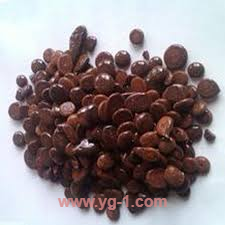
Rubber curing sits at the heart of countless industrial products, from seals and hoses to belts and molded parts. Two curing routes appear often in technical discussions: a vulcanizing resinand a peroxide curing system. Each brings its own strengths, limits, and suitable applications. Choosing between them requires an understanding of rubber type, service conditions, and processing demands. So how does a vulcanizing resin truly compare to a peroxide curing system, and what should formulators weigh before making a decision?
How the Two Systems Differ
Resin curing relies on thermosetting alkyl phenolic resins or epoxy resins. These materials form crosslinks through chemical reactions that create a three-dimensional network. Peroxide curing, by contrast, uses organic peroxides that decompose under heat to generate free radicals. Those radicals then abstract hydrogen atoms from rubber chains, forming carbon-carbon crosslinks. The chemistry differs, and so do the outcomes.
One notable distinction involves the type of crosslink produced. Peroxide systems create direct carbon-carbon bonds between polymer chains. Resin systems form bridges that involve the resin molecule itself. This structural difference influences heat resistance, compression set, and aging behavior. Rubber cured with resin often shows strong heat resistance, which suits high-temperature applications. Peroxide-cured rubber tends to offer good compression set and low volatility.
Where Each System Shines
Resin curing has a long history in butyl rubber and unsaturated carbon chain rubbers. It improves heat resistance significantly, making it a fit for under-hood parts, industrial seals, and other demanding environments. Epoxy resins also cure carboxyl rubber and chloroprene rubber well, delivering good flex resistance.
Peroxide curing works across a wide range of saturated and unsaturated rubbers. It avoids the sulfur-related issues that can affect certain compounds. Peroxide systems also produce transparent or light-colored rubber products, since they leave no colored residue. For silicone rubber, EPDM, and many specialty elastomers, peroxide curing remains a common choice.
Processing Considerations
Formulators must think about more than final properties. Resin curing may require specific activators or accelerators. It can also release byproducts that need attention. Peroxide curing demands careful temperature control, as premature decomposition can cause scorch. Peroxide systems may also face interference from certain antioxidants and plasticizers. Each route carries its own processing window.
Taizhou Huangyan Donghai Chemical Co., Ltd., known as Donghai, has worked with rubber additives since 1985. The company supplies accelerators, antioxidants, scorch retarders, and various processing aids. Its experience covers multiple curing systems and rubber types, offering formulators a reliable source for compounding materials.
Practical Selection Points
A seal for a high-temperature engine compartment may favor resin curing. A light-colored silicone part may call for peroxide curing. A formulator balances performance, cost, and processing ease. Donghai Chemical supports customers in navigating these choices. With decades of production technology and a complete supply system, the company helps rubber manufacturers find suitable additives for their projects. A vulcanizing resin may suit one compound, while a peroxide system fits another. The right compounding partner can make the difference, and visiting https://www.yg-1.com/product opens a path to additives that match specific rubber formulations.

 English
 Arabic
 French
 Spanish
 Portuguese
 Deutsch
 Turkish
 Dutch
Dutch
 Italiano
 Russian
 Romaian
 Portuguese (Brazil)
 Greek
Greek