


How Do Vacuum Suction Cups Help Protect Glass and Metal Finishes
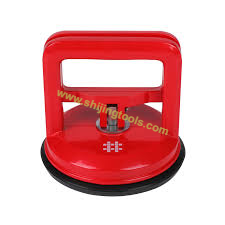
Glass and metal sheets are widely used in construction, interior decoration, equipment manufacturing, and industrial fabrication. Although these materials offer durability and attractive finishes, their smooth surfaces and substantial weight can make transportation, positioning, and installation challenging. A Heavy Duty Vacuum Suction Cup provides a practical handling method by creating a vacuum seal against a suitable surface, helping workers maintain control without relying entirely on edge clamps or direct manual gripping. Through its product range and handling equipment, shijingtools introduces practical options for professional applications. But how can this equipment support the safe movement of glass panels and metal sheets in different working environments?
Understanding Vacuum Suction Technology
Vacuum suction equipment operates through a pressure difference between the area beneath the rubber pad and the surrounding atmosphere. Once the pad makes proper contact with a suitable surface, air is removed from the contact area through a manual pump, an electric mechanism, or another compatible vacuum system. Atmospheric pressure then helps hold the pad against the material.
This operating principle allows the tool to grip a flat panel without requiring workers to hold its edges continuously. It can also simplify adjustments during installation, particularly when a sheet must be raised, repositioned, or aligned with an adjacent surface. The actual holding force depends on the effective contact area, vacuum level, surface condition, and equipment design.
Selecting suitable equipment therefore requires attention to the intended material and lifting method rather than relying on appearance alone. A product designed for lightweight tiles may not meet the requirements of a large glass panel or a thick metal sheet.
Handling Glass Panels with Greater Control
Glass requires careful handling because scratches, edge impacts, uneven pressure, and sudden movement may result in costly damage. Large panels can also become difficult to control when workers attempt to lift them manually, especially during window installation, partition construction, or facade assembly.
Vacuum suction tools provide a contact point on the glass surface, allowing workers to lift and guide the panel while keeping their hands positioned around the handle. This arrangement can assist with transferring glass between workstations, moving window units into installation positions, and adjusting panels during renovation projects.
Before operation, the glass should be inspected for cracks, contamination, and surface irregularities. The suction pad must be clean, flexible, and free from visible damage. After attachment, the operator should verify that the vacuum has formed correctly and that any pressure indicator shows an acceptable condition.
Glass thickness alone does not determine whether a particular tool is suitable. Panel dimensions, total mass, orientation, lifting direction, and the location of the contact points must also be considered. For large or overhead installations, an appropriately engineered lifting system and suitable fall-prevention measures may be necessary.
Applications in Metal Sheet Handling
Metal sheets are common in fabrication workshops, machinery production, building component manufacturing, and vehicle body assembly. Their edges can be sharp, while polished, painted, or coated surfaces may require protection against scratches and pressure marks.
A suitable vacuum handling tool can provide a practical way to transfer flat metal panels between processing stations or position finished components during assembly. Because the holding force acts through a surface contact area, the tool can reduce the need to grip the sheet directly along its edges.
However, metal surfaces vary considerably. Smooth stainless steel and coated aluminum may provide suitable sealing conditions, while embossed sheets, oily plates, heavily textured finishes, or curved components can create difficulties. Oil contamination may affect the contact surface, and raised patterns can prevent the rubber pad from forming an airtight seal.
For this reason, the operator should assess the material finish before choosing equipment. If the surface cannot maintain a reliable vacuum, an alternative handling method may be required. Sharp edges should also be managed carefully to prevent damage to the suction pad during positioning.
Factors That Influence Performance
Several conditions affect how effectively vacuum suction equipment handles glass and metal sheets.
Surface cleanliness is particularly important because dust, small particles, moisture, and grease can interfere with the seal. Cleaning the contact area and checking the rubber pad before use help maintain suitable operating conditions.
Load distribution also matters. A large sheet may have an uneven center of gravity, particularly when it contains cutouts or has an irregular shape. The lifting points should be positioned according to the manufacturer's instructions, with the load remaining within the rated capacity for the intended lifting direction.
Temperature, surface curvature, and the condition of the sealing material can influence vacuum retention as well. Rubber components that have hardened, cracked, or become deformed may fail to maintain adequate contact. Regular inspection helps identify wear before the equipment is used on valuable materials.
Operators should never assume that a stated capacity applies equally to every lifting direction or surface condition. Vertical and horizontal handling can produce different forces, and dynamic movement may introduce additional stress. Following the manufacturer's specifications is essential for safe operation.
Selecting Equipment for Professional Work
Choosing the appropriate product begins with understanding the material dimensions, weight, surface finish, lifting frequency, and working environment. A compact manual model may suit occasional installation work, whereas repeated industrial handling may call for an electrically operated unit with a vacuum monitoring function.
Handle design, grip comfort, portability, battery requirements, and maintenance access can also influence daily operation. For teams working across construction sites or manufacturing facilities, convenient transportation and straightforward inspection procedures are practical considerations.
SHIJING Tools provides vacuum suction equipment intended for handling applications involving materials such as glass, tiles, and metal panels. Its product selection includes different operating configurations, allowing users to examine available designs according to their working requirements. Reviewing product specifications and confirming compatibility with the intended load remain important steps before purchasing.
Maintaining Safe and Reliable Operation
A suitable lifting tool still requires careful operation. Before each task, inspect the suction pad, handle, vacuum mechanism, and any pressure monitoring components. The working surface should be clean, and the attachment should be tested according to the manufacturer's instructions before the material is lifted.
During movement, avoid sudden acceleration, twisting, or impacts that may disturb the seal. Keep the load controlled, maintain a suitable working position, and prevent people from standing beneath suspended materials. If the vacuum indicator signals a loss of pressure, follow the equipment's prescribed response procedure rather than continuing the lift.
After use, remove dust and residue from the pad, check for damage, and store the tool in a clean, protected location. These practices support consistent performance and help preserve the condition of both the equipment and the handled material.
For teams seeking practical equipment for glass installation, metal fabrication, and panel transportation, the Heavy Duty Vacuum Suction Cup range offers a useful starting point for evaluating surface compatibility, handling capacity, and operating requirements. SHIJING Tools provides product information and handling solutions at https://www.shijingtools.com/, where professionals can review available options and identify equipment suited to their applications.

 English
 Arabic
 French
 Portuguese
 Deutsch
 Turkish
 Dutch
Dutch
 Italiano
 Russian
 Romaian
 Portuguese (Brazil)
 Greek
Greek
 ไทย
ไทย