


Printed Label vs. Woven Label | Which Is Better for Your Clothing Brand?
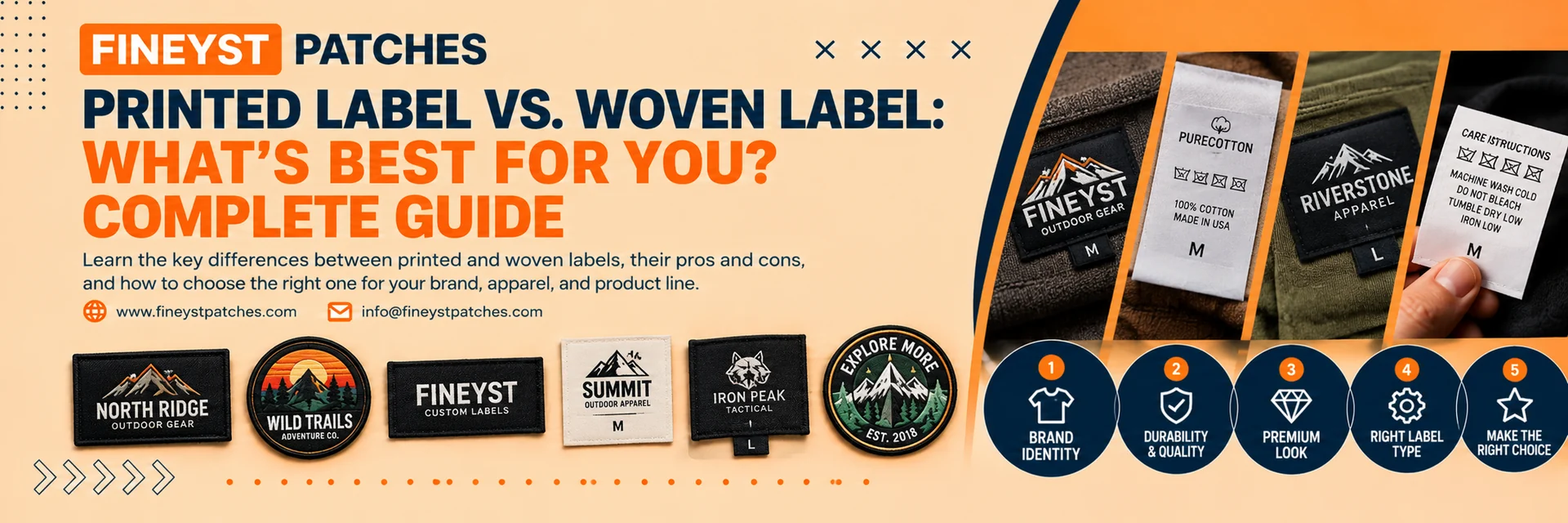
Printed Label vs. Woven Label is an important comparison for clothing brands looking to choose the right labels for their products. Both options help businesses display their logos, brand names, sizes, and other essential information, but they differ in appearance, texture, durability, and production methods. Understanding these differences can help you select the best labeling solution for your clothing line.
Whether you manufacture T-shirts, hoodies, jackets, sportswear, or premium fashion garments, the right label can improve your product presentation and strengthen your brand identity.
What Is a Printed Label?
A printed label is created by applying ink or another printing method to a suitable material. It can display brand names, logos, size information, care instructions, and other details in a clear and attractive format.
Printed labels are widely used in the clothing industry because they offer flexibility in design and can reproduce intricate artwork, multiple colors, and small text. Depending on the application, they may be produced on satin, cotton, polyester, or other materials. Some printed labels are also applied directly to the garment.
Benefits of Printed Labels
1. Detailed Designs
Printed labels are an excellent choice for brands that need detailed graphics, fine lines, or complex logos. They can reproduce intricate designs that may be difficult to achieve with woven techniques.
2. Flexible Color Options
Printing allows brands to use a wide range of colors, making it easier to match labels with brand guidelines and clothing designs.
3. Suitable for Different Products
Printed labels are commonly used for T-shirts, casual wear, sportswear, uniforms, and many other types of garments.
4. Cost-Effective Solutions
Printed labels can be economical for simple designs and large production runs. The final price depends on the material, printing method, order quantity, and finishing requirements.
Potential Limitations of Printed Labels
The durability of printed labels depends on the quality of the ink, material, and production process. Some prints may fade or lose clarity after repeated washing if unsuitable materials or printing techniques are used.
For clothing that requires frequent laundering, it is important to select a suitable printing method and test samples before placing a large order.
What Is a Woven Label?
A woven label is made by weaving threads together to create text, logos, patterns, or other designs directly into the fabric. Unlike a printed label, which applies ink to a surface, a woven label forms its design through the arrangement of threads.
Woven labels are popular among fashion brands because they provide a textured finish and a professional appearance. They are often used on jeans, jackets, hoodies, bags, uniforms, and premium clothing.
Benefits of Woven Labels
1. Long-Lasting Design
Because the design is created from woven threads, it generally resists fading in a different way from printed ink. High-quality woven labels can maintain their appearance through repeated washing and regular use.
2. Premium Appearance
Woven labels provide a distinctive fabric texture that can give clothing a polished and professional finish. They are particularly popular with brands that want a recognizable identity.
3. Strong Brand Recognition
A woven label can showcase a brand logo or name in a consistent style across different products, helping customers recognize your clothing line.
4. Suitable for Many Garments
Woven labels work well on denim, outerwear, knitwear, streetwear, accessories, and other products where a fabric label complements the garment's design.
Potential Limitations of Woven Labels
Woven labels may require more setup and production time, depending on the design and order quantity. Extremely small text and highly detailed images can also be more challenging to reproduce clearly than with certain printing methods.
Their texture and edges should be considered when selecting labels for lightweight clothing or garments worn close to the skin.
Printed Label vs. Woven Label: Key Differences
Choosing between these two options becomes easier when you compare their main features.
1. Design and Appearance
Printed labels offer flexibility for complex graphics, gradients, small text, and multiple colors. Woven labels create designs using threads, producing a textured appearance that often works well for logos and simple branding.
If your design includes detailed artwork, a printed label may be the better option. If you want a classic fabric finish, a woven label may be more suitable.
2. Durability
Woven labels are generally known for their ability to retain their thread-based designs over time. Printed labels can also be durable, but their performance depends on the ink, substrate, and printing technique.
For either option, material quality and proper manufacturing are essential. Testing labels under the washing conditions your products will experience is the best way to assess performance.
3. Texture and Comfort
Printed labels can have a smooth surface, depending on the material and application. Some direct-to-garment printed labels eliminate the need for an additional sewn-in label.
Woven labels have a fabric texture and may feel thicker than certain printed alternatives. For baby clothing, underwear, and other garments worn close to the skin, consider the label's softness, size, edge finishing, and placement.
4. Cost and Production
Printed labels can be an economical choice for designs that require multiple colors or detailed artwork. Woven labels may involve specialized setup and production processes, particularly for complex designs.
However, neither option is always cheaper. Costs vary according to order quantity, dimensions, materials, design complexity, and finishing requirements.
5. Branding and Professional Quality
Both label types can support professional branding. Printed labels provide design flexibility, while woven labels offer a distinctive textile finish.
The right choice depends on the image you want to create and how the label complements the garment. Consistent logo placement, colors, and typography can help establish a recognizable clothing brand.
Which Label Is Best for Different Types of Clothing?
Different garments have different labeling requirements. Consider the following recommendations when selecting labels for your products.
T-Shirts: Printed labels are a practical choice for detailed branding, care information, and lightweight applications. Woven labels can also work well as neck labels or decorative brand tags.
Hoodies and Sweatshirts: Woven labels are popular for streetwear and casual fashion because their textured appearance complements heavier fabrics. Printed labels are useful when detailed artwork is required.
Jeans and Denim: Woven labels can provide a durable, fabric-based branding option that suits denim products. The best choice depends on the intended placement and design.
Sportswear: Lightweight printed labels or direct garment printing can be suitable for activewear where comfort and minimal bulk matter.
Luxury Clothing: Woven labels can offer a premium textile finish, while high-quality printed labels may suit brands with detailed logos or minimalist designs.
Baby Clothing: Prioritize softness and comfort. A carefully selected printed label or a soft, well-finished woven label can work, depending on the garment and placement.
How to Choose the Right Label for Your Brand
Before choosing between printed and woven labels, consider your products, target customers, and branding goals.
Understand Your Garment Material: Choose a label that complements the fabric and does not create unnecessary bulk or discomfort.
Consider Your Design: Detailed, multicolored artwork may be easier to reproduce with printing, while thread-based designs can provide a classic woven appearance.
Evaluate Washing Requirements: Select materials and manufacturing methods suited to the garment's expected care conditions.
Set Your Budget: Compare quotes from manufacturers for different quantities, materials, and finishing options instead of assuming one label type is always more affordable.
Check the Final Appearance: Request samples to review color accuracy, texture, readability, and overall quality before ordering in bulk.
Maintain Brand Consistency: Use consistent branding across your neck labels, size labels, care labels, and other garment accessories to create a unified customer experience.
Why Custom Clothing Labels Matter
Custom clothing labels do more than identify a garment. They help communicate your brand's personality, provide useful product information, and create a consistent presentation across your clothing collection.
For growing fashion businesses, customized labels can make products look more professional and recognizable. Choosing the right material, design, and production technique ensures that the label complements your garment and supports your brand image.
Whether you select printed or woven labels, pay attention to readability, placement, comfort, and manufacturing quality. These details can make a meaningful difference in how customers experience your products.
Final Thoughts
The Printed Label vs. Woven Label decision depends on your design requirements, garment type, budget, and branding goals. Printed labels are ideal for detailed graphics, flexible color options, and many cost-conscious applications. Woven labels are an excellent choice for thread-based designs, a textured appearance, and long-lasting brand identification.
Neither option is universally better for every clothing product. By comparing samples, reviewing production methods, and considering your customers' needs, you can select the label that best suits your clothing brand and helps your products stand out in a competitive market.

 English
 Arabic
 French
 Spanish
 Portuguese
 Deutsch
 Turkish
 Dutch
Dutch
 Italiano
 Russian
 Romaian
 Portuguese (Brazil)
 Greek
Greek