


Top Benefits of Hiring a Professional Embroidery Digitizing Service
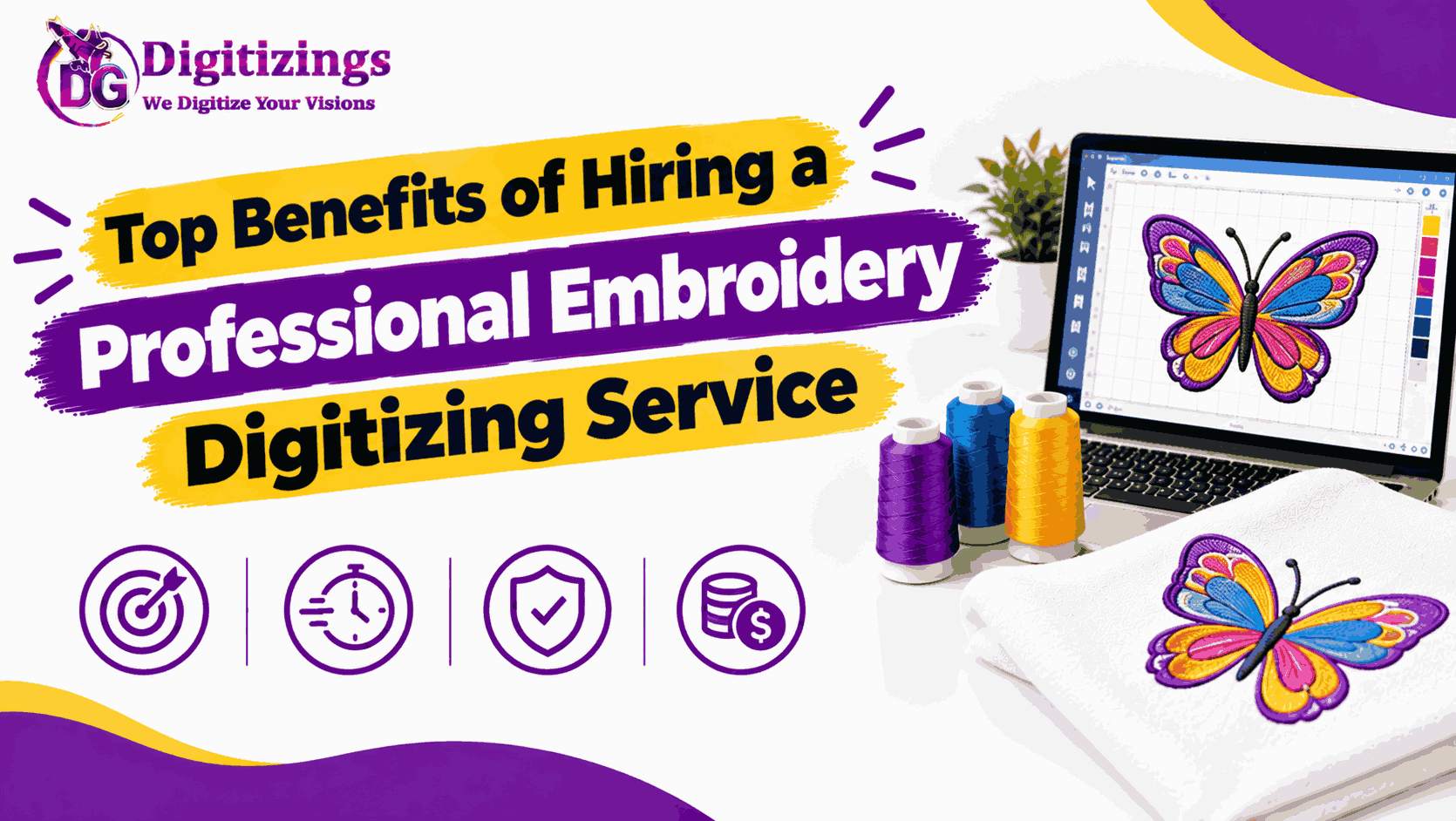
Embroidery is an effective way to add identity, creativity, and value to clothing, accessories, uniforms, and promotional products. A carefully embroidered company logo can make a business look more professional, while custom lettering, patches, and decorative graphics help products stand out in a competitive market.
However, attractive artwork alone does not guarantee excellent embroidery. Before a design reaches the embroidery machine, it must be converted into a digital file containing instructions for creating the stitches. This process requires technical knowledge, artistic judgment, and an understanding of how different fabrics behave during production.
Hiring a professional embroidery digitizing service gives businesses access to specialized expertise without requiring them to handle every technical detail themselves. A skilled digitizer considers stitch types, density, underlay, compensation, sequencing, and design dimensions to prepare a file for its intended application.
Whether you operate an embroidery shop, manage a clothing brand, produce corporate uniforms, or create personalized gifts, professional digitizing can offer several important advantages. Understanding these benefits helps you make better decisions about quality, production costs, customer satisfaction, and long term business growth.
1. Achieve Cleaner and More Professional Embroidery
One of the most important benefits of professional digitizing is improved control over the appearance of the finished design.
A digital graphic may contain thin lines, small text, detailed shapes, and overlapping colors. These elements must be adapted to the physical limitations of thread and fabric before they can be embroidered successfully.
Better Stitch Construction
A professional digitizer selects appropriate stitch types for different parts of the artwork.
Satin stitches are commonly used for lettering, narrow columns, and borders. Fill stitches cover larger areas, while running stitches can reproduce fine lines and selected outlines.
Choosing the appropriate construction helps the design maintain its shape and appearance during embroidery.
More Consistent Coverage
Poorly prepared files may produce gaps, uneven stitching, or areas with excessive thread buildup.
Professional digitizing focuses on balancing stitch density, underlay, and coverage to create a cleaner result.
Improved Design Definition
Borders, curves, lettering, and decorative elements need to remain distinguishable after stitching.
A skilled digitizer knows when to adjust the design so that its important features remain visible and recognizable.
2. Preserve Your Brand Identity Across Different Products
Businesses frequently use the same logo on multiple products. A company may need its branding on polo shirts, caps, jackets, bags, and promotional merchandise.
Although the original artwork remains the same, each product can require a different digitizing approach.
Maintain Consistent Branding
Professional digitizing helps preserve important visual characteristics, including logo proportions, lettering, distinctive shapes, and color relationships.
This consistency helps customers recognize the brand across different garments and product categories.
Adapt Designs to Different Sizes
A small chest logo has different requirements from a large jacket back graphic.
Simply enlarging or reducing an existing embroidery file may change stitch density and affect how individual elements perform.
A professional digitizer can prepare appropriately adjusted versions when the design size changes substantially.
Support New Product Collections
When a clothing brand introduces new products, it may need to adapt existing artwork for different applications.
Professional digitizing makes it easier to prepare logo files that suit new garments while maintaining a consistent visual identity.
3. Reduce Costly Embroidery Production Errors
Production mistakes can waste thread, fabric, machine time, and labor. They can also delay orders and create problems with customers.
A professionally prepared embroidery file helps address many design related issues before production begins.
Prevent Unwanted Gaps
If adjoining embroidery objects are not constructed correctly, visible gaps may appear between shapes or borders.
Appropriate stitch planning and compensation help account for expected fabric movement and improve alignment.
Control Excessive Density
Too many stitches can make embroidery unnecessarily thick and contribute to fabric distortion.
Professional digitizing balances coverage with the characteristics of the material and the design.
Improve Lettering Accuracy
Small letters and narrow strokes can become unclear when they are not adapted for embroidery.
A skilled digitizer may adjust the font, spacing, or stroke construction to improve readability.
Avoid Repeated Corrections
A carefully prepared file can reduce the number of adjustments needed during production. Although no digitizing service can eliminate every possible machine or fabric issue, professional preparation can help prevent avoidable mistakes.
4. Save Valuable Time During Production
Time is an important resource for embroidery businesses, particularly those handling multiple orders every day.
Professional digitizing can help create a more efficient production process by organizing the design before it reaches the machine.
Use Logical Stitch Sequencing
The order in which embroidery objects are stitched affects machine movement and design registration.
A well planned sequence can reduce unnecessary travel between objects while helping adjoining elements remain properly aligned.
Reduce Unnecessary Trims and Jumps
Trims cut the thread between selected sections, while jumps move the machine between locations without creating visible stitches.
Some trims and jumps are necessary. However, poorly organized files may contain unnecessary machine movements that increase production time.
Professional digitizing can identify opportunities to make the stitch path more efficient without compromising the design.
Make Repeat Orders Easier
Once a design has been approved, the final file can be stored and reused for future orders when the application remains suitable.
This reduces the need to prepare the same design from the beginning every time a customer reorders.
5. Improve Small Lettering and Fine Details
Small lettering is one of the most challenging elements in embroidery. Text that appears clear on a computer screen can become difficult to read when reproduced with thread.
Professional digitizers understand how to adapt lettering to the limitations of the embroidery process.
Choose Suitable Fonts
Some fonts are better suited to embroidery than others.
Simple characters with sufficient stroke thickness and spacing often produce clearer results than highly decorative fonts with narrow lines and complicated details.
Preserve Internal Letter Spaces
Letters such as A, B, O, P, and R contain internal openings that must remain visible.
If the stitches become too dense or the lettering is too small, these openings can close and make the characters difficult to recognize.
Adjust Spacing and Proportions
A professional digitizer can modify character spacing, strengthen narrow strokes, or recommend a larger size when necessary.
The objective is to preserve the intended wording while creating lettering that remains readable after stitching.
6. Get Designs Prepared for Different Fabrics
Different fabrics behave differently during embroidery. Cotton, denim, fleece, nylon, twill, terry cloth, and stretch materials all present different production considerations.
Professional digitizing takes these differences into account when developing the stitch structure.
Cotton and Polo Shirts
Cotton garments and polo shirts commonly feature company logos and small chest designs.
The digitizer should consider the fabric construction, dimensions, and lettering size when preparing the file.
Caps and Structured Materials
Caps have curved surfaces and limited embroidery areas. Their construction may require adjustments to stitch direction, sequencing, placement, and lettering.
A specialist familiar with cap digitizing can prepare a design that accounts for these limitations.
Fleece and Textured Fabrics
Soft and textured fabrics can conceal small details beneath the surface.
Appropriate underlay and stitch construction can help improve visibility, although suitable stabilization and hooping are also important.
Stretch Materials
Stretch fabrics can move during embroidery, potentially distorting the design.
Professional digitizing can help account for expected movement, while the production team must also use appropriate stabilization techniques.
7. Access Specialized Embroidery Techniques
Not every embroidery project involves a simple flat logo. Businesses often need specialty designs that require additional technical knowledge.
Three Dimensional Puff Embroidery
Raised embroidery uses foam beneath selected stitches to create a dimensional appearance.
Bold lettering and simple shapes often work well for this technique. Small details and thin outlines may require modification to achieve clean coverage.
Appliqué Digitizing
Appliqué combines fabric pieces with embroidery. The file must organize placement, securing stitches, and finishing details in an appropriate sequence.
Professional planning helps keep the fabric positioned correctly and supports an attractive finished design.
Patch and Badge Digitizing
Patches and badges often require clean borders, readable lettering, and balanced internal shapes.
A skilled digitizer considers the finished patch size and the way the design elements fit together.
Large Jacket Back Designs
Large jacket graphics may include several colors, detailed lettering, filled shapes, and decorative borders.
These projects require careful density control and sequencing to avoid excessive thread buildup and unnecessary production time.
8. Receive Machine Compatible Embroidery Files
An embroidery design must be delivered in a format supported by the intended machine or software.
Professional digitizing services can prepare files for compatible embroidery systems according to the customer's requirements.
Common embroidery formats include DST, PES, EXP, JEF, VP3, and HUS.
Avoid Compatibility Problems
Providing the required format before ordering helps prevent unnecessary conversion and production delays.
Support Multiple Production Systems
Businesses that use different embroidery machines may need the same design in several formats.
A professional service can prepare the required versions when supported, allowing production teams to use the design across compatible equipment.
Understand Conversion Limitations
Changing a file from one format to another does not automatically improve its stitch construction.
If the original file contains poor density, unreadable lettering, or inefficient sequencing, those problems may remain after conversion.
Redigitizing may be more appropriate when the design requires substantial technical improvement.
9. Control Operating Costs and Improve Profitability
Professional digitizing is an expense, but it can help reduce other costs associated with embroidery production.
The financial benefit depends on the design, order volume, and quality of the delivered file.
Reduce Material Waste
Incorrect stitching can lead to rejected garments or repeated embroidery work.
A properly prepared file can help reduce design related mistakes, protecting expensive materials and finished products.
Make Better Use of Machine Time
Reducing avoidable trims, jumps, and repeated corrections can help embroidery machines spend more time producing actual stitches.
Even small improvements can become valuable when a design is embroidered on hundreds of garments.
Evaluate the Long Term Cost
The cheapest initial digitizing fee is not necessarily the most economical option.
A slightly more expensive file may provide better value if it reduces corrections, supports repeat orders, and performs reliably during production.
Keep Approved Files Organized
Maintaining an organized library of approved embroidery files makes future orders easier to manage.
It also reduces the risk of accidentally using outdated versions of a logo or design.
10. Expand Your Business Without Hiring a Full Time Digitizer
Small embroidery shops and growing clothing brands may not have enough consistent work to justify employing a dedicated digitizing specialist.
Outsourcing provides access to professional file preparation when required.
Adjust to Changing Demand
A business may experience seasonal peaks, promotional campaigns, or sudden increases in customer orders.
An external digitizing provider can help handle additional work without requiring permanent staffing changes.
Take on More Specialized Projects
Customers may request caps, patches, raised embroidery, intricate lettering, or large decorative designs.
Working with a provider that has relevant expertise can help a business consider projects that exceed its usual digitizing capabilities.
Keep Internal Staff Focused on Production
Outsourcing digitizing can allow employees to concentrate on embroidery operations, finishing, order management, and customer service.
This arrangement can be useful when external digitizing is more practical than managing every design internally.
11. Improve Customer Satisfaction and Repeat Business
The quality of embroidered products affects how customers perceive a business.
A clean logo, readable lettering, and consistent stitching help create professional products that are more likely to meet customer expectations.
Deliver More Consistent Products
Approved files help maintain the appearance of branding across repeat orders.
This is valuable for customers who expect their uniforms, promotional products, and apparel collections to look consistent.
Reduce Avoidable Delays
Files that are correctly prepared for the intended application can reduce the risk of production interruptions caused by design related problems.
Build Customer Confidence
When businesses provide products that meet agreed specifications, customers are more likely to trust the service and return for future orders.
Choosing a Professional Embroidery Digitizing Service
The benefits of professional digitizing depend partly on selecting a provider suited to your business.
Review Relevant Samples
Look for examples similar to the designs you produce. A provider experienced with small lettering may have different strengths from one specializing in large jacket backs or raised embroidery.
Compare Complete Pricing
Ask what the quotation includes, including the required file format, design dimensions, minor corrections, and specialty techniques.
Check Communication and Turnaround
A reliable provider should understand your instructions and provide realistic delivery expectations.
Confirm Revision Policies
Find out how technical corrections are handled and whether major artwork changes incur additional charges.
Consider Long Term Reliability
For businesses that order frequently, consistent quality, organized files, and responsive communication may be more valuable than a small difference in price.
How Digitizings Can Support Custom Embroidery Projects
For businesses exploring professional digitizing options, Digitizings offers a range of services for custom logos, cap embroidery, patches, lettering, raised designs, and other embroidery applications. Comparing the available service options with your artwork, production needs, and budget can help you determine whether the provider is suitable for your project.
Conclusion
Hiring a professional embroidery digitizing service provides advantages that extend beyond simply receiving a machine file. It can improve stitch quality, preserve brand identity, enhance lettering, reduce avoidable production problems, support specialty techniques, and make repeat orders easier to manage.
Professional digitizing also gives businesses access to specialized knowledge without requiring every technical task to be completed in house. This can be particularly valuable for small embroidery shops, clothing brands, promotional businesses, and companies handling changing production volumes.
The best results come from choosing a provider with relevant experience, explaining the project requirements clearly, confirming machine compatibility, and reviewing the file before production.
By treating digitizing as an essential part of embroidery production, businesses can improve consistency, protect their materials, and deliver more professional products to their customers.
FAQs
1. What are the main benefits of hiring a professional embroidery digitizing service?
Professional digitizing can improve stitch quality, lettering clarity, design consistency, machine efficiency, and compatibility with the intended embroidery equipment.
2. Can professional digitizing help reduce embroidery costs?
It can help reduce avoidable production problems, material waste, unnecessary machine movement, and repeated corrections. The actual savings depend on the design and production volume.
3. Is professional digitizing suitable for small businesses?
Yes. Small businesses can outsource digitizing as needed instead of hiring a full time specialist. This can provide access to technical expertise while keeping staffing costs flexible.
4. Can the same embroidery file be used on different fabrics?
Sometimes, but different materials may require adjustments to stitch density, underlay, compensation, and other construction details. Separate versions may be more suitable for substantially different applications.
5. How do I choose a reliable embroidery digitizing provider?
Review relevant samples, compare complete pricing, confirm supported file formats, check revision policies, and make sure the provider understands your intended fabric and design requirements.
6. Should I test a professionally digitized design before a large order?
Yes. Test stitching can reveal problems involving lettering, density, registration, fabric movement, and placement before an entire production batch is embroidered.

 English
 Arabic
 French
 Portuguese
 Deutsch
 Turkish
 Dutch
Dutch
 Italiano
 Russian
 Romaian
 Portuguese (Brazil)
 Greek
Greek
 ไทย
ไทย