


Sanitary Stainless Steel Fittings: A Practical Guide for Hygienic Piping Systems
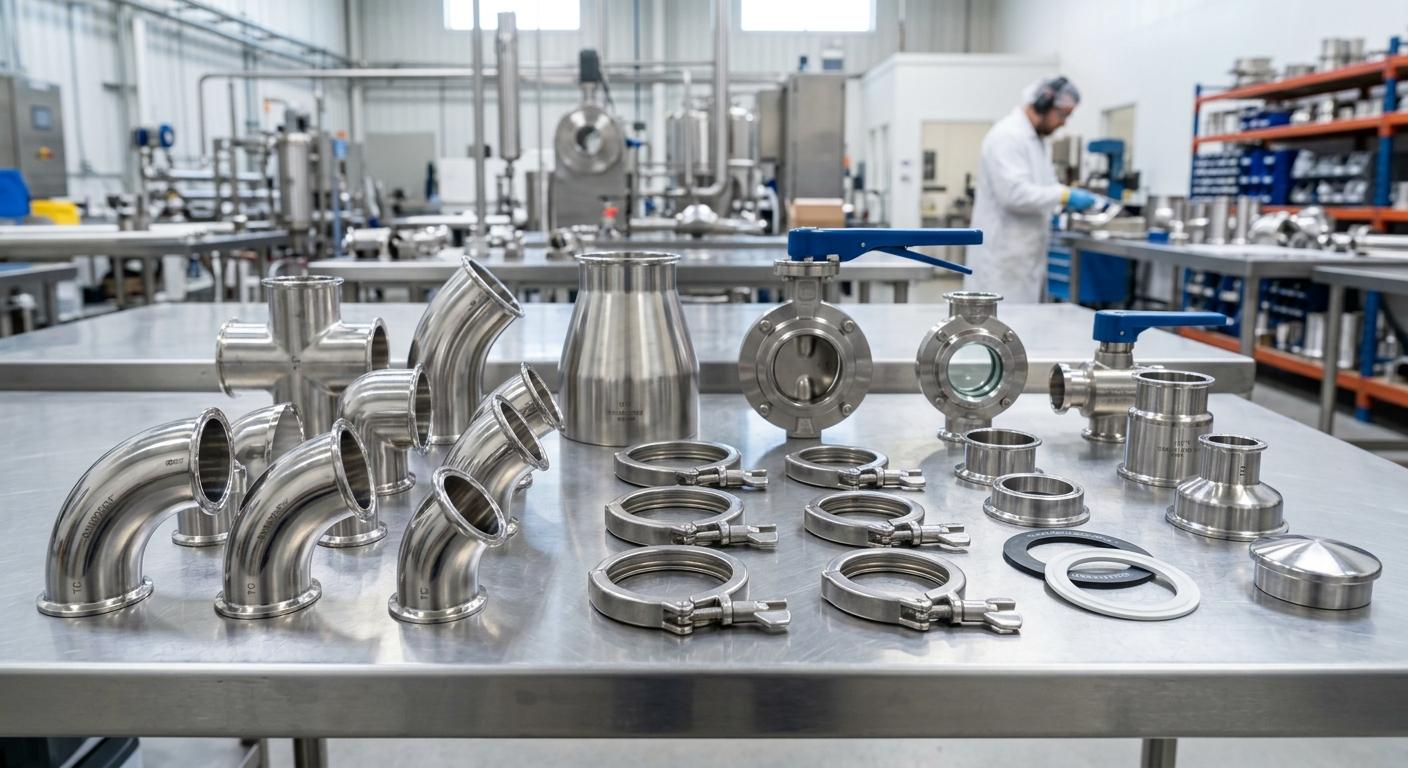
Sanitary stainless steel fittings are an important part of piping systems used in industries where cleanliness, product safety, and corrosion resistance are essential. These fittings connect pipes, change flow direction, create branches, and allow different sections of a processing system to work together efficiently. They are widely used in food and beverage production, dairy processing, pharmaceuticals, biotechnology, cosmetics, and other applications where hygienic standards are a priority.
Made primarily from stainless steel grades such as 304 and 316L, sanitary fittings are designed to provide smooth internal surfaces and reliable connections. Their construction helps reduce areas where bacteria, product residue, or contaminants could collect. This makes them especially useful in production environments that require regular cleaning and sanitation.
What Are Sanitary Stainless Steel Fittings
Sanitary stainless steel fittings are specially designed components used to connect and control hygienic piping systems. Unlike standard industrial fittings, sanitary versions are manufactured with cleanliness and ease of maintenance in mind. Their internal surfaces are generally smooth and carefully finished to reduce contamination risks.
Common types include elbows, tees, reducers, crosses, clamps, unions, caps, adapters, and ferrules. Depending on the system, fittings may use sanitary clamp connections, threaded connections, welded connections, or other hygienic connection methods.
The design selected depends on factors such as pipe size, pressure, temperature, fluid characteristics, cleaning requirements, and the applicable industry standards.
Why Stainless Steel Is Used for Sanitary Applications
Stainless steel is preferred for hygienic processing because it offers a combination of durability, corrosion resistance, and ease of cleaning. Stainless steel surfaces can withstand frequent exposure to water, cleaning chemicals, and many processing fluids without quickly deteriorating.
Grade 304 stainless steel is commonly used for general food and beverage applications. For environments where greater corrosion resistance is required, 316L stainless steel can be a better choice. Its molybdenum content provides improved resistance to certain corrosive environments.
Another important advantage is the non-porous nature of properly finished stainless steel. When the surface is smooth and maintained correctly, it is easier to clean and sanitize compared with rough or porous materials.
Common Types of Sanitary Fittings
Different fittings perform different functions within a hygienic piping network. Sanitary elbows are used to change the direction of flow, with 90-degree and 45-degree configurations being common choices. Tees allow a pipeline to branch into another direction, while reducers connect pipes with different diameters.
Sanitary clamps and ferrules are frequently used where equipment needs to be disconnected for inspection, cleaning, or maintenance. Caps can close unused pipe sections, while unions provide convenient connections between components.
For more specialized systems, manufacturers may also supply fittings designed for tanks, pumps, valves, heat exchangers, and processing equipment. Choosing the correct fitting ensures proper flow and helps maintain the hygienic characteristics of the entire system.
Applications Across Different Industries
Sanitary stainless steel fittings are used in many industries because they support strict cleanliness requirements. In dairy processing plants, they can be found in milk transfer and processing lines. Food manufacturers use them for moving ingredients, sauces, beverages, and other liquid or semi-liquid products.
Pharmaceutical and biotechnology facilities require particularly careful control of contamination. Hygienic stainless steel components can help create piping systems that are easier to clean and maintain. Cosmetics manufacturers also use sanitary fittings in systems handling creams, lotions, oils, and other formulations.
Breweries, beverage plants, commercial kitchens, and other processing facilities can also benefit from sanitary piping components. The exact fitting material, finish, dimensions, and connection style should always be selected according to the application.
Surface Finish and Hygienic Design
Surface finish is an important consideration when selecting sanitary stainless steel fittings. A smoother internal surface generally makes it more difficult for product residue and microorganisms to remain attached to the fitting.
Poorly finished components, damaged surfaces, sharp internal transitions, and difficult-to-clean areas can create hygiene concerns. For this reason, high-quality sanitary fittings are manufactured with attention to weld quality, internal geometry, and surface finishing.
Some processing systems also use electropolished stainless steel components when a highly refined surface is required. The appropriate finish depends on the industry's standards and the characteristics of the material being processed.
Choosing the Right Sanitary Fittings
Several factors should be considered before purchasing sanitary stainless steel fittings. First, determine the required pipe diameter and connection type. The fitting must match the existing piping system to prevent leaks and installation problems.
Material grade is another important consideration. While 304 stainless steel works well for many applications, 316L may be more suitable for systems exposed to more aggressive chemicals or demanding processing conditions.
Operating temperature and pressure should also be reviewed. The fitting must be capable of handling the conditions of the system without deformation or premature failure. Cleaning procedures are equally important, especially in facilities using clean-in-place systems.
Finally, consider the required industry standards and certifications. Using components that meet appropriate sanitary design requirements can support consistent hygiene and easier maintenance.
Maintenance and Cleaning
Even high-quality sanitary stainless steel fittings require proper maintenance. Regular inspections can help identify damaged seals, loose connections, corrosion, or surface imperfections before they become larger problems.
Clamp connections should be checked periodically, and gaskets should be replaced when they show signs of wear. Cleaning procedures should follow the recommendations for the specific piping system and process.
Avoid using cleaning methods or chemicals that are unsuitable for the stainless steel grade. Proper cleaning and maintenance not only protect hygiene but can also extend the service life of fittings and other piping components.
Final Thoughts
Sanitary stainless steel fittings provide a reliable solution for hygienic piping systems where cleanliness, durability, and corrosion resistance are essential. Their smooth construction, flexible connection options, and compatibility with demanding processing environments make them valuable across food, dairy, pharmaceutical, beverage, biotechnology, and cosmetic industries.
Selecting the right material grade, fitting type, surface finish, connection method, and size can improve system performance while making cleaning and maintenance easier. With proper installation and care, sanitary stainless steel fittings can provide dependable service for many years in demanding hygienic applications.

 English
 Arabic
 French
 Spanish
 Portuguese
 Deutsch
 Turkish
 Dutch
Dutch
 Italiano
 Russian
 Romaian
 Portuguese (Brazil)
 Greek
Greek