


How Multi-Device Viewing Is Changing Entertainment Habits in Sweden
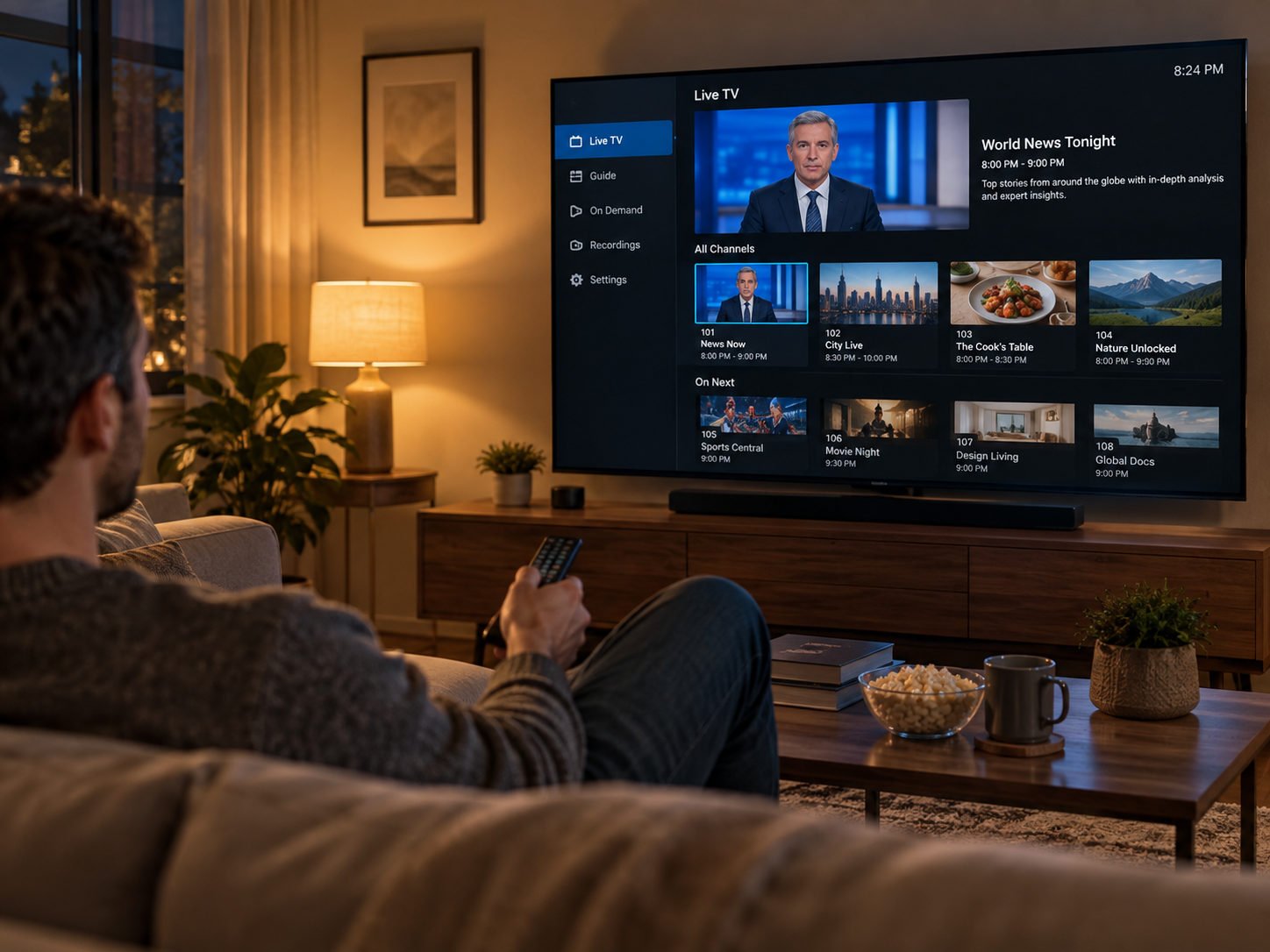
Television viewing is no longer limited to sitting in front of one screen at a scheduled time. In Sweden, internet connectivity and the spread of connected devices have changed how people access and consume video content.
Smart TVs remain an important part of the home, but they now exist alongside smartphones, tablets, laptops, and dedicated streaming devices. This means viewers can choose different screens depending on what they are watching, where they are, and how much time they have available.
Recent Swedish media research illustrates how significant this transition has become. Nordicom reported that streamed TV reached 68% of the Swedish population on an average day in 2025, while scheduled TV reached 46%. The same research found that 98% of people aged 9 to 85 had access to a smartphone.
The change is therefore not simply about replacing traditional television. It is about creating a more connected viewing environment in which several devices can participate in the same entertainment routine.
Television Is Becoming Part of a Larger Device Ecosystem
The traditional television set was once the center of home video consumption.
Today, it is better understood as one component of a larger digital ecosystem.
A household may have a smart TV in the living room, smartphones belonging to different family members, one or more laptops, tablets, and perhaps a separate streaming device. All of these products can potentially connect to online video services.
This changes the relationship between viewers and screens.
A large television may remain preferable for films or live events, while a smartphone can be more convenient for short videos. A laptop may be useful when entertainment is combined with another activity, while a tablet can provide a portable alternative.
The important development is that viewers do not necessarily have to choose one permanent screen.
Swedish Viewing Habits Are Becoming More Digital
The broader Swedish media landscape shows a clear movement toward online video.
Nordicom's 2025 Media Barometer found that 95% of the population aged 9 to 85 watched some form of moving image on an average day. Streamed TV had a daily reach of 68%, compared with 46% for scheduled TV.
Mediemyndigheten likewise reports that access to streaming is increasing and that younger and older groups differ considerably in which services they use.
These figures do not mean that traditional television has disappeared. Instead, they show that internet-delivered video has become an established part of everyday media consumption.
Multi-device viewing fits naturally into this environment because internet-based services are not restricted to a single type of television receiver.
Different Screens Serve Different Situations
One reason multi-device viewing has become practical is that different screens can serve different purposes.
A television is generally suited to longer sessions where viewers can sit comfortably and focus on the content.
A smartphone is different. It is portable and always nearby, making it useful for shorter viewing sessions or situations where a larger screen is unavailable.
Tablets occupy a middle position. They offer more screen space than phones while remaining portable.
Laptops can also become entertainment devices, particularly when users are already working or studying on them.
This variety allows people to adapt their viewing habits to their circumstances rather than adapting their circumstances to television.
Streaming Has Reduced Dependence on Fixed Schedules
Traditional television was closely connected to programming schedules.
If a program started at eight o'clock, viewers who wanted to watch it live generally had to be available at that time. Recording introduced more flexibility, but it still required planning and suitable equipment.
Internet streaming changed this model.
On-demand content allows viewers to decide when they want to watch. Live streaming retains the real-time element of television while using internet infrastructure to deliver the content.
This combination gives households more control over their routines.
Research from Nordicom shows that streamed television has become more widely used than scheduled television in Sweden, although the balance varies considerably between age groups.
Multi-Device Viewing Also Changes Content Discovery
The shift toward connected screens has changed how viewers find something to watch.
Traditional television encouraged channel surfing and program-guide browsing. Digital platforms can offer search, categories, recommendations, watchlists, profiles, and personalized home screens.
The interface becomes part of the viewing experience.
A person might discover a program on a phone and later watch it on a television. Another viewer might see a recommendation on a laptop before continuing the program elsewhere.
This behavior requires services to maintain consistent accounts, content information, and application experiences across devices.
For developers, that creates an interesting technical challenge. The same service has to work effectively across very different hardware and interaction models.
The Home Network Has Become More Important
Multi-device viewing also makes the home internet connection more important.
When only one television receives a traditional broadcast signal, other household devices have little effect on the television picture.
With internet streaming, multiple devices may depend on the same network.
A television could be streaming a high-resolution program while someone else is using a smartphone, another person is attending a video conference, and a computer is downloading a large file.
All of these activities compete for network resources.
This means that Wi-Fi coverage, router placement, bandwidth, and network stability can influence the quality of modern entertainment.
A strong home setup is therefore increasingly part of the viewing infrastructure.
The Smart TV Remains Important
The growth of smartphones and other devices has not made the television screen irrelevant.
In fact, Swedish consumers continue to use television sets extensively for streaming. Kantar research on Swedish households highlights the importance of screen choice and reports that the TV set remains the most common screen for watching streamed content daily or several times per day.
This illustrates an important point: multi-device viewing does not necessarily mean replacing the television.
Instead, different devices can complement one another.
The television can remain the main screen for shared household viewing while smaller devices provide additional ways to access content.
Device Switching Is Becoming More Natural
Modern viewers can move between screens without thinking much about the technology involved.
The process might begin with browsing on a phone, continue on a laptop, and finish on a television.
This behavior is possible because many digital services are designed around user accounts rather than individual devices. Viewing history, preferences, watchlists, and recommendations can be associated with an account and synchronized across compatible applications.
For households exploring an online platform , cross-device compatibility can therefore be an important practical consideration. The usefulness of a service is not only about what can be watched, but also about how easily the experience fits into the devices already being used.
From a technology perspective, this requires reliable backend infrastructure.
Authentication systems, databases, APIs, cloud services, and application interfaces all need to work together.
The user may see only a simple menu, but behind it can be a complex system designed to keep information consistent across multiple devices.
Multi-Device Viewing Creates New Design Challenges
Creating a good streaming application for one device is already a significant design task. Supporting several types of devices introduces additional challenges.
A smartphone interface can rely on touch gestures. A television application may depend on a remote control. A laptop can use a mouse and keyboard, while a tablet combines touch interaction with a larger display.
Developers therefore have to consider more than responsive screen dimensions.
Navigation, text size, accessibility, playback controls, performance, and input methods all need to work appropriately in different environments.
This is one reason multi-device entertainment is also relevant to the wider software development community.
More Choice Can Also Create More Complexity
Having several screens and numerous services provides flexibility, but it can introduce new problems.
Users may have multiple applications installed, several subscriptions to manage, different account credentials, and varying interfaces across devices.
Households can also experience confusion when one device supports a particular application while another does not.
There is therefore a balance between flexibility and simplicity.
A well-designed entertainment setup should make it reasonably clear how users can access content without requiring them to understand the technical infrastructure behind it.
The best multi-device experiences tend to make complexity feel invisible.
What This Means for the Future
The direction of Swedish media consumption suggests that connected and flexible viewing will remain important.
Nordicom's 2025 findings show that 77% of the population had access to a subscription-based TV streaming service, while smartphone access reached 98%.
At the same time, traditional television continues to serve particular audiences and use cases.
This suggests that the future is unlikely to be defined by one screen replacing another. Instead, entertainment will increasingly operate across an ecosystem of devices and services.
Artificial intelligence may further influence this development through improved recommendations, conversational search, automated subtitles, and more personalized interfaces.
Faster networks and better connected-home hardware could also make switching between devices increasingly seamless.
Conclusion
Multi-device viewing is changing entertainment habits in Sweden by making television less dependent on a single screen, location, or schedule.
Smart TVs remain central to home viewing, but smartphones, tablets, laptops, and streaming devices now form part of the same broader entertainment environment. Swedish media research shows how strongly streaming and connected devices have become integrated into everyday media use.
The most significant change is not simply that people have more screens. It is that each screen can serve a different purpose while connected services allow viewers to move between them.
For developers and technology users, this evolution demonstrates how software, networking, cloud infrastructure, and interface design can gradually reshape an ordinary daily activity such as watching television.

 English
 Arabic
 French
 Spanish
 Portuguese
 Deutsch
 Dutch
Dutch
 Italiano
 Russian
 Romaian
 Portuguese (Brazil)
 Greek
Greek
 ไทย
ไทย