


EHS Management Software for Proactive Risk Management
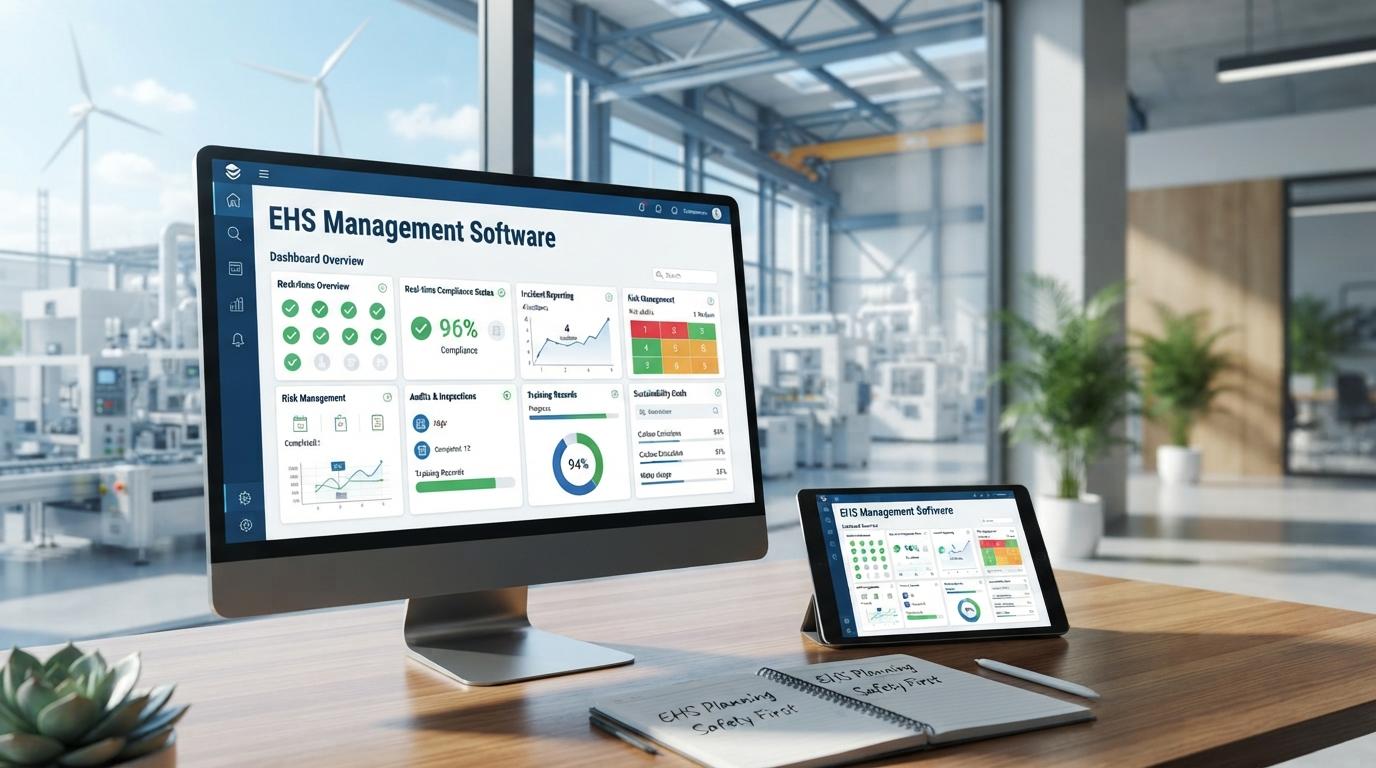
Workplace safety becomes much easier to manage when organisations identify risks before they turn into incidents. Instead of waiting for an employee to get injured or equipment to fail, safety teams can look for hazards, assess risks, and take action early. EHS Management Software can support this approach by bringing hazard reporting, risk assessments, inspections, incident records, and corrective actions into one organised system. When we have better information about workplace conditions, we can make safety decisions based on what is actually happening rather than waiting for a serious event to occur.
What Is Proactive Risk Management
Proactive risk management means identifying and controlling potential problems before they cause harm.
A reactive approach usually starts after something has already happened. An employee gets injured, equipment is damaged, or a near miss occurs, and the organisation investigates the event afterward.
A proactive approach works differently.
Safety teams regularly inspect work areas, encourage employees to report hazards, conduct risk assessments, review previous findings, and make changes before an incident occurs.
This does not mean every incident can be prevented. Workplace conditions can change, and new risks can appear. However, a proactive process gives organisations a better opportunity to identify problems early.
How EHS Management Software Supports Risk Management
EHS Management Software provides a central platform for managing different safety activities.
Instead of maintaining separate spreadsheets for risk assessments, inspection records, incident reports, and corrective actions, organisations can connect these activities within one system.
For example, an employee can report a workplace hazard. The safety team can then review the report, assess the associated risk, assign a corrective action, and monitor the action until it is completed.
This creates a clear path from identifying a problem to addressing it.
The exact capabilities vary between EHS software providers, but common functions may include
- Hazard reporting
- Risk assessments
- Safety inspections
- Incident reporting
- Near miss reporting
- Corrective action management
- Safety observations
- Compliance tracking
- Safety documentation
- Reports and dashboards
EHS Risk Management in Everyday Operations
EHS risk management is not something that should happen only once a year.
Workplaces change regularly. New equipment may be introduced, employees may be assigned different responsibilities, production processes may change, or materials may be replaced.
Each change can create new risks.
For example, a manufacturing company may install a new production machine. Before employees begin using it, the safety team can review possible hazards, assess the risks, and establish appropriate controls.
The assessment can then be stored in the EHS system so it can be reviewed later.
This makes risk management part of normal business operations instead of a separate activity that happens occasionally.
Risk Assessment Software for Hazard Identification
Risk assessment software can help safety professionals record and evaluate workplace hazards in a consistent way.
A typical assessment may consider factors such as the likelihood of an event and the potential severity of its consequences.
The organisation can then determine which controls are already in place and whether additional controls are required.
For example, a warehouse may identify risks related to forklift movement. The safety team may review vehicle routes, pedestrian movement, visibility, training, and workplace layout.
Once the assessment is completed, the organisation can record the required controls and assign actions where necessary.
This information can also be reviewed when workplace conditions change.
Workplace Safety Software for Employee Reporting
Employees play an important role in proactive safety management because they experience workplace conditions every day.
A worker may notice a damaged cable, slippery floor, blocked exit, faulty machine guard, unsafe storage arrangement, or another hazard before management becomes aware of it.
Workplace safety software can provide employees with a structured way to report these concerns.
A useful reporting process should be simple enough that employees can use it without spending a lot of time completing unnecessary information.
The report may include the location, description, photographs, and other relevant details.
Once submitted, the safety team can review the report and determine whether an immediate response or further risk assessment is required.
Safety Management Software for Corrective Actions
A proactive safety process needs more than good reporting. Organisations must also act on the information they receive.
Safety management software can help turn safety findings into assigned corrective actions.
For example, an inspection identifies damaged electrical equipment. Instead of leaving the finding in an inspection document, the system can create an action for the responsible maintenance team.
The action can include
- Description of the issue
- Responsible employee
- Priority
- Due date
- Current status
- Completion notes
- Supporting evidence
Managers can then monitor whether the action has been completed.
This helps prevent safety findings from being forgotten after an inspection is finished.
Using Incident Management Software to Learn From Events
Incident management software is generally associated with recording events after they happen, but incident information can also support proactive risk management.
When organisations review previous incidents and near misses, they may identify recurring hazards or weaknesses in existing controls.
For example, if several employees report similar slips in the same area, the organisation may need to examine the flooring, cleaning process, drainage, or housekeeping procedures.
The goal is not simply to count incidents.
The information can be used to ask better questions about why the events are occurring and whether existing controls are working.
Learning From Near Misses
Near misses can provide valuable information because they reveal situations where something could have gone wrong without necessarily causing an injury.
Imagine a worker almost falls because a walkway is obstructed. Nobody is injured, but the event still shows that something needs attention.
If the near miss is reported, the organisation can investigate the situation and remove the obstruction or improve the process that allowed it to occur.
EHS software can help organisations record these events alongside other safety information.
Over time, reviewing near misses may reveal patterns that would otherwise remain unnoticed.
Environmental Health and Safety Software
EHS management also covers environmental responsibilities.
Environmental health and safety software can help organisations manage environmental activities alongside workplace health and safety processes.
Depending on the organisation, these activities may involve
- Waste management
- Chemical handling
- Environmental inspections
- Emissions
- Resource use
- Environmental incidents
- Environmental documentation
When environmental and safety information is managed through a connected system, EHS teams can maintain a broader view of workplace and environmental responsibilities.
Safety Compliance Software
Proactive risk management also requires organisations to monitor applicable safety requirements.
Safety compliance software can help teams organise compliance related activities, documentation, inspections, audits, and corrective actions.
The software itself does not make an organisation compliant. Businesses still need to understand the legal and regulatory requirements that apply to their operations.
However, a digital system can help employees manage those responsibilities more consistently.
For example, a compliance task can be assigned to a responsible person with a specific deadline. Managers can then review its status and follow up when necessary.
Using EHS Software for Safety Inspections
Regular inspections can help organisations identify problems before they result in incidents.
With EHS software, safety teams can create digital inspection checklists based on the requirements of different work areas.
An inspector can record findings while moving through the workplace and attach notes or photographs where supported.
If a hazard is identified, the finding can be connected to a corrective action.
This means inspection information does not simply remain as a completed checklist. It can become part of an ongoing risk management process.
Data and Reporting for Proactive Decisions
One of the advantages of digital EHS systems is the amount of safety information they can collect over time.
Managers may be able to review
- Frequently reported hazards
- Repeated incidents
- Near miss trends
- Overdue corrective actions
- Inspection findings
- Risk assessment results
- Safety observations
- Compliance activities
This information can help organisations identify areas that require additional attention.
For example, if one location consistently reports the same type of hazard, management may need to investigate the underlying working conditions.
Good reporting should support decision making rather than simply produce large amounts of data.
Benefits of Proactive EHS Management
A proactive approach supported by EHS Management Software can provide several practical benefits.
Earlier Hazard Identification
Employees and safety teams have structured ways to report and record potential hazards.
Better Risk Visibility
Managers can see which risks have been identified and which controls are being used.
Stronger Corrective Action Tracking
Safety findings can be assigned to responsible employees and monitored through completion.
More Consistent Inspections
Digital checklists can help teams follow standard inspection procedures.
Better Use of Safety Information
Historical records can help organisations identify recurring hazards and patterns.
More Organised Compliance
Compliance tasks and supporting records can be managed through structured workflows.
Choosing the Right EHS Management Software
Every organisation has different safety requirements, so you should start by understanding your own processes.
Ask how employees currently report hazards. Look at how risk assessments are completed. Review how inspections are recorded and how corrective actions are followed up.
Then compare software based on those needs.
Important features may include
- Risk assessment tools
- Hazard reporting
- Mobile access
- Inspection management
- Incident management
- Corrective action tracking
- Compliance management
- Document management
- Reporting and dashboards
- User permissions
Ease of use is also important. If employees find the system complicated, they may be less likely to report hazards consistently.
A practical system should make safety work easier rather than adding unnecessary administrative steps.
Final Thoughts
EHS Management Software can support a proactive approach to workplace risk management by helping organisations identify hazards, assess risks, conduct inspections, record incidents, and follow up on corrective actions.
The biggest value comes from connecting these activities. A hazard report can lead to a risk assessment. An inspection finding can create a corrective action. A near miss can highlight a weakness in an existing control.
This connected approach gives safety teams more information to work with before problems become serious.
Technology is only one part of effective safety management. We still need employees who report hazards, supervisors who respond to concerns, and managers who provide the resources needed to control risks.
When people, procedures, and EHS software work together, organisations can build a more consistent process for identifying risks early and taking action before those risks lead to preventable workplace events.

 English
 Arabic
 French
 Spanish
 Portuguese
 Deutsch
 Turkish
 Dutch
Dutch
 Italiano
 Russian
 Romaian
 Greek
Greek
 ไทย
ไทย