


Why Is a Rock Polyaxial Testing System Important for Rock Analysis?
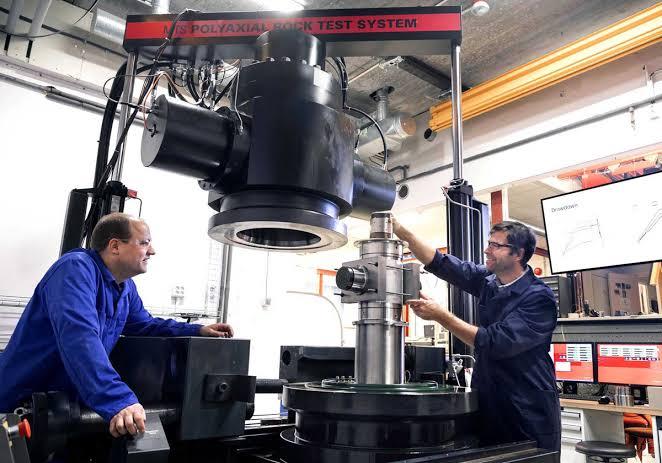
Rock behavior can vary significantly under different combinations of stress, making laboratory testing an important part of geotechnical and rock mechanics research. Simple strength tests may not fully represent the conditions experienced by rock masses deep underground or around engineered structures. A Rock Polyaxial Testing System allows researchers and engineers to study rock behavior under controlled three-dimensional stress conditions. This type of testing can provide useful information about strength, deformation, failure patterns, and stress interactions. The resulting data can support the analysis and design of tunnels, mines, underground structures, foundations, slopes, and other projects involving complex rock conditions.
How Does Polyaxial Testing Examine Rock Behavior?
Polyaxial testing applies controlled stresses to a rock specimen along multiple directions. This allows researchers to investigate how the material responds when stresses interact rather than acting along only one axis. Depending on the equipment and testing procedure, measurements may include applied stress, deformation, strain, and failure characteristics. A Rock Polyaxial Testing System can therefore provide information that may be difficult to obtain through simpler uniaxial or conventional triaxial tests. Proper specimen preparation, loading control, instrumentation, and data acquisition are important for producing reliable results that can be used in rock mechanics studies.
Why Are Three-Dimensional Stress Conditions Important?
Natural rock masses rarely experience perfectly simple loading conditions. Underground excavations, mining operations, foundations, slopes, and tunnels can create complex stress distributions within surrounding rock. Testing rock under multiple controlled stresses can help researchers understand how these conditions influence strength and deformation. Polyaxial testing can also provide data for evaluating failure mechanisms and developing or validating numerical models. By studying rock behavior under different stress combinations, engineers can obtain a more detailed understanding of material response. This information can be particularly valuable when project conditions involve significant confinement or changing stress paths.
What Information Can Rock Testing Provide?
Laboratory rock testing can generate information about strength, stiffness, deformation, failure modes, and other mechanical characteristics. Polyaxial testing can be useful when researchers need to investigate how these properties change under different stress states. The results may contribute to constitutive model development, numerical simulation, and engineering design. Test data can also help researchers compare different rock types or investigate the influence of geological characteristics on mechanical behavior. To make the findings useful, testing conditions should be carefully documented, and results should be interpreted alongside geological information, field observations, and other laboratory measurements.
How Can Polyaxial Testing Support Underground Construction?
Tunnels and underground excavations can significantly alter the stress conditions around a rock mass. Understanding how the surrounding material may deform or fail can help engineers develop suitable excavation and support strategies. Polyaxial laboratory testing can provide data about rock response under controlled multidirectional loading, which may support numerical modeling and stability assessments. The findings can be combined with geological mapping, borehole information, in-situ measurements, and other rock tests. While laboratory testing cannot reproduce every field condition, it can provide controlled mechanical data that contributes to a broader understanding of underground rock behavior.
What Role Does Rock Testing Play in Mining?
Mining operations can involve substantial changes in the stress environment around excavations. Rock strength and deformation characteristics are therefore important considerations when evaluating underground openings, pillars, slopes, and other mining structures. Polyaxial testing can help researchers examine how rock responds under different combinations of confinement and applied stresses. The resulting data may support numerical analyses and mine design studies. Engineers should consider the geological variability of the site when interpreting laboratory results because actual rock masses may contain joints, fractures, bedding planes, and other discontinuities that influence overall behavior.
How Do Crash Barriers Relate to Engineering Testing?
Geotechnical and material testing can support many different engineering fields, including infrastructure development and transportation safety. Roadside safety systems require suitable materials, manufacturing processes, installation practices, and performance evaluation. Thrie Beam Crash Barrier Suppliers provide barrier systems used in road safety applications, where appropriate product specifications and installation requirements are important. Although crash barriers are not directly related to polyaxial rock testing, both areas involve engineering performance under defined conditions. Understanding the requirements of each application helps professionals select appropriate materials, testing procedures, and quality-control practices for the intended project environment.
Why Is Pressure Aging Important for Asphalt Research?
Asphalt binders can undergo changes over time because of oxidation and environmental exposure. Laboratory aging procedures are used to simulate aspects of long-term aging so researchers can evaluate how asphalt materials may behave after extended service. A Pressure Aging Vessel is used in laboratory procedures to expose asphalt binder samples to controlled pressure and temperature conditions for long-term aging simulation. The aged binder can then undergo additional testing to evaluate changes in its properties. This type of testing is relevant to pavement research, asphalt material development, and laboratory investigations of long-term binder performance.
What Should You Consider When Selecting Testing Equipment?
Testing equipment should be selected according to the intended application, required loading range, specimen dimensions, measurement accuracy, control capabilities, and applicable standards. For polyaxial rock testing, laboratories may need precise control over multiple stress directions, reliable sensors, suitable specimen fixtures, and effective data acquisition. Equipment robustness and maintenance requirements are also important for laboratories conducting frequent testing. Users should review technical specifications, calibration provisions, software capabilities, training, and after-sales support. A suitable testing system should provide the control and measurement capabilities required for the specific research or engineering program.
How Important Are Data Acquisition and Control?
Accurate control and measurement are essential when conducting complex rock mechanics experiments. A polyaxial system may need to control several loading parameters simultaneously while recording changes in stress, strain, displacement, and other variables. Reliable data acquisition can help researchers identify important stages of specimen behavior and failure. Automated controls can also improve repeatability when properly configured. However, automation does not eliminate the need for experienced operators. Test setup, specimen alignment, calibration, loading sequences, and data interpretation should all be carefully managed to produce results suitable for research and engineering analysis.
What Are the Main Applications of Polyaxial Testing?
Polyaxial rock testing can be relevant to several areas of rock mechanics, including underground construction, mining, petroleum engineering, geological research, and advanced numerical modeling. It can help researchers investigate mechanical behavior under complex stress states and develop data for constitutive models. Results may also contribute to understanding failure mechanisms and evaluating how different stress paths affect rock response. The usefulness of the test depends on the research objective and the quality of the specimen and testing procedure. Combining polyaxial results with other laboratory and field data can provide a more comprehensive engineering assessment.
Frequently Asked Questions
1. What is a Rock Polyaxial Testing System?
A Rock Polyaxial Testing System is laboratory equipment designed to apply controlled stresses to rock specimens in multiple directions. It allows researchers to investigate rock strength, deformation, stress interaction, and failure under more complex loading conditions than some simpler testing methods. Such systems can be useful in rock mechanics research, mining studies, tunnel design, and numerical model development. The exact capabilities depend on the equipment configuration, loading range, instrumentation, specimen dimensions, and testing procedures used by the laboratory.
2. Why is polyaxial rock testing useful?
Polyaxial testing can provide information about rock behavior under multidirectional stress conditions. Natural and engineered rock environments often involve complex combinations of stresses, so testing beyond simple loading arrangements can provide additional mechanical information. Results may help researchers understand failure mechanisms, develop constitutive models, and support numerical simulations. However, laboratory specimens do not reproduce every characteristic of a field rock mass. Jointing, fractures, bedding, groundwater, and geological variability should therefore be considered when applying laboratory findings to engineering projects.
3. What are Thrie Beam Crash Barriers used for?
Thrie Beam Crash Barrier Suppliers provide roadside barrier systems designed to help manage vehicle impacts and reduce the risk of vehicles leaving designated road areas under certain conditions. Their performance depends on factors including product design, material specifications, installation, road geometry, and applicable safety requirements. Crash barriers should be selected and installed according to relevant project specifications and standards. They are part of transportation infrastructure rather than rock mechanics, although both fields involve engineering evaluation and performance requirements.
4. What is a Pressure Aging Vessel used for?
A Pressure Aging Vessel is laboratory equipment used to simulate long-term aging of asphalt binder under controlled temperature and pressure conditions. The process is intended to represent aspects of aging that occur during extended service. After aging, the binder can undergo additional laboratory tests to evaluate changes in its properties. This equipment is commonly relevant to asphalt research and pavement material evaluation. Test conditions and procedures should follow the applicable standard or research methodology to ensure that results are meaningful and reproducible.
5. Can polyaxial testing replace other rock tests?
Polyaxial testing is not necessarily a replacement for all other rock tests. Different laboratory methods provide different types of information. Uniaxial compression, triaxial testing, point load testing, tensile testing, and other procedures can characterize specific aspects of rock behavior. Polyaxial testing is most useful when the research requires information about multidirectional stress conditions. Engineers and researchers should select a testing program based on the project's objectives, geological conditions, required parameters, and applicable standards rather than relying on one test method alone.
6. What factors affect the accuracy of polyaxial testing?
Specimen quality, dimensions, alignment, loading control, stress measurement, sensor calibration, and testing conditions can all influence results. Rock heterogeneity, fractures, bedding, and mineral composition may also affect specimen behavior. Careful specimen preparation and consistent testing procedures are therefore important. Laboratories should maintain appropriate calibration and quality-control practices and document the test setup thoroughly. Interpreting results alongside geological information and other laboratory data can help researchers understand the limitations of individual specimens and improve the usefulness of the resulting mechanical data.

 English
 Arabic
 French
 Spanish
 Portuguese
 Deutsch
 Turkish
 Dutch
Dutch
 Italiano
 Romaian
 Portuguese (Brazil)
 Greek
Greek
 ไทย
ไทย