


Hand Held Fiber Laser Welding Machine: Precision Welding for Modern Metalwork
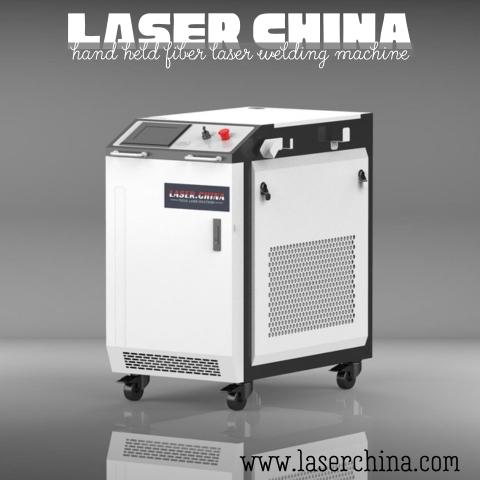
Metal fabrication is constantly evolving as manufacturers look for welding solutions that can deliver clean joints, consistent results, and efficient production. A hand held fiber laser welding machine has become an increasingly useful option for workshops, fabrication businesses, repair services, and industrial production environments. Its compact working approach allows operators to weld different metal components while maintaining greater control over the welding process.
Unlike conventional welding methods that often require extensive preparation and finishing, fiber laser welding uses a concentrated laser beam to create a precise weld between metal surfaces. The process can be applied to materials such as stainless steel, carbon steel, aluminum, galvanized steel, and other compatible metals. With the right configuration and operating settings, businesses can use this technology for both routine fabrication and specialized welding work.
Understanding Hand Held Fiber Laser Welding Technology
A hand held fiber laser welding machine combines a fiber laser source with a manually operated welding head. The laser source generates a high-energy beam, which travels through the optical fiber before reaching the welding head. The operator then directs the beam along the joint that needs to be welded.
The concentrated laser energy melts the material in a controlled area and creates a strong connection as the molten metal cools. Because the energy is focused into a relatively small working zone, the welding process can be highly controlled.
The hand held design is particularly useful when components have different shapes, when welding positions change frequently, or when the operator needs to move around a large workpiece. Instead of placing the entire component inside a fixed automated system, the operator can guide the welding head directly along the required joint.
Where Hand Held Fiber Laser Welding Machines Are Used
A hand held fiber laser welding machine can serve many applications across metalworking industries. Fabrication workshops may use it to join frames, cabinets, panels, enclosures, brackets, pipes, and machine components.
Stainless steel fabrication is another important application. The technology can be used for products such as kitchen equipment, stainless steel furniture, architectural components, tanks, and decorative metal structures. Aluminum welding is also possible with appropriate machine settings and a suitable laser configuration.
Automotive component manufacturing, agricultural machinery, electrical enclosures, hardware production, and general engineering workshops can also incorporate handheld laser welding into their production processes.
Repair work is another area where portability becomes valuable. An operator can position the welding head around damaged or separated metal components without requiring a large automated setup.
Choosing the Appropriate Laser Power
Laser power plays an important role when selecting a hand held fiber laser welding machine. Common configurations include 1000W, 1500W, 2000W, and higher-power systems.
The appropriate power depends on the material, thickness, joint design, welding speed, and production requirements. Thinner sheet metal may require less power, while thicker materials can require a higher-power laser source.
A 1500W system, for example, can be suitable for many general fabrication applications, while a 2000W machine can provide additional working capacity for applications involving thicker materials or higher production requirements.
Instead of choosing a machine simply because it has a higher wattage, manufacturers should consider the actual materials and thicknesses they regularly work with. Proper power selection helps maintain a practical balance between welding performance, operating requirements, and equipment investment.
Welding Different Metals
Material compatibility is an important consideration before purchasing a laser welding system. Stainless steel is widely used with fiber laser welding because the focused beam can produce precise and visually clean joints when the machine is correctly configured.
Carbon steel is also commonly processed in fabrication environments. Operators can adjust laser power, speed, wire feeding, and other parameters according to the application.
Aluminum requires careful control because of its reflective characteristics and thermal properties. A properly configured laser source and suitable process settings are important for achieving consistent results.
Galvanized materials can also require special attention because the zinc coating behaves differently when exposed to intense heat. Proper preparation, ventilation, and process control should therefore be considered when working with coated metals.
Preparing Materials Before Welding
Although laser welding can reduce the amount of preparation required compared with some traditional processes, material preparation remains important.
The surfaces should be clean and free from excessive oil, grease, rust, dirt, paint, or other contaminants. Poor surface preparation can affect the consistency and appearance of the weld.
The two components should also be positioned correctly. Excessive gaps, uneven edges, or movement during welding can influence the final joint. Good alignment helps the laser beam interact with the intended welding area more consistently.
For professional production environments, establishing repeatable preparation procedures can make a significant difference in maintaining consistent results across multiple workpieces.
Handheld Operation and Operator Control
The operator plays an important role in handheld laser welding. The welding head needs to be guided steadily along the joint while maintaining appropriate movement and positioning.
Modern machines often provide adjustable operating parameters through a control interface. Depending on the equipment, operators may be able to adjust laser power, welding speed, wire feeding, and other process settings.
Training is essential because laser welding requires different operating techniques from conventional arc welding. Operators need to understand the equipment, material behavior, appropriate settings, safety procedures, and welding technique before beginning production work.
Once operators become familiar with the equipment, the handheld format can provide considerable flexibility for different workpieces and welding positions.
Wire Feeding for Different Joint Requirements
Some applications can be performed without additional filler material, while others require welding wire to achieve the desired joint profile or compensate for a gap between components.
A wire feeder can be integrated into a hand held fiber laser welding machine to provide controlled filler material during the welding process. The choice of wire should match the base material and application requirements.
For example, stainless steel components generally require compatible stainless filler wire when additional material is necessary. Similar considerations apply when working with aluminum or carbon steel.
Correct wire selection and feeding settings help maintain a consistent weld appearance and joint formation.
Cleaning and Finishing After Welding
One reason businesses consider laser welding is the possibility of reducing post-welding finishing work. The concentrated heat input can help create controlled welds with limited distortion when appropriate parameters are used.
However, finishing requirements depend on the material, joint design, application, and desired appearance. Some products may require grinding, polishing, brushing, or other surface treatment after welding.
For visible stainless steel products, for example, surface appearance can be an important part of the manufacturing process. A controlled welding process combined with suitable finishing procedures can help produce a professional final appearance.
Integrating Laser Welding Into Production
Businesses transitioning to laser welding should consider how the machine will fit into their existing workflow. The equipment may be used as a dedicated welding station or integrated alongside cutting, bending, cleaning, and other fabrication processes.
A workshop producing metal cabinets might use laser cutting to prepare panels, bending equipment to form them, and a hand held fiber laser welding machine to assemble the components. This creates a connected production workflow where each stage supports the next.
For smaller workshops, the same machine can be used for different products throughout the day. Its handheld operation allows operators to move between projects without relying entirely on fixed automation.
Maintenance and Daily Machine Care
Regular maintenance helps keep laser welding equipment operating consistently. Operators should inspect the welding head, protective components, nozzle, lenses, cooling system, and other relevant parts according to the manufacturer's maintenance instructions.
Optical components require particular care because contamination can affect laser transmission and welding performance. Keeping the working area clean and following recommended replacement intervals can help protect sensitive components.
Cooling systems should also be monitored because stable operating temperatures are important for many laser systems. Any unusual alarms, temperature changes, or performance issues should be investigated before continuing intensive production.
Laser Welding Safety
Laser welding requires appropriate safety procedures because high-powered laser systems can present serious hazards. Operators should use equipment designed with suitable safety controls and follow the manufacturer's instructions.
Appropriate laser safety protection, controlled work areas, protective eyewear where required, suitable clothing, ventilation, and fire-safety measures should be considered according to the machine and application.
Training should cover both laser-specific risks and general welding hazards. A professional working environment should never rely only on the operator's experience; appropriate engineering controls and workplace procedures are essential.
Selecting a Machine for Your Workshop
When purchasing a hand held fiber laser welding machine, businesses should look beyond the advertised laser power. The laser source, welding head, cooling system, control interface, wire feeder, consumables, warranty, technical support, and availability of replacement parts can all influence long-term usability.
It is also useful to evaluate the materials and thickness ranges that the machine is intended to process. Ask suppliers for application information and confirm that the proposed configuration matches the workshop's actual production requirements.
Final Thoughts
A hand held fiber laser welding machine offers a modern approach to metal joining for workshops and manufacturers seeking precise and flexible welding capabilities. From stainless steel fabrication and carbon steel structures to aluminum components and repair applications, the technology can be adapted to many metalworking requirements.

 Arabic
 French
 Spanish
 Portuguese
 Deutsch
 Turkish
 Dutch
Dutch
 Italiano
 Russian
 Romaian
 Portuguese (Brazil)
 Greek
Greek
 ไทย
ไทย