


Choosing Mosaic Size for a Shower Pan
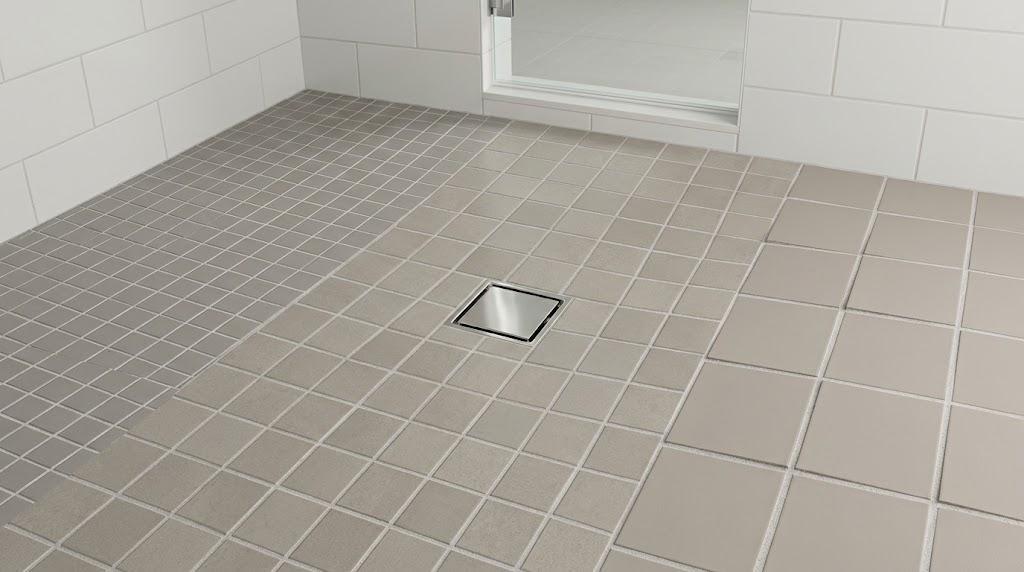
A shower floor is one of the few surfaces in a home that must shed water with no help. Slope does that work, and tile choice decides whether the slope functions as designed. Rigid, oversized pieces fight the pitch and leave raised edges behind. Smaller units travel with the bed instead.
That ranking puts geometry ahead of color and pattern. Style still matters, but it comes after the floor drains. Working through the decision in order keeps the project out of trouble.
The steps below follow that order. They cover slope, size families, traction, materials, sheet types, layout, purchasing, and repairs.
Why Small Units Handle a Slope
Every shower pan sits on a shallow, pitched bed. Most residential pans fall about one quarter inch for every foot of run. That pull moves water from the wall edge to the drain without attention.
A large tile ignores the pitch. A 12x12 stays flat while the bed curves beneath it. One edge lifts away from the mortar and stays raised. The raised lip is called lippage.
Lippage causes trouble on two fronts. Bare toes catch on the lifted edge, which is a real hazard. Water also dams behind the lip and leaves mineral rings.
Small sheets behave differently. Each sheet carries many pieces separated by narrow joints. Those joints let the sheet track the curve as it is pressed down. The surface ends up flush and sheds water the way it should.
The Three Common Size Ranges
Mosaics sold for shower floors fall into three rough ranges. Choosing among them starts with the slope in front of you. Grout density and upkeep then narrow the field further.
The ranges are worth thinking about before any browsing begins. Sizes behave differently enough that guessing rarely pays off. Mosaic tiles bathroom selections usually land in one of the three. What follows describes each range in turn.
1x1 Inch and Smaller
Squares at one inch, plus penny rounds and small hexes, hug nearly any curve. Curbless showers with a steep drop to a linear drain favor this scale. Radiused corners and tight transitions also go easier at this size.
The price is grout. Smaller pieces mean many joints, and every joint collects soap film. Hard water adds scale on top of that film within weeks. Anyone who avoids scrubbing should think twice here.
2x2 Inch
Two-inch squares cover the widest range of residential jobs. They flex with a quarter-inch fall and stay flat at the corners. Joint count stays moderate, so routine cleaning is not a burden.
This is usually the first size brought out when shoppers ask for shower floor options. Installers like it because it cuts cleanly around drains and sets quickly. For a standard pan, it is a sensible default.
3x3 Inch and Larger
Wider pieces cut joint count and give the floor a calmer look. That pulls some homeowners toward three-inch or four-inch squares. On a gentle fall, the approach can work out fine.
A four-inch piece on a quarter-inch pitch may lift along one edge. Measure the actual fall of your bed before ordering anything. Three inches is a practical ceiling on most residential pans.
Grout Lines and Traction
Wet tile is slick under bare feet, and that is a real safety issue. What a foot grips is the grout, not the tile face. Joint count per square foot therefore drives traction.
A one-inch sheet is mostly grout and grips very well. Two inches still gives most households plenty of friction. This is why mosaic tiles bathroom floors tend to stay on the smaller end of the range. Above that, the effect fades quickly, and polished faces make it worse.
Texture helps, but it cannot stand in for joints. Matte and textured finishes are worth specifying for any pan surface. Keep gloss and polished options on walls.
Grout selection follows joint width. Sanded grout is meant for gaps wider than one eighth inch. Most mosaics use one sixteenth or one eighth inch joints, so unsanded grout is standard. Check the maker's notes first, since soft stone scratches under sand.
Material Considerations
Fit comes from size, and longevity comes from material. Constant moisture, foot traffic, and cleaning products all act on the floor. Porosity and surface finish deserve a look before you order.
Porcelain is the reliable pick on a wet floor. It is dense, absorbs very little water, and resists staining without sealing. Matte finishes add grip without extra maintenance. It tolerates daily traffic and ordinary cleaners.
Natural stone has a character no factory matches. Travertine, slate, and marble work well when sealed on schedule. Stone is porous, so it needs sealing before and after grouting, then yearly. Skip that routine and it darkens and grows mildew.
Glass tiles shed water completely and read clean in modern baths. Their face is slick, so only small formats belong on a pan. Penny rounds and one-inch squares work because joints carry the grip. Verify the floor rating, since thin glass cracks under repeated weight.
Sheet Backing Types
Mosaics come mounted on sheets, and the mounting method changes how a sheet behaves. Three types are common today. Each sets with its own advantages.
Mesh backing leads in popularity. Tiles sit on a fiberglass mesh that stays flexible in your hands. Pressing the sheet into a sloped bed lets it track the curve. Irregular pitches go more smoothly with mesh.
Paper facing works in reverse. Sheets set face down and the paper is soaked off after the mortar cures. The result is a flat field with nothing between tile and mortar to weaken the bond. You cannot see the pieces while setting, so low spots hide easily.
Fused sheets with no open joints belong on walls. A pan needs a gap between every piece so the sheet can flex. Those gaps also give grout somewhere to grip. Skip fused formats underfoot.
Planning Your Layout
Layout earns its keep before thinset is ever mixed. Ten minutes of dry planning keeps joints even and cuts clean.
Work from the drain outward, since it anchors the whole pattern. Center the first sheet over the opening and radiate toward the walls. Cuts at opposite walls then balance each other. The field reads as intentional rather than accidental.
Pans are rarely square, so cutting is part of the job. A standard round drain spans four inches across. Remove the four tiles that sit over the opening and leave a small gap around the flange. The cover hides the cut edges and gives room to adjust.
At the corners, measure twice and cut once. Keep joint width identical across the field and at the walls. If the sheet uses one-eighth-inch gaps, hold that gap everywhere. Inconsistent joints read as sloppy work.
Buying Your Tiles
Where you buy matters as much as what you pick. A dedicated tile shop tends to staff people who understand slopes, drain assemblies, and floor ratings. That familiarity keeps wall-rated product off your shower pan. Walk in with measurements and clear questions.
Carry the drain assembly with you. Holding the flange against a mosaic sheet shows how the pieces sit around the opening. You will know instantly whether the tiles are too large to cut cleanly. One check like that prevents a wasted trip.
Explain the project plainly at the counter. Say you need mosaic tiles bathroom flooring rated for a sloped pan, and staff can rule out wall-only options immediately. Vague questions tend to produce vague answers.
Ask about backing type too, since sheets vary in how they bend. A second tile shop can confirm a doubtful pick if the first answer feels thin. That extra visit costs little beside a failed floor.
Order roughly fifteen percent extra material. Cutting mosaics breaks pieces, and everyone makes mistakes. Spare boxes also guard against dye lot shifts between batches. Color match later is never guaranteed.
Troubleshooting Common Issues
Even a well-chosen size can show problems once it is set. Three checks catch most of them before grout seals them in place.
Test with water first. Pour a bucket across the pan and trace the path it takes. Every drop should reach the drain on its own. Standing water means a section must lift so the bed can be corrected.
Feel for lippage second. Run your palm across the field and hunt for raised edges. A single high piece taps down with a rubber mallet. Widespread lift means the mosaic tiles bathroom range you chose was too large for your fall.
Finish at the drain edge. Water crosses that cutout constantly, and rough cuts gather debris over time. Smooth them with a rubbing stone before grouting. Clean edges keep flow moving for years.
Conclusion
Sizing a pan mosaic comes down to slope, grip, and upkeep. The bed falls toward the drain, and the tile must follow without lifting. For most pans, a 2x2 porcelain square handles the job on every count.
Steeper falls do better with 1x1. If grout cleaning bothers you, 3x3 can work on a gentle slope, but confirm the pitch first. Speak with your local tile shop about floor ratings and backing types before ordering. Measure the drain, buy extra material, and dry-fit the first sheet before mixing anything.

 English
 Arabic
 French
 Spanish
 Portuguese
 Deutsch
 Turkish
 Dutch
Dutch
 Russian
 Romaian
 Portuguese (Brazil)
 Greek
Greek
 ไทย
ไทย