


Employee Attendance Management System: Simplifying Workforce Tracking With HRMS Software
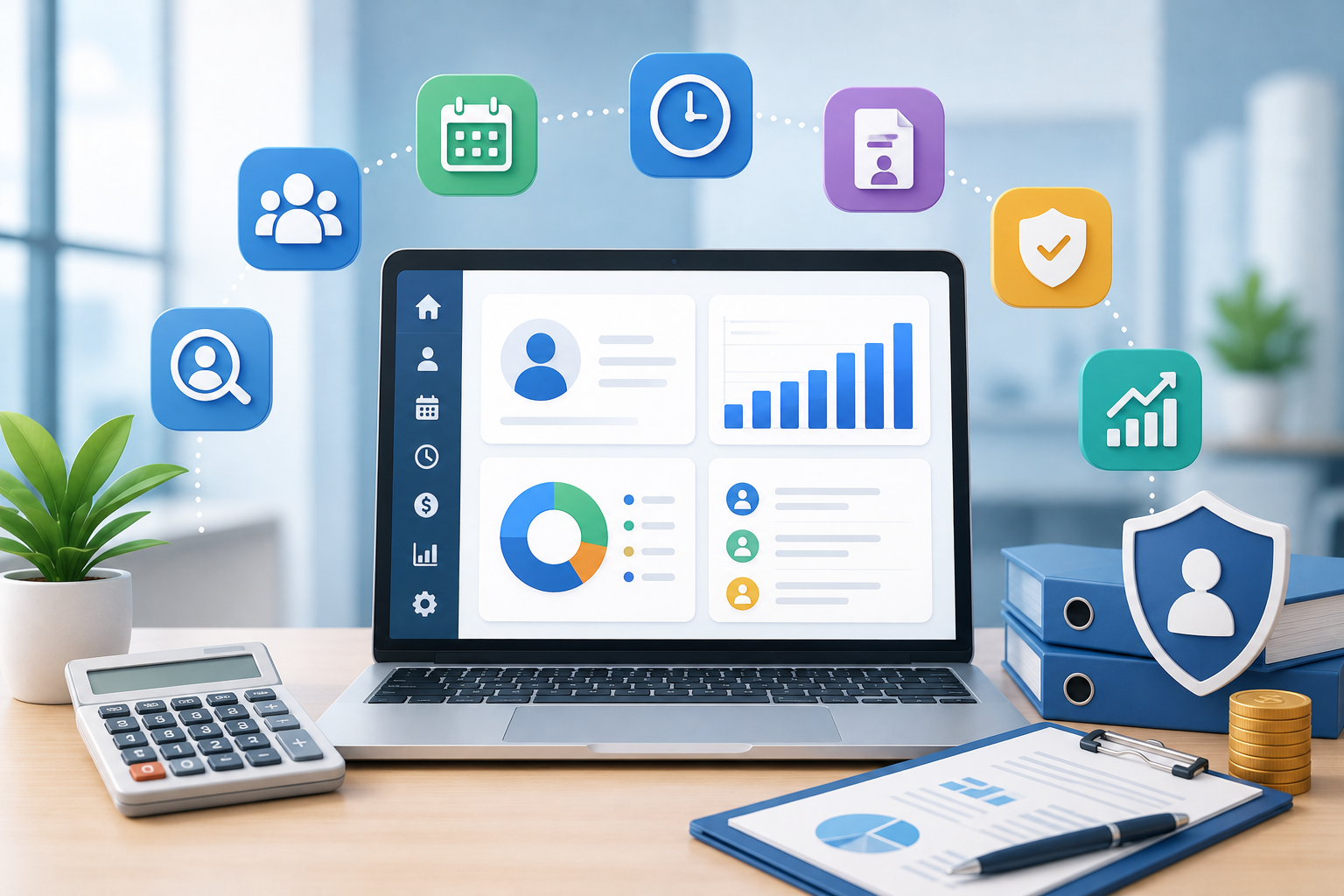
Managing employee attendance is an important part of everyday HR operations. Businesses need accurate information about employee presence, working hours, shifts, overtime, late arrivals, and absences. When attendance is tracked manually through registers or spreadsheets, HR teams can spend significant time updating records and correcting errors. An Employee Attendance Management System provides a digital way to record, monitor, and manage attendance more efficiently.
Modern HRMs Software can connect attendance with leave, payroll, employee records, and other HR functions, creating a more centralized approach to workforce management.
What Is an Employee Attendance Management System?
An Employee Attendance Management System is software designed to automate the process of recording and managing employee attendance. It can help businesses track employee working hours, attendance status, shifts, late arrivals, overtime, and attendance corrections.
Depending on the system, employees may record attendance using biometric devices, web applications, mobile applications, or other supported methods.
Instead of maintaining separate attendance registers and spreadsheets, HR teams can manage attendance data through one centralized platform.
Why Businesses Need an Attendance Management System
As an organization grows, manually tracking attendance becomes increasingly difficult. HR teams may need to manage different departments, shifts, locations, and employee schedules.
Common challenges with manual attendance management include:
- Time-consuming data entry
- Incorrect or missing attendance records
- Difficulty managing multiple shifts
- Manual attendance calculations
- Delayed reports
- Payroll data inconsistencies
- Too many attendance correction requests
An automated attendance system can help businesses create a structured process for recording and reviewing attendance.
Key Features of an Employee Attendance Management System
1. Digital Attendance Tracking
Employees can record their attendance through supported devices or applications. HR teams can access attendance information without manually collecting records from different departments.
2. Shift Management
Businesses with multiple shifts can create and assign schedules according to employee requirements.
The system can help HR teams monitor whether employees are following assigned schedules and identify late arrivals or other attendance exceptions.
3. Working Hours Tracking
An attendance system can record employee check-in and check-out information and calculate working hours based on configured rules.
This information can also be useful for payroll and workforce reports.
4. Attendance Regularization
Employees may occasionally forget to mark attendance or experience technical problems while checking in or out.
A regularization workflow allows employees to submit correction requests digitally. Managers can review requests and take appropriate action according to company policies.
5. Overtime Tracking
Organizations that manage overtime can use attendance data to track additional working hours. Where supported, overtime information can also be connected to payroll.
6. Attendance Reports
HR teams can generate reports covering attendance, absenteeism, working hours, late arrivals, overtime, and other attendance-related information.
These reports can provide managers with better visibility into workforce attendance.
How HRMS Software Supports Attendance Management
HRMs Software can connect attendance with other HR activities. Instead of managing attendance as a separate system, businesses can integrate it with employee records, leave management, payroll, and reporting.
For example, an employee's attendance can be recorded through the HR platform. Approved leave can be connected with the employee's attendance record, while relevant attendance information can be used during payroll processing.
This reduces duplicate data entry and creates a more connected HR workflow.
Benefits of an Employee Attendance Management System
Saves HR Time
Automated attendance tracking reduces the need for manual registers, spreadsheet updates, and repeated calculations.
Helps Improve Data Accuracy
Digital attendance records can reduce errors caused by manual data entry and calculations.
Improves Employee Transparency
Employees can view their attendance information and submit correction requests when necessary, depending on the system.
Supports Payroll Processing
Attendance information can be connected with payroll to support salary calculations based on working days, overtime, or applicable attendance rules.
Provides Better Visibility
HR teams and managers can access attendance reports and identify attendance patterns more easily.
Mobile Attendance for Modern Workplaces
Many businesses now have hybrid, remote, or field-based employees. A mobile attendance system can provide an alternative to traditional office-based attendance methods.
Depending on the platform, mobile attendance may include features such as location verification, device authentication, or other controls.
Businesses should select attendance methods based on their work environment, employee requirements, privacy considerations, and internal policies.
Choosing the Right HRMS Software
Before selecting an HRMS platform, businesses should evaluate their attendance requirements and broader HR needs.
Important features to consider include:
- Employee attendance tracking
- Shift management
- Check-in and check-out
- Mobile attendance
- Biometric integration
- Overtime tracking
- Attendance regularization
- Leave integration
- Payroll integration
- Attendance reports
- Role-based access
- Data security
- Mobile and web access
- Customer support
- Scalability
The software should also be easy for employees, managers, and HR teams to use.
Attendance Management for Growing Businesses
Small businesses may initially manage attendance through spreadsheets or manual registers. As employee numbers increase, these methods can become difficult to maintain.
An Employee Attendance Management System can provide a centralized structure for recording attendance, managing shifts, handling regularization requests, and generating reports.
When attendance is connected with HRMS software, businesses can also manage leave, payroll, employee records, and other HR activities within the same platform.
Conclusion
An Employee Attendance Management System can help businesses automate attendance tracking, manage shifts, monitor working hours, handle regularization, and generate attendance reports. It can reduce manual work while giving HR teams and managers better visibility into employee attendance.
By using HRMs Software with integrated attendance capabilities, organizations can connect attendance with employee management, leave, payroll, and other HR processes. Choosing a scalable and user-friendly system can help businesses build more organized workforce management processes as they grow.

 English
 Arabic
 French
 Spanish
 Portuguese
 Deutsch
 Turkish
 Dutch
Dutch
 Italiano
 Romaian
 Portuguese (Brazil)
 Greek
Greek
 ไทย
ไทย