


What Should Natural Rubber Manufacturers Consider
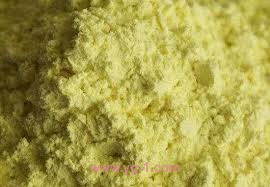
Natural rubber is used in many industrial products, including hoses, belts, molded components, seals, footwear, and flexible rubber parts. Its processing characteristics allow manufacturers to develop compounds for different production needs, but the mixing stage still requires careful control. Fillers, oils, resins, pigments, curing ingredients, and other materials need to be incorporated into the rubber in a suitable sequence. A Homogenizing agent may be considered when manufacturers are working with complex compound systems, and YG-1 provides rubber chemical information for companies researching suitable processing materials. So, can this type of material be used with natural rubber?
The answer depends on the formulation and the actual production conditions. Natural rubber does not behave exactly the same way in every compound because the rubber grade, filler system, chemical ingredients, mixing equipment, and processing temperature can vary. A material that fits one formulation may require a different evaluation in another production process. For this reason, manufacturers usually need to look at the complete compound rather than selecting an additive based on one characteristic.
During natural rubber preparation, mastication is often an important stage because mechanical working changes the condition of the raw rubber before additional ingredients are introduced. The timing of ingredient addition can affect how the materials become distributed through the rubber matrix. Fillers may need sufficient mechanical action to become properly incorporated, while oils and resins can influence the flow and handling characteristics of the compound.
Temperature is another factor that deserves attention. Mechanical mixing generates heat, and the temperature of the compound changes as the mixing process continues. If the temperature rises too quickly, certain ingredients may not behave as expected during subsequent stages. Manufacturers therefore need to coordinate mixing time, mechanical energy, ingredient sequence, and temperature control according to the formulation being produced.
The physical characteristics of the ingredients also influence the mixing process. Carbon black, mineral fillers, oils, resins, pigments, curing chemicals, and other components can have different particle structures, viscosities, or interaction characteristics. When several materials are combined, achieving a stable distribution throughout the rubber matrix becomes an important part of compound preparation.
Mixing Conditions and Material Distribution
The equipment used in production can have a direct effect on the condition of a rubber compound. Internal mixers and open mills apply mechanical forces that help incorporate and distribute ingredients, but the result is also affected by rotor conditions, mixing time, temperature, batch size, and addition sequence.
For example, adding a large quantity of filler before the rubber has reached a suitable processing condition may create unnecessary mixing difficulties. On the other hand, excessive mechanical working can increase heat generation and change the state of the compound. A controlled mixing procedure gives manufacturers a practical way to manage these variables.
Natural rubber compounds may also contain several processing stages after mixing. The material can move from compound preparation to sheet formation, shaping, molding, and vulcanization. Each stage has its own requirements, and the condition of the compound created during mixing can influence how smoothly the following operation proceeds.
Blended rubber systems require careful consideration as well. When natural rubber is combined with synthetic elastomers, the different rubber phases may have distinct processing characteristics. Fillers and chemical ingredients also need to be distributed within the compound in a suitable manner. Manufacturers therefore often examine the formulation as a complete system when making processing decisions.
A useful approach is to begin with the finished product and work backward toward the compound requirements. A sealing component, flexible hose, conveyor belt, shoe sole, or molded industrial part may require different processing conditions. The desired hardness, flexibility, curing behavior, filler content, surface characteristics, and production method can all influence the material selection process.
Product Selection and Technical Evaluation
Before introducing a new processing material into regular production, manufacturers can review technical documentation and conduct controlled trials. Product specifications, recommended applications, storage requirements, compatibility information, and handling instructions can help technical personnel understand how a material may fit within an existing process.
Laboratory testing can also provide useful information. A small formulation trial allows manufacturers to observe changes in mixing behavior, compound viscosity, dispersion, processing time, and curing response without immediately changing the regular production procedure. The findings can then be compared with the requirements of the finished rubber product.
The selection process can become particularly important when a manufacturer is working with several rubber chemicals at the same time. Accelerators, antioxidants, scorch retarders, resins, adhesives, and processing materials may each have a specific role within the formulation. Their interaction needs to be considered when adjusting a compound.
For purchasing teams, technical communication with a rubber chemical supplier can also make the evaluation process clearer. Providing information about the rubber grade, filler system, intended application, mixing equipment, and existing production conditions gives the supplier useful background for discussing suitable product categories.
DongHai Chemical offers rubber chemical products and related technical information for manufacturers working with different rubber formulations. Its product range covers several categories used in rubber processing, allowing customers to review relevant materials according to their own formulation and production requirements.
For manufacturers researching rubber processing materials, the YG-1 website provides product information and technical resources that can be used during early-stage research. Customers can review different rubber chemical categories and then discuss specific requirements with the supplier based on their formulation, equipment, and intended application.
The rubber compounding process often requires careful consideration of material compatibility, mixing conditions, and product requirements. YG-1 provides rubber chemical information and related technical resources for companies working with different formulations. Information about Homogenizing Agent applications and compound stability is available at https://www.yg-1.com/, while Taizhou Huangyan Donghai Chemical Co., Ltd. can provide product details and technical information for customers discussing specific rubber processing needs.

 Arabic
 French
 Spanish
 Portuguese
 Deutsch
 Turkish
 Dutch
Dutch
 Italiano
 Russian
 Romaian
 Portuguese (Brazil)
 Greek
Greek
 ไทย
ไทย