


LongHui High Speed Cold Heading Machine Service Guide
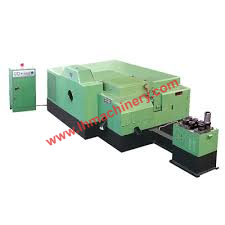
A High Speed cold heading machine is built for repeated metal forming, where feeding, cutting, upsetting, extrusion, and transfer need to work together through a continuous production cycle. Because these movements happen under mechanical load, regular maintenance has a direct connection with tooling condition, forming consistency, and equipment operation. LongHui, represented by lhmachinery, provides multi-station cold heading forming equipment for manufacturers producing screws, bolts, rivets, nuts, sleeves, and other metal components. The appropriate maintenance interval depends on production intensity, material characteristics, tooling arrangements, and machine configuration, so how often should a High Speed Cold Heading Machine really be inspected?
Maintenance frequency should not be decided by a calendar alone. A machine operating throughout several production shifts may experience substantially different wear from equipment used occasionally for small production batches. The type of wire being processed also matters because material hardness and diameter can influence the load placed on forming tools and mechanical components. Production teams can therefore establish a basic inspection routine while adjusting certain checks according to actual working conditions.
Lubrication is one of the first areas technicians usually examine. Moving parts inside forming equipment repeatedly experience friction and mechanical pressure, making appropriate lubrication important for smooth movement. Oil levels, lubrication points, circulation conditions, and signs of contamination can be checked during routine servicing. If lubricant becomes contaminated or its condition changes, cleaning and replacement may be required according to the machine manufacturer's instructions. Paying attention to unusual heat or friction can also help technicians notice changes before they become larger mechanical issues.
Tooling deserves careful attention because punches, dies, cutters, and related components directly influence the shape and dimensions of finished parts. Repeated forming can gradually change the working surfaces of these components, particularly when production involves demanding materials or complicated geometries. Operators may notice early signs through dimensional changes, surface marks, burrs, cracking, or inconsistent forming. Regular inspection allows worn tooling to be identified before its condition affects a larger quantity of finished components.
The feeding mechanism should also be included in routine checks. Accurate feeding is necessary because the material needs to reach the correct position before each forming operation. Technicians can observe wire movement, guides, gripping elements, cutting components, and alignment during production. Irregular feeding may appear as inconsistent positioning, slipping, unusual movement, or changes in the finished part. When these signs occur, checking the feeding path and related components can help identify the source instead of simply adjusting the finished product afterward.
Mechanical transmission parts are another important maintenance area. Bearings, gears, shafts, connecting elements, and other moving components work continuously during production. Changes in operating sound or vibration may indicate that a component should receive closer attention. Routine checks can include inspecting visible wear, loose connections, lubrication conditions, and unusual movement. Keeping a simple service record is useful because gradual changes are easier to recognize when technicians can compare current observations with previous inspections.
Electrical and control components should not be overlooked. Sensors, motors, switches, wiring, control cabinets, and protection devices all contribute to the coordinated operation of forming equipment. Dust accumulation, loose connections, damaged cables, or irregular sensor signals may influence machine behavior. Cleaning and inspection should follow appropriate safety procedures, while specialized electrical work should be handled by qualified personnel. A maintenance plan that includes both mechanical and electrical areas gives technicians a broader view of equipment condition.
Production data can help determine when certain inspections need to be carried out. Long operating periods, frequent tooling changes, material changes, unexpected stoppages, and fluctuations in finished-part quality can all provide useful information. For example, if a particular component repeatedly requires adjustment after extended production, that pattern can be recorded and considered when planning future servicing. This makes maintenance a process connected to actual machine use instead of a routine based only on fixed dates.
The working environment also has an influence on equipment care. Metal particles, lubricant residue, dust, and workshop conditions can accumulate around machinery and affect cleaning or inspection work. Keeping the area around the equipment organized makes it easier to identify leaks, loose components, damaged parts, or unusual residue. Clean surfaces also allow technicians to observe the machine more clearly during scheduled checks.
Operators have an important role because they work with the equipment during everyday production. A technician may identify a change in vibration, sound, feeding behavior, or forming response simply because the machine behaves differently from its usual operating pattern. Recording these observations can provide useful information for maintenance personnel. When operator feedback is combined with scheduled inspections, small changes are less likely to be overlooked.
Preventive maintenance should also be connected with spare-part planning and production scheduling. If technicians know which components require periodic inspection or replacement, necessary parts can be prepared before planned service periods. Production managers can then arrange maintenance around existing manufacturing schedules instead of waiting for an unexpected shutdown. Service records may include tooling changes, lubrication work, replaced components, abnormal conditions, and corrective actions, creating a useful reference for future maintenance decisions.
LongHui develops multi-station cold heading forming machines for manufacturers working with different metal components and forming processes. When evaluating a High Speed Cold Heading Machine, buyers can review the multi-station equipment information at https://www.lhmachinery.com/ and discuss material specifications, product dimensions, forming stages, tooling arrangements, production requirements, and equipment configuration with the lhmachinery team. This gives manufacturers a practical way to connect the machine setup with the parts they actually intend to produce and the working conditions of their production line.

 English
 Arabic
 Spanish
 Portuguese
 Deutsch
 Turkish
 Dutch
Dutch
 Italiano
 Russian
 Romaian
 Portuguese (Brazil)
 Greek
Greek
 ไทย
ไทย