


Nafion 117: Properties, Uses and Applications Explained
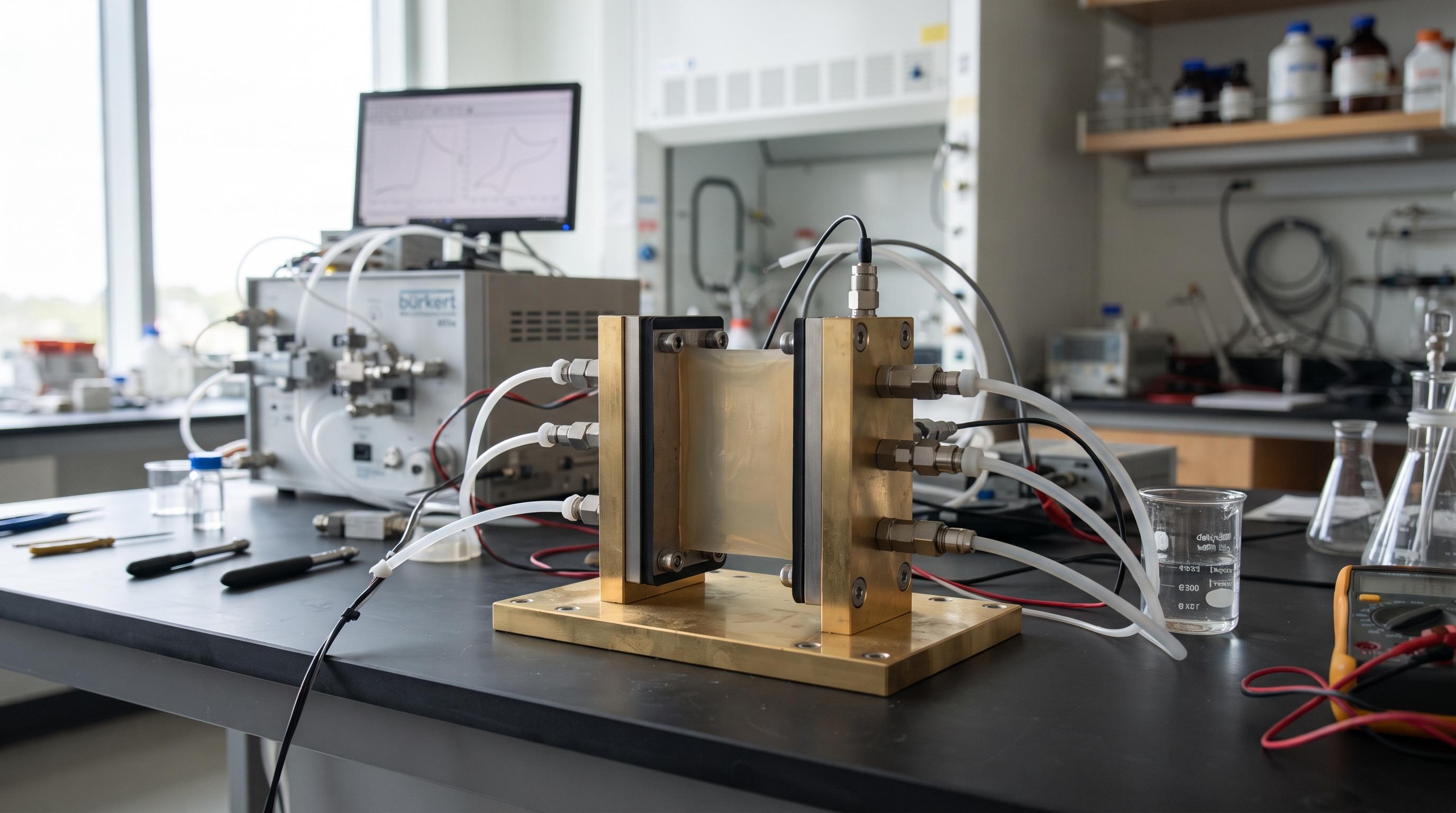
Nafion 117 is a widely studied proton exchange membrane used in electrochemical research and a variety of membrane-based applications. It belongs to the perfluorosulfonic acid family of ion exchange materials and is known for its ability to conduct protons while providing strong chemical stability. The membrane contains a fluorinated polymer backbone with sulfonic acid groups that support proton transport when the material is hydrated. Because of this combination of proton conductivity, chemical resistance, and mechanical stability, Nafion 117 has become a common material in fuel cell research, microbial electrochemical systems, electrolysis studies, sensors, and laboratory membrane experiments.
What Is Nafion 117?
Nafion 117 is a perfluorosulfonic acid polymer membrane that functions as a proton-conducting ion exchange membrane. Its structure combines a chemically resistant fluorinated backbone with side chains ending in sulfonic acid groups. These ionic groups interact with water and create pathways that allow protons to move through the membrane. Nafion 117 is generally supplied as an unreinforced membrane and is commonly identified by its equivalent weight and nominal thickness. Research literature commonly reports an equivalent weight around one thousand one hundred grams per equivalent and a dry thickness close to one hundred seventy five to one hundred eighty three micrometers, although measured values can vary with conditioning and test method.
Chemical Structure of Nafion 117
The chemical structure of Nafion 117 is based on a polytetrafluoroethylene-like fluorinated backbone with perfluoroether side chains that terminate in sulfonic acid groups. The fluorinated backbone provides high chemical resistance, while the sulfonic acid groups provide the ionic character needed for proton conduction. When the membrane absorbs water, the hydrophilic ionic regions form hydrated domains within the hydrophobic polymer structure. These domains provide pathways for proton movement, which explains why hydration has such an important effect on the electrochemical behavior of Nafion 117.
What Does Nafion 117 Do?
The primary function of Nafion 117 is to allow proton transport while acting as a barrier to many other species. In an electrochemical device, this selective ion transport can help separate different reaction environments while allowing protons to move between them. This property makes the membrane useful in proton exchange membrane fuel cells, microbial fuel cells, electrolysis research, and other electrochemical systems. Its function is not simply based on the polymer itself because the amount of water contained within the membrane strongly influences proton mobility and therefore affects overall membrane performance.
Proton Conductivity of Nafion 117
Proton conductivity is one of the most important properties of Nafion 117 because it determines how efficiently protons can move through the hydrated membrane. Reported conductivity values vary depending on temperature, humidity, hydration level, membrane conditioning, and measurement technique. Research literature reports substantial proton conductivity for hydrated Nafion 117, while conductivity can decrease significantly when the membrane becomes dry. This relationship between water content and conductivity is a major consideration when Nafion 117 is used in fuel cells and other proton-conducting systems.
Thickness of Nafion 117
Nafion 117 is generally recognized as a relatively thick unreinforced Nafion membrane compared with several thinner membrane grades. Literature commonly reports a dry thickness in the range of approximately one hundred seventy five to one hundred ninety micrometers, while commercial specifications can list a typical thickness around one hundred eighty three micrometers under defined conditions. The thickness affects mechanical strength, resistance to transport, water management, and the distance protons must travel through the membrane. Therefore, membrane thickness should be considered when comparing Nafion 117 with thinner Nafion materials for a particular electrochemical application.
Water Absorption and Hydration
Water plays a central role in the performance of Nafion 117 because proton transport occurs through hydrated ionic regions within the membrane. When the membrane absorbs water, the sulfonic acid groups become hydrated and proton mobility can increase. At the same time, hydration causes the membrane to swell, which can change its dimensions and physical properties. Research has reported measurable water swelling for Nafion 117, demonstrating why hydration conditions should be controlled when comparing experimental results. The membrane's water content can also change with temperature and surrounding humidity, making water management an important part of practical operation.
Nafion 117 in Fuel Cells
Nafion 117 has been widely used in fuel cell research because it can conduct protons while separating reactant environments. In a proton exchange membrane fuel cell, the membrane is positioned between the electrodes and helps transport protons from the anode side toward the cathode side while limiting direct mixing of the reactant gases. Its chemical stability and proton conductivity have made Nafion materials important in fuel cell development and laboratory research. The performance of a Nafion membrane in a fuel cell depends on hydration, temperature, electrode structure, gas conditions, membrane thickness, and other operating factors rather than on membrane conductivity alone.
Nafion 117 in Microbial Fuel Cells
Nafion 117 is also used in microbial fuel cell research because its proton exchange properties can help separate different chambers while permitting proton movement. Researchers have studied it as a cation exchange membrane and proton exchange membrane in microbial electrochemical systems. Its relatively strong chemical stability and established electrochemical behavior make it a useful reference material for laboratory investigations. However, membrane selection can influence ion transport, oxygen crossover, substrate movement, and overall cell performance, so Nafion 117 is not automatically the ideal choice for every microbial fuel cell design.
Nafion 117 in Electrolysis
Nafion membranes can also be used in electrochemical water splitting and related electrolysis research where proton transport is required. The membrane can provide ionic separation between different electrode environments while supporting proton movement. Nafion 117 may be selected for laboratory studies when its thickness, conductivity, chemical resistance, and physical properties fit the experimental design. Researchers must consider operating temperature, water content, electrode compatibility, gas crossover, and chemical environment when evaluating its suitability for electrolysis applications.
Nafion 117 for Electrochemical Research
Nafion 117 is frequently used as a research membrane because its properties are well documented and it provides a useful reference material for electrochemical experiments. Researchers can use it when studying proton transport, membrane resistance, ion exchange behavior, fuel cells, microbial electrochemical systems, sensors, and membrane modifications. Its established position in research also makes it useful for comparing new membrane materials against a commonly studied perfluorosulfonic acid membrane. Experimental results should still specify membrane conditioning and testing conditions because Nafion properties can change substantially with hydration and temperature.
Chemical Resistance of Nafion 117
The fluorinated structure of Nafion 117 contributes to its strong chemical resistance, which is one reason it is useful in demanding electrochemical environments. The fluorinated polymer backbone is chemically robust, while the sulfonic acid groups provide ion exchange functionality. However, strong chemical resistance does not mean that the membrane is compatible with every chemical or operating condition. Highly aggressive environments, unusual solvents, elevated temperatures, mechanical stress, and prolonged exposure to certain chemicals can affect membrane performance. Users should therefore evaluate compatibility according to the specific application rather than assuming universal chemical resistance.
Mechanical Properties of Nafion 117
Mechanical stability is another important characteristic of Nafion 117 because the membrane must maintain its structure while absorbing water and operating in an electrochemical environment. Published material data show that Nafion membrane properties can change between dry and hydrated conditions, including changes in tensile behavior and modulus. Hydration generally makes the membrane more flexible, while swelling changes its dimensions. These characteristics are important when the membrane is installed in a cell because mechanical stress, swelling, compression, and handling can influence its long-term condition.
Advantages of Nafion 117
Nafion 117 offers several characteristics that explain its continued use in electrochemical research. Its proton-conducting ability, chemical stability, established research history, and relatively robust membrane structure make it useful for many laboratory applications. Its thicker structure can also provide mechanical advantages compared with some thinner membranes, although thickness can increase transport resistance. Another advantage is the extensive scientific literature available on Nafion materials, which allows researchers to compare experimental behavior with previously reported results. These advantages make Nafion 117 a useful reference membrane for many electrochemical studies.
Limitations of Nafion 117
Although Nafion 117 has many useful properties, it also has limitations that should be considered before use. Its relatively high thickness can increase membrane resistance compared with thinner proton exchange membranes. Proton conductivity can also decrease when the membrane loses water, making hydration management important. Nafion materials can additionally allow transport of some unwanted species, meaning that proton selectivity does not represent perfect exclusion of all other molecules or ions. Cost, processing requirements, fluorinated chemistry, and performance under low-humidity conditions can also influence whether Nafion 117 is appropriate for a particular application.
Nafion 117 Compared With Other Nafion Membranes
Nafion 117 is one member of a broader family of Nafion membrane grades. Different grades can have different thicknesses while sharing related polymer chemistry and equivalent weight characteristics. Thinner membranes can reduce the distance for proton transport and may lower area resistance, while thicker membranes can provide greater physical robustness and may reduce certain forms of crossover. The appropriate membrane therefore depends on the balance between conductivity, mechanical stability, transport behavior, hydration, and application requirements. Nafion 117 is often selected when a relatively thick and well-established membrane is useful for the experimental design.
Preparation of Nafion 117 Before Use
Nafion 117 may require conditioning or pretreatment before it is used in an electrochemical experiment, depending on the application and the research protocol. Published experimental methods commonly involve cleaning the membrane, rinsing it thoroughly, and converting or maintaining it in the desired ionic form before testing. The exact procedure should be selected according to the experimental purpose and the membrane manufacturer's guidance. Pretreatment can remove manufacturing residues and establish a consistent hydrated or protonated state, but overly aggressive treatment can damage the material or alter its properties.
Handling and Storage of Nafion 117
Proper handling and storage can help preserve the condition of Nafion 117 before it is incorporated into an experimental system. The membrane should be protected from unnecessary contamination, sharp objects, excessive mechanical force, and unsuitable chemicals. Because hydration affects its dimensions and properties, researchers should also pay attention to whether the membrane is being stored dry or hydrated and maintain consistent conditions when reproducibility is important. Before use, the membrane should be inspected for visible defects, contamination, cracks, or other physical damage that could influence its performance.
Factors That Affect Nafion 117 Performance
Several factors can influence the performance of Nafion 117, including temperature, humidity, water content, membrane thickness, chemical environment, pressure, mechanical stress, and electrode configuration. Proton conductivity generally depends strongly on hydration, while membrane swelling can alter dimensions and mechanical behavior. Temperature can influence both transport and water management, and the surrounding chemical environment can affect the membrane over extended periods. Because these variables interact with one another, reliable experiments should control and report relevant operating conditions when evaluating Nafion 117.
Frequently Asked Questions About Nafion 117
What is Nafion 117 used for?
Nafion 117 is primarily used as a proton-conducting ion exchange membrane in electrochemical research and applications. It is commonly investigated in fuel cells, microbial fuel cells, electrolysis, sensors, membrane studies, and other systems where selective proton transport is required.
What type of membrane is Nafion 117?
Nafion 117 is a perfluorosulfonic acid ion exchange membrane with a fluorinated polymer backbone and sulfonic acid functional groups. Its structure provides chemical stability and enables proton transport when the membrane is sufficiently hydrated.
Why does Nafion 117 need water?
Water helps hydrate the sulfonic acid groups within Nafion and creates an environment that supports proton movement. When the membrane becomes dehydrated, proton conductivity can decrease substantially, which is why water management is important in many Nafion applications.
Is Nafion 117 suitable for fuel cells?
Nafion 117 has been widely used in fuel cell research because it can conduct protons and provide separation between electrochemical environments. Its suitability for a particular fuel cell depends on operating temperature, humidity, electrode design, reactants, membrane thickness, and other system requirements.
What makes Nafion 117 chemically stable?
The highly fluorinated polymer backbone contributes significantly to the chemical stability of Nafion materials. The fluorinated structure is resistant to many chemical environments while the sulfonic acid groups provide the ionic functionality needed for proton conduction.
Is Nafion 117 waterproof?
Nafion 117 is not best described as a conventional waterproof plastic because it is designed to absorb water and conduct protons through hydrated ionic regions. It can absorb and retain water, and its dimensions and properties change with hydration. Therefore, its relationship with water is fundamentally different from that of ordinary waterproof polymer materials.
Why is Nafion 117 widely used in research?
Nafion 117 is widely used because it combines proton conductivity, chemical stability, mechanical properties, and a long history of scientific investigation. Its well-established characteristics also make it useful as a reference material when researchers evaluate new ion exchange membranes.
How should Nafion 117 be stored?
Storage depends on the experimental requirements and the condition in which the membrane will be used. Researchers should protect it from contamination and physical damage while maintaining appropriate hydration or dry storage conditions according to their laboratory protocol and product guidance.
Conclusion
Nafion 117 is a well-established perfluorosulfonic acid membrane with important applications in electrochemical research and proton exchange systems. Its fluorinated backbone provides chemical stability, while its sulfonic acid groups and hydrated ionic regions enable proton transport. The membrane has been widely studied in fuel cells, microbial fuel cells, electrolysis, sensors, and other electrochemical applications. Its performance depends strongly on hydration, temperature, thickness, chemical environment, and experimental conditions. Although Nafion 117 has limitations such as relatively high thickness and sensitivity to water management, its established properties and extensive research history make it an important membrane for electrochemical studies. Understanding its structure, proton conductivity, handling requirements, strengths, and limitations can help researchers determine whether Nafion 117 is appropriate for their particular application.

 English
 Arabic
 French
 Spanish
 Portuguese
 Deutsch
 Turkish
 Dutch
Dutch
 Italiano
 Russian
 Romaian
 Portuguese (Brazil)
 Greek
Greek