


Beer Company in India: How Regional Markets Are Won
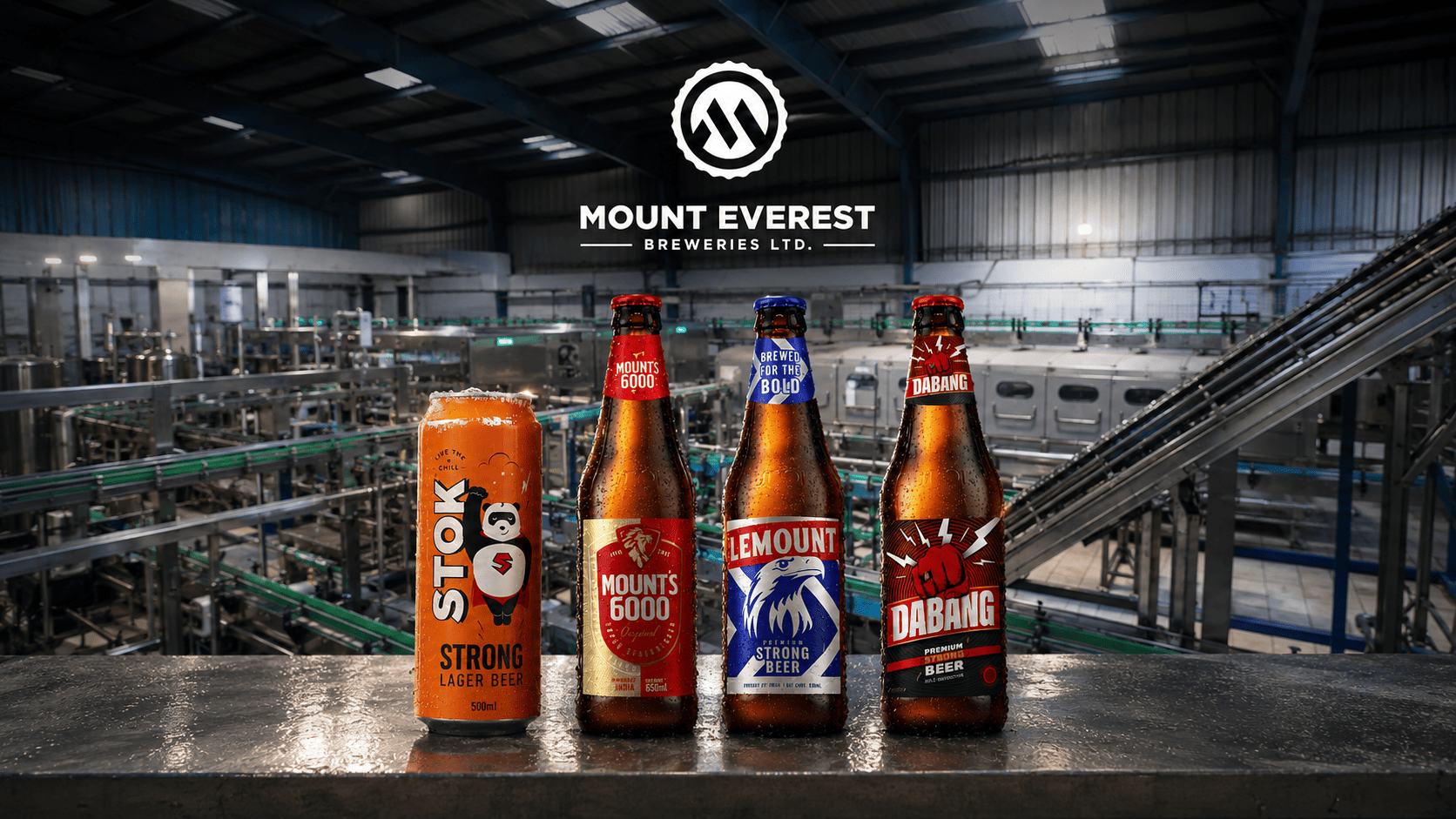
Every beer company in India runs 30 businesses, not one. Each state sets its own excise duty, pricing formula, and licence terms, so a brand that sells well in Karnataka may never reach a Uttar Pradesh shelf. Regional strategy, not national advertising, now decides who grows.
That matters more this year than last. The India beer market reached INR 477 billion in 2025 and is projected to grow at 6.45% annually through 2034. Growth is real, but it is unevenly distributed across states. This post covers who leads the market, how breweries enter new states, why smaller cities are opening up, and what licensing actually demands.
Which Is the Biggest Beer Company in India?
India's beer market is concentrated. The top five players hold roughly 85% of volume, with more than ten companies brewing commercially. Large macro-breweries account for 69% of the market, backed by multi-state plants and deep retail distribution.
Scale wins because beer is heavy, cheap per unit, and taxed at the state border. Shipping a case 400 km across two excise regimes destroys the margin. So the largest players build or lease plants inside each major consuming state.
How Market Share Actually Gets Measured
Share figures shift depending on the metric:
- Volume share favours mass-market strong beer brands sold in the 650 ml bottle.
- Value share favours premium and imported labels with thinner volumes.
- State share is the one operators watch, since a national number hides losing half the map.
Where the Challengers Are Winning
Newer players skip the national fight. They pick three or four contiguous states, secure capacity there, and build depth before widening. That approach needs less capital and fewer licences at once.
How Do Beer Companies Expand Into New Indian States?
Expansion follows a fixed sequence: study the state excise policy, secure brewing capacity, register labels, get price approval, then appoint distribution. Skipping a step stalls the launch by a full excise year, because most states renew policies annually in March or April.
Capacity comes three ways. A company builds its own plant, buys one, or signs a contract brewing deal with an existing licensee. Contract brewing is fastest and is how most brands test a new state before committing capital.
Why Excise Policy Decides Everything
Policy shifts move investment quickly. Uttar Pradesh's 2026–27 excise policy prompted brewers to pledge close to INR 55 billion over three years, with the Brewers Association of India citing clarity on licensing and taxation as the trigger.
Karnataka went further, becoming the first state to tax by alcohol content rather than volume under an Alcohol-in-Beverage model. Beer gets cheaper relative to spirits, which favours brewers directly.
The Cost of Getting It Wrong
Label registration fees, brand fees, and minimum guaranteed offtake are non-refundable in most states. A beer company in India that misreads demand pays for shelf space it never uses.
Why Is Craft Beer Growing in India's Smaller Cities?
Craft is growing outside metros because licensing eased and rent is lower. Maharashtra, Karnataka, and Telangana have all relaxed microbrewery norms, while brewpubs now open in cities with no prior craft scene. A taproom in a tier-2 city needs a fraction of the capital a Bengaluru site demands.
Ingredients are localising too. Mango, kokum, cardamom, millet, and tamarind appear regularly in Indian brewpub taps a shift that independent brewers documenting regional palate preferences have tracked closely over the past three years.
The Tier-2 Economics
- Setup runs roughly INR 1–2.5 crore for equipment, permits, and launch (Source: Restroworks, 2025).
- Kegs and growlers carry volume where bottling capacity does not exist.
- One brewpub can anchor a local market with no competing taps.
The Demographic Push
Over 50% of India's population is under 30. Younger drinkers experiment more and trade up faster, which suits small-batch brewing.
What Licences Does a Beer Company in India Need?
A brewery needs a state excise manufacturing licence, an FSSAI food licence, pollution control board consent, factory registration, and separate label registration for every SKU in every state. Brewpubs add a microbrewery licence and an on-premise service licence. None transfer across state lines.
Timelines run six to eighteen months depending on the state. Water source approval and effluent treatment clearance are the usual bottlenecks.
Conclusion
The Indian beer market is growing, but growth is a state-by-state contest. A beer company in India succeeds by matching capacity, pricing, and product to each excise regime rather than by broadcasting one national message. Karnataka's tax reform and Uttar Pradesh's policy overhaul show how fast a single state decision can redirect billions in capital.
The interesting question is what happens when three or four large states adopt alcohol-content taxation together. Does beer finally close the price gap with spirits, or does the patchwork simply redraw itself along new lines?

 English
 Arabic
 French
 Spanish
 Portuguese
 Turkish
 Dutch
Dutch
 Italiano
 Russian
 Romaian
 Portuguese (Brazil)
 Greek
Greek
 ไทย
ไทย