


Portopulmonary Hypertension: Understanding a Rare Complication of Liver Disease
Introduction
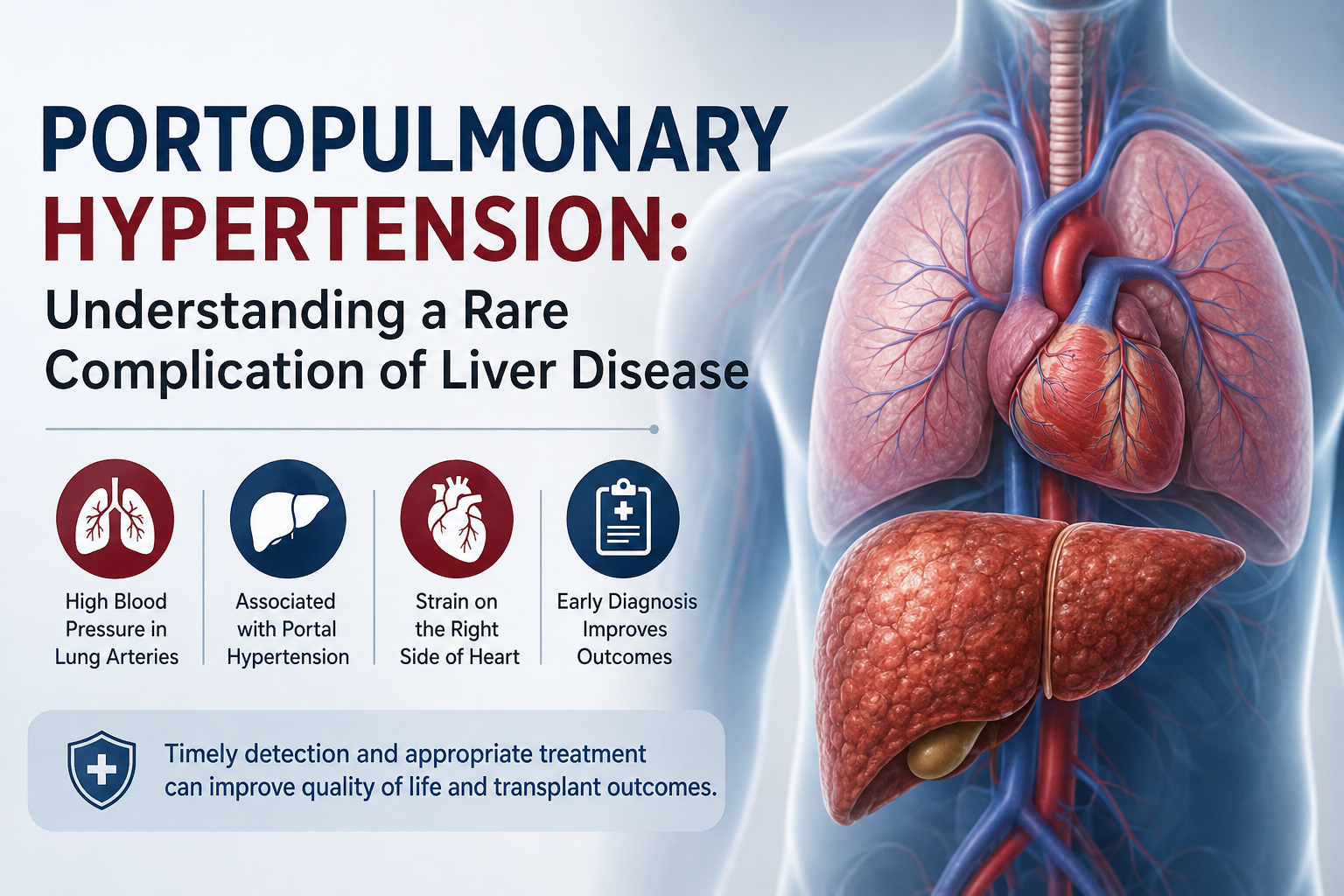
Liver disease can affect much more than the liver. In some people with portal hypertension, increased pressure in the blood vessels around the liver can also affect the lungs and heart. One uncommon but serious condition that can develop is portopulmonary hypertension (PoPH).
Although it is considered rare, recognizing PoPH is important because it can influence a person's health, treatment options, and suitability for liver transplantation. So, what exactly is portopulmonary hypertension, and why does liver disease sometimes lead to problems in the lungs?
This guide explains the condition in simple language, including its causes, warning signs, diagnosis, treatment, and frequently asked questions.
Understand portopulmonary hypertension, a rare liver disease complication, with insights into symptoms, diagnosis, treatment, causes, and liver transplantation risks.
What Is Portopulmonary Hypertension?
Portopulmonary hypertension is a type of pulmonary arterial hypertension that occurs in people who have portal hypertension, usually related to chronic liver disease.
Pulmonary hypertension means that the pressure in the blood vessels carrying blood from the heart to the lungs becomes abnormally high. When this happens in association with portal hypertension, it is called portopulmonary hypertension.
Think of your blood vessels as a network of roads. Normally, blood travels through these roads smoothly. If the vessels supplying the lungs become narrowed or resistant, the heart has to work harder to push blood forward.
Over time, this extra workload can strain the right side of the heart.
PoPH can occur in people with cirrhosis, portal hypertension without cirrhosis, and certain other liver conditions. Importantly, not everyone with liver disease or portal hypertension develops portopulmonary hypertension.
How Is Portopulmonary Hypertension Connected to Liver Disease?
To understand the connection, it helps to understand portal hypertension.
The portal vein carries blood from organs such as the intestines and spleen to the liver. When blood has difficulty passing through a damaged or scarred liver, pressure can build up in this system. This is known as portal hypertension.
The exact reason some people with portal hypertension develop PoPH is not completely understood. Researchers believe that changes in blood flow, blood vessel function, inflammation, and other biological processes may contribute.
The important point is that portal hypertension can be associated with changes in the pulmonary blood vessels.
As these vessels become narrower or more resistant to blood flow, pressure inside them can rise. The heart then needs to pump harder to move blood through the lungs.
What Causes Portopulmonary Hypertension?
There is no single cause responsible for every case.
Chronic liver disease and portal hypertension are the major underlying conditions associated with PoPH. However, researchers believe several mechanisms may contribute to its development.
Some possible factors include:
- Increased blood flow through the lungs
- Changes in pulmonary blood vessel function
- Inflammatory processes
- Abnormal regulation of blood vessel widening and narrowing
- Changes associated with portal hypertension
- Genetic or individual susceptibility
PoPH is different from pulmonary hypertension caused by left-sided heart disease or chronic lung disease. This distinction matters because treatment depends on the underlying cause.
Who Is at Risk?
People with portal hypertension are the primary group at risk.
PoPH may occur in people with:
- Cirrhosis
- Chronic hepatitis-related liver disease
- Autoimmune liver diseases
- Cholestatic liver diseases
- Portal vein disorders
- Other causes of portal hypertension
However, having one of these conditions does not mean that PoPH will definitely develop.
People being evaluated for liver transplantation may receive additional heart and lung assessments because undiagnosed pulmonary hypertension can create significant risks during major surgery.
Symptoms of Portopulmonary Hypertension
One of the challenges is that early PoPH may cause few or nonspecific symptoms.
When symptoms develop, they may include:
- Shortness of breath, particularly during physical activity
- Fatigue
- Reduced exercise tolerance
- Chest discomfort
- Dizziness
- Fainting or near-fainting
- Rapid heartbeat
- Swelling in the legs or ankles
Some of these symptoms can also occur with advanced liver disease itself.
For example, a person with cirrhosis may already experience fatigue, weakness, or reduced physical capacity. This can make it difficult to recognize that a separate heart-lung problem is developing.
That's why persistent or worsening breathlessness should not simply be assumed to be part of liver disease.
How Is Portopulmonary Hypertension Diagnosed?
Diagnosis usually involves several steps.
A doctor may begin with your medical history and physical examination. They may ask about breathlessness, chest symptoms, exercise capacity, liver disease, previous heart problems, and other health conditions.
Testing may include:
1. Echocardiogram
An echocardiogram uses ultrasound to create images of the heart. It can help doctors estimate pulmonary artery pressure and assess how well the right side of the heart is functioning.
2. Electrocardiogram
An ECG records the heart's electrical activity. It may provide clues about heart strain or rhythm abnormalities.
3. Chest Imaging
A chest X-ray or other imaging may help doctors evaluate the heart and lungs and rule out alternative explanations for symptoms.
4. Blood Tests
Blood tests can help assess liver function and look for other conditions that might contribute to breathlessness or heart problems.
5. Right Heart Catheterization
This is an important test when pulmonary hypertension is suspected because it directly measures pressures inside the heart and pulmonary circulation.
A diagnosis of pulmonary hypertension should not be made solely from symptoms or an echocardiogram.
Understanding the Role of Echocardiography
An echocardiogram is often an important screening tool.
During the test, sound waves create moving images of the heart. Doctors can evaluate:
- The size and function of the right ventricle
- Heart chamber structure
- Heart valve function
- Blood flow
- Signs suggesting elevated pressure in the pulmonary circulation
For people with advanced liver disease who are being assessed for transplantation, echocardiography can help identify individuals who may need additional evaluation.
However, an echocardiogram does not provide the same direct measurements as right heart catheterization.
If the results raise concern, your medical team may recommend further testing.
Right Heart Catheterization and Confirming the Diagnosis
Right heart catheterization is the definitive test used to measure pressures within the right side of the heart and pulmonary circulation.
During this procedure, a thin catheter is carefully guided through a blood vessel toward the heart. Specialized measurements are then taken.
The test can measure parameters such as:
- Mean pulmonary artery pressure
- Pulmonary artery wedge pressure
- Cardiac output
- Pulmonary vascular resistance
These measurements help doctors determine whether pulmonary hypertension is present and identify its type.
This distinction is particularly important in people with liver disease because breathlessness can have many causes, including anemia, fluid accumulation, heart disease, lung disease, infection, or other complications.
Treatment Options for Portopulmonary Hypertension
Treatment is individualized according to the severity of pulmonary hypertension, liver function, heart function, and other medical factors.
The main goals are to reduce pressure in the pulmonary circulation, improve symptoms, protect the right side of the heart, and make treatment safer when liver transplantation is being considered.
Depending on the situation, specialists may use medications from pulmonary arterial hypertension treatment groups.
These may include medicines that affect pathways involved in pulmonary blood vessel narrowing and relaxation, such as:
- Endothelin receptor antagonists
- Phosphodiesterase-5 inhibitors
- Prostacyclin-based therapies
- Soluble guanylate cyclase stimulators
The exact medication, dose, and combination should be determined by a specialist.
People with significant liver disease require particularly careful medical supervision because some medications may need adjustments based on liver function, blood pressure, interactions, and other health conditions.
Supportive Care
Treatment may also involve managing associated problems.
Depending on the individual, doctors may address:
- Fluid retention
- Low oxygen levels
- Anemia
- Heart rhythm problems
- Other complications of liver disease
Patients should not start or stop pulmonary hypertension medications without medical guidance.
Portopulmonary Hypertension and Liver Transplantation
This is one of the most important aspects of PoPH.
For some people with advanced liver disease, liver transplantation may provide the best long-term treatment for the underlying liver problem. However, significant pulmonary hypertension can increase the risks associated with transplantation.
Why?
During liver transplantation, the cardiovascular system undergoes major changes. If the right side of the heart is already struggling against high pressure in the pulmonary arteries, the heart may have difficulty coping with these changes.
Therefore, people being evaluated for transplantation may undergo cardiovascular and pulmonary assessment.
Can Patients With PoPH Receive a Liver Transplant?
In some cases, yes.
The presence of PoPH does not automatically mean that liver transplantation is impossible.
A major objective is to determine whether pulmonary pressures and heart function can be brought into a safer range before transplantation.
Pulmonary hypertension specialists, hepatologists, cardiologists, anesthesiologists, and transplant teams may work together to determine the safest approach.
This is why early recognition can be so valuable.
Can Portopulmonary Hypertension Be Prevented?
There is currently no guaranteed way to prevent PoPH.
However, managing the underlying liver condition and portal hypertension is important for overall health.
You can support liver health by:
- Following your liver specialist's treatment plan
- Avoiding alcohol if your doctor recommends abstinence
- Maintaining a healthy weight
- Eating a balanced diet
- Staying physically active according to your medical condition
- Taking prescribed medications correctly
- Keeping regular liver follow-up appointments
- Managing diabetes, cholesterol, and blood pressure when applicable
People with significant liver disease should also discuss any supplements or non-prescription medicines with their healthcare provider because some can affect the liver or interact with prescribed treatments.
Prevention is not simply about avoiding one particular cause. It is about protecting liver, heart, and lung health together.
When Should You See a Doctor?
If you have chronic liver disease or portal hypertension and develop new or worsening shortness of breath, talk with your healthcare provider.
You should seek urgent medical attention for severe symptoms such as:
- Severe difficulty breathing
- Fainting
- Severe or persistent chest pain
- Blue or gray lips or skin
- Sudden severe weakness
- Rapid deterioration of your condition
These symptoms can have many possible causes and should be evaluated promptly.
For people with liver disease, unexplained breathlessness deserves attention because it may reflect a heart, lung, blood, or liver-related complication.
Living With Portopulmonary Hypertension
A diagnosis of PoPH can understandably feel frightening. But remember: the condition can be evaluated and treated, and management has improved considerably over time.
Your care may involve several specialists rather than one doctor alone.
It can help to:
Keep track of symptoms. Note changes in breathlessness, fatigue, dizziness, swelling, or exercise tolerance.
Take medications consistently. Pulmonary hypertension medicines often require careful, ongoing use.
Attend scheduled appointments. Your doctors may monitor heart function, pulmonary pressures, oxygen levels, and liver health.
Ask before exercising intensely. Physical activity can be beneficial, but the appropriate level depends on your heart and lung condition.
Discuss transplantation early if appropriate. If advanced liver disease is present, timely assessment can help the transplant team understand your cardiovascular risk.
Most importantly, don't ignore changes in your breathing or physical ability.
Conclusion
Portopulmonary hypertension is a rare but potentially serious complication associated with portal hypertension and liver disease. It affects the blood vessels of the lungs and can place additional strain on the right side of the heart.
Because symptoms may overlap with those of advanced liver disease, diagnosis can sometimes be challenging. Echocardiography and other tests can raise suspicion, while right heart catheterization provides important direct measurements for confirming and characterizing pulmonary hypertension.
Treatment aims to control pulmonary pressures, protect heart function, improve quality of life, and, when appropriate, help make liver transplantation safer. If you have liver disease and experience unexplained or worsening breathlessness, discussing it with your healthcare team is an important step.
Frequently Asked Questions
1. What is portopulmonary hypertension?
Portopulmonary hypertension is pulmonary arterial hypertension that occurs in association with portal hypertension. It can develop in people with chronic liver disease and may increase the workload on the right side of the heart.
2. Is portopulmonary hypertension the same as pulmonary hypertension?
Not exactly. Portopulmonary hypertension is a specific form of pulmonary hypertension associated with portal hypertension. Pulmonary hypertension can have many other causes, so doctors need appropriate testing to determine the underlying type.
3. Can portopulmonary hypertension be treated?
Yes. Treatment may include medications specifically designed to lower pulmonary vascular resistance and improve blood flow through the lungs. The treatment plan depends on disease severity, liver function, heart function, and other individual factors.
4. Can someone with portopulmonary hypertension have a liver transplant?
Some patients can undergo liver transplantation, particularly when pulmonary hypertension is appropriately evaluated and treated. However, significant uncontrolled pulmonary hypertension can increase transplant risk, so careful assessment by a specialized transplant team is essential.
5. What symptoms should a person with liver disease watch for?
Important symptoms include new or worsening shortness of breath, reduced exercise tolerance, chest discomfort, dizziness, fainting, rapid heartbeat, and swelling of the legs or ankles. Severe breathing difficulty or fainting requires urgent medical evaluation.

 English
 Arabic
 French
 Spanish
 Portuguese
 Deutsch
 Turkish
 Dutch
Dutch
 Russian
 Romaian
 Portuguese (Brazil)
 Greek
Greek
 ไทย
ไทย