


Building a Strong Apparel Brand With the Right Leather Manufacturer
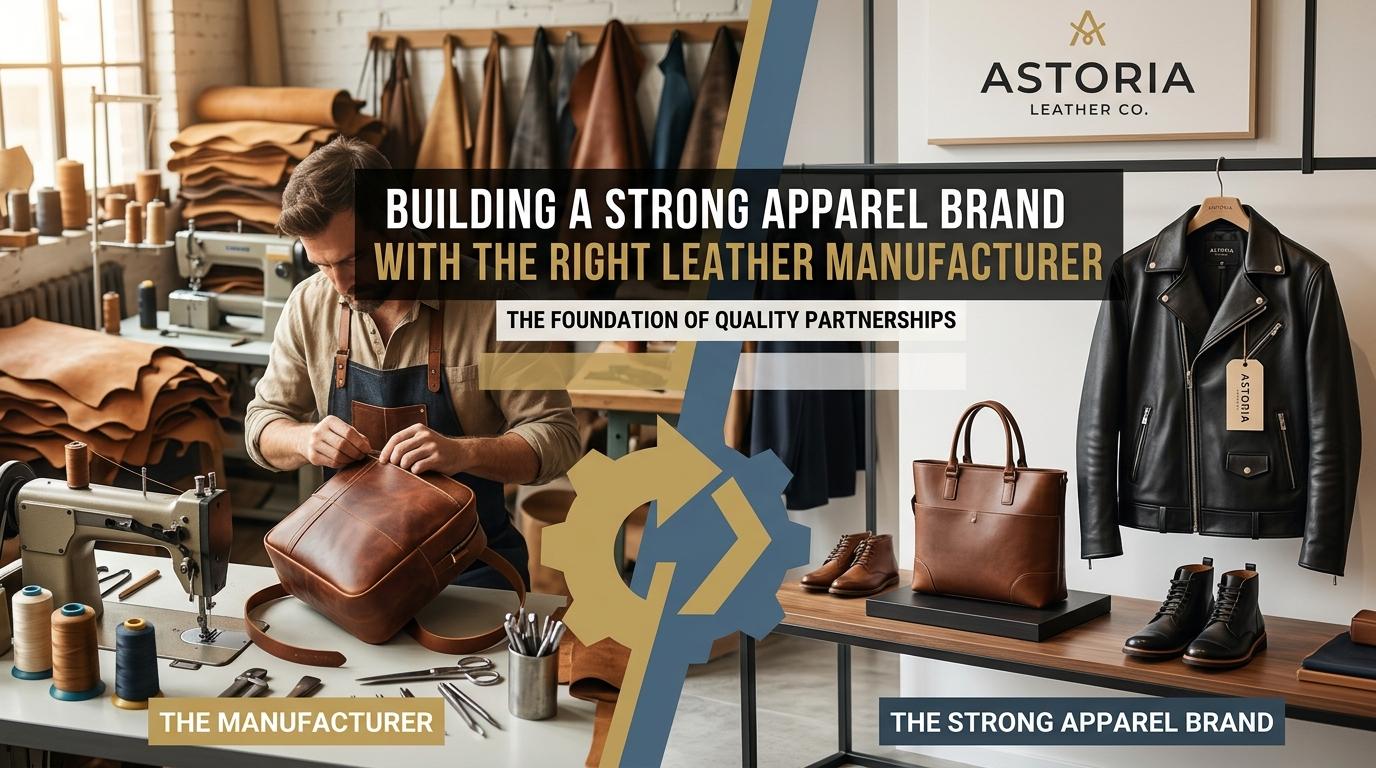
Building a memorable apparel brand takes far more than a compelling logo, attractive designs, or an effective marketing campaign. Behind every successful fashion label is a dependable manufacturing operation capable of turning creative concepts into consistent, commercially viable products. For brands that want to move beyond basic garments and create a broader lifestyle identity, leather manufacturing can become an especially valuable part of that strategy.
Leather goods can add sophistication, durability, and practical value to an apparel collection. A well-designed leather bag, wallet, or garment can reinforce the visual language of a brand while creating additional revenue opportunities. However, those advantages depend heavily on choosing the right manufacturing partner. Leather production involves material selection, cutting precision, stitching, hardware installation, edge finishing, quality control, and careful handling throughout production.
The right manufacturer therefore becomes more than a supplier. It can serve as an extension of your product development team, helping your brand translate its aesthetic into products customers can use and appreciate for years.
Why Leather Manufacturing Matters to Modern Apparel Brands
Apparel brands operate in an increasingly crowded market. Customers have countless options, and visual differentiation alone is rarely enough to sustain long-term loyalty. Product quality, functionality, material authenticity, and consistency increasingly influence whether customers return to a brand.
Leather products can address several of these priorities simultaneously. Unlike many trend-driven accessories, well-made leather goods can have a timeless quality that allows them to remain relevant across multiple collections. They can also complement apparel without creating the same sizing complexity associated with garments.
For example, an apparel company specializing in premium outerwear could introduce leather accessories that reflect the same colors, textures, and design details. A contemporary streetwear label might develop minimalist leather wallets or compact bags. A heritage-inspired brand could use traditional leather construction to reinforce its emphasis on craftsmanship.
This creates a connected product ecosystem rather than a collection of unrelated items.
Choosing the Right Leather Manufacturer
Not every manufacturing facility has the same capabilities. Before entering a production relationship, apparel brands should evaluate whether a prospective supplier understands leather as a material and can consistently reproduce the intended design.
A strong manufacturing partner should demonstrate competence across several areas:
- Material knowledge: Understanding different leather types, thicknesses, finishes, grain characteristics, and durability requirements.
- Construction expertise: Accurate cutting, stitching, reinforcement, lining, edge finishing, and hardware installation.
- Sampling capabilities: The ability to create prototypes that accurately represent the final product before bulk production begins.
- Quality assurance: Consistent inspection procedures for materials, dimensions, stitching, color, hardware, and finishing.
- Production scalability: Capacity to support both initial orders and larger quantities as demand increases.
- Customization: Flexibility around branding, dimensions, colors, components, packaging, and other product specifications.
The goal is not simply to find a factory that can produce leather products. It is to find a partner whose manufacturing standards match the expectations associated with your brand.
Product Development Should Start With the Brand Identity
One common mistake is beginning leather accessory development by asking what products are currently popular. A stronger approach starts with the brand itself.
Consider your existing customer, price positioning, visual identity, and product philosophy. If your apparel collection emphasizes understated luxury, an oversized logo-covered accessory may feel disconnected. If your brand is built around rugged outdoor performance, delicate fashion-oriented construction may not communicate the right message.
Product development should therefore answer a simple question: What leather products naturally belong in this brand's world?
From there, designers and manufacturers can work together on dimensions, construction, material specifications, colors, closures, lining, and branding details. This process helps ensure that new accessories feel like logical extensions of the existing collection.
Expanding Into Leather Bags
Bags are among the most versatile categories for an apparel brand seeking to expand beyond clothing. They can serve functional needs while also providing a large visual surface for communicating brand identity.
A travel-focused clothing company, for example, might develop leather duffle bags that coordinate with its outerwear and footwear collections. Brands targeting professionals could explore structured work bags, while lifestyle labels may benefit from casual crossbody designs.
For companies seeking ready-to-scale accessory categories, exploring wholesale Leather duffle bags can provide a starting point for evaluating shapes, construction approaches, and merchandising possibilities.
When developing bags, however, aesthetics should never replace functionality. Handle attachment points need sufficient reinforcement. Zippers should operate smoothly. Seams must tolerate repeated loading, and the base should resist premature abrasion. Interior compartments should also reflect how the intended customer will actually use the product.
Creating a Cohesive Leather Accessory Collection
A single leather accessory can strengthen a collection, but a coordinated range can create a much stronger commercial effect. Brands can develop complementary products that share materials, hardware finishes, colors, stitching patterns, and logo treatments.
For example, a collection might include:
- A signature everyday purse.
- A matching wallet or card holder.
- A travel-oriented duffle bag.
- A compact crossbody accessory.
- A premium belt or small leather accessory.
These products can be sold independently while also supporting cross-selling. A customer purchasing a jacket may later purchase a matching bag. Someone initially attracted to a wallet may discover the apparel collection through the accessory.
This interconnected approach can increase customer lifetime value because the brand becomes part of more areas of the customer's lifestyle.
The Opportunity in Custom Leather Purses
Purses can be particularly valuable for brands targeting fashion-conscious consumers because they combine practicality with strong visual appeal. Their design offers numerous opportunities for differentiation through silhouette, hardware, texture, color, compartments, handles, and closures.
Customization becomes especially important when the goal is to establish a distinctive brand signature. Rather than simply placing a logo onto an existing generic design, brands can develop recognizable proportions and construction details that customers associate with the label.
Working with suppliers that offer custom Leather purses wholesale can support this strategy by giving brands a pathway toward coordinated production while maintaining a consistent product concept.
Before committing to bulk quantities, brands should carefully review prototypes. Pay attention to the feel of the leather, color consistency, stitching alignment, hardware quality, edge treatment, interior finishing, and overall structure. A sample should be treated as a commercial product evaluation rather than simply a visual preview.
Why Small Leather Goods Can Strengthen a Brand
Small leather goods are another useful category because they typically require less material than larger accessories and can be easier for customers to purchase as entry-level products. A wallet, card holder, or compact organizer can introduce a new customer to a brand without requiring the higher spending associated with a full apparel outfit.
These products also make effective gifting items. Their relatively compact size can simplify storage, merchandising, shipping, and fulfillment compared with larger leather products.
For brands planning volume accessory programs, bulk leather wallets can fit naturally into promotional campaigns, seasonal launches, corporate gifting programs, and broader lifestyle collections.
However, small products still require meticulous manufacturing. A wallet with uneven stitching, poorly finished edges, loose card slots, or weak closures can undermine perceptions of quality. Because small leather goods often contain fewer design elements, customers may notice manufacturing flaws more easily.
Quality Control Is a Brand Protection Strategy
Quality control should not be viewed merely as a factory responsibility. It is a direct form of brand protection. Customers rarely distinguish between a manufacturing defect and a failure by the brand itself. If an item arrives with broken hardware, inconsistent stitching, damaged leather, or incorrect dimensions, the customer remembers the company that sold it.
A structured inspection process should therefore be established before bulk manufacturing begins.
| Quality Area | What to Inspect | Why It Matters |
|---|---|---|
| Leather | Color, grain, thickness, finish, and visible defects | Maintains consistency and supports the intended premium appearance |
| Stitching | Spacing, tension, alignment, and loose threads | Influences both durability and visual craftsmanship |
| Hardware | Zippers, buckles, snaps, rings, and attachments | Prevents functional failures and premature wear |
| Dimensions | Length, width, depth, pocket placement, and strap measurements | Ensures every production unit matches approved specifications |
| Finishing | Edges, lining, branding, and surface treatment | Creates the polished final presentation expected by customers |
Brands should document acceptable tolerances and establish a process for handling defects before production begins. This eliminates ambiguity when inspection results do not match expectations.
From Prototype to Bulk Production
Moving from a design sketch to a finished leather product requires a disciplined development process. Rushing this stage can create costly problems later, particularly when hundreds or thousands of units are involved.
- Define the product brief. Document the intended customer, dimensions, materials, target price, functional requirements, and visual direction.
- Create detailed specifications. Provide drawings, measurements, leather requirements, hardware details, stitching specifications, branding instructions, and packaging expectations.
- Develop the prototype. Have the manufacturer produce an initial sample for physical evaluation.
- Conduct functional testing. Check closures, handles, straps, pockets, seams, load-bearing areas, and overall usability.
- Revise the design. Resolve construction or aesthetic issues before approving the final sample.
- Approve the production standard. Retain an approved reference sample and written specifications for bulk manufacturing.
- Inspect production. Conduct quality checks throughout the manufacturing cycle rather than waiting until finished goods are shipped.
This structured process gives both the brand and manufacturer a shared definition of what a finished product should be.
How the Right Partner Supports Apparel Brand Growth
Manufacturing decisions become increasingly important as an apparel company grows. A supplier that works well for a small pilot order may not necessarily have the infrastructure required for rapid expansion. Conversely, an experienced production partner can help a growing brand transition from limited releases to repeatable commercial production.
For brands developing a broader leather category, it can be useful to work with established leather clothing manufacturers that understand the relationship between apparel construction and leather product development. This can simplify communication when a brand's collection includes multiple product categories.
Centralizing related manufacturing capabilities can also improve consistency. Instead of managing completely separate suppliers for every accessory and garment, brands may be able to establish more unified standards for materials, branding, packaging, quality, and production communication.
Balancing Cost, Quality, and Scalability
Price is an important manufacturing consideration, but the lowest quoted unit cost does not necessarily represent the strongest commercial option. Brands should evaluate the complete cost structure, including sampling, tooling, material waste, quality defects, rework, freight, packaging, minimum order quantities, and potential delays.
A manufacturer offering a slightly higher unit price may ultimately create greater value if its production consistency reduces returns and defective inventory.
When comparing suppliers, consider:
- Minimum order quantities and volume pricing.
- Material sourcing and leather quality.
- Sampling and development fees.
- Production lead times.
- Customization capabilities.
- Quality inspection procedures.
- Communication and project management.
- Capacity for future reorders.
- Packaging and labeling support.
The best supplier is one that provides an economically sustainable path from first sample through long-term production.
Building a Long-Term Manufacturing Relationship
The strongest apparel brands do not treat manufacturers as interchangeable vendors. They develop working relationships based on clear expectations, feedback, transparency, and continuous improvement.
Communication is particularly important when products involve specialized materials. Leather can vary naturally in grain and appearance, so both sides should establish realistic standards for acceptable variation. At the same time, measurable requirements should govern dimensions, stitching, hardware, color targets, and construction.
Regular production reviews can also reveal opportunities for improvement. A manufacturer may identify a construction method that reduces material waste, strengthens a stress point, simplifies assembly, or improves consistency. These improvements can become valuable competitive advantages when repeated across large production runs.
Turning Leather Products Into a Stronger Brand Story
Leather is not only a manufacturing material; it can also become part of a brand's storytelling strategy. Customers increasingly want to understand the thinking behind the products they purchase. Design choices, material characteristics, craftsmanship, functionality, and longevity can all contribute to a stronger narrative.
The key is authenticity. Marketing claims should accurately reflect the product and manufacturing process. A brand that emphasizes craftsmanship should ensure that craftsmanship is visible in the finished product. A company positioning itself around durability should select materials and construction techniques capable of supporting that promise.
When product development, manufacturing quality, and brand messaging reinforce one another, customers receive a much clearer reason to trust the label.
Frequently Asked Questions (FAQs)
What should an apparel brand look for in a leather manufacturer?
Look for proven leatherworking expertise, reliable quality control, strong sampling capabilities, customization options, clear communication, appropriate production capacity, and the ability to maintain consistent standards as order volumes grow.
Why should an apparel company add leather accessories?
Leather accessories can diversify revenue, complement apparel collections, create cross-selling opportunities, and give customers products that are not dependent on garment sizing. Bags and small leather goods can also provide additional entry points into the brand.
How important is sampling before bulk production?
Sampling is essential. It allows brands to evaluate construction, materials, proportions, functionality, finishing, and branding before committing significant capital to inventory. Any major issues should be resolved at the sample stage.
Can leather accessories strengthen brand identity?
Yes. Consistent materials, colors, hardware, silhouettes, stitching details, and branding can make accessories feel like natural extensions of an apparel collection. Over time, distinctive product details can become recognizable elements of the brand.
What is the biggest manufacturing mistake brands should avoid?
One of the most costly mistakes is approving production without sufficiently detailed specifications and a thoroughly tested reference sample. Clear documentation and pre-production evaluation reduce misunderstandings and quality problems during bulk manufacturing.
Build a Stronger Apparel Brand With the Right Manufacturing Partner
A successful apparel brand needs more than creative products. It needs a manufacturing foundation capable of delivering those products consistently, protecting quality, supporting new categories, and scaling alongside demand.
Leather can be a powerful addition to that foundation when it is approached strategically. From bags and purses to wallets and complementary apparel pieces, well-made leather products can expand a brand's commercial reach while reinforcing its identity and perceived value.
The right manufacturing relationship makes that expansion far more manageable. By prioritizing material expertise, customization, quality assurance, communication, and scalable production, brands can create leather collections that feel intentional rather than simply added on.
If your goal is to build an apparel business with a distinctive product ecosystem and dependable production capabilities, now is the time to evaluate manufacturers based on long-term value rather than unit price alone. Choose a partner capable of turning your product vision into consistently finished goods, then use that manufacturing strength to create a brand customers can recognize, trust, and return to.

 English
 Arabic
 French
 Spanish
 Portuguese
 Deutsch
 Turkish
 Dutch
Dutch
 Italiano
 Russian
 Romaian
 Greek
Greek
 ไทย
ไทย