


Why Does Stretch Matter in Seamless Yoga Sets? YogasuitFactory Explains
Can Seamless Yoga Sets Provide Enough Stretch for High-Intensity Workouts?
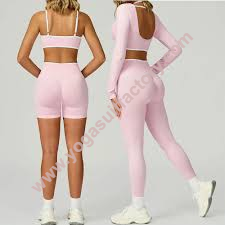
High-intensity workouts place continuous demands on sportswear because the body may move through deep bends, rapid transitions, extended positions, and repeated exercises within one session. Garments need to accommodate these movements without creating unnecessary restriction around the waist, hips, shoulders, thighs, or knees.Seamless Yoga Sets are designed around flexible fabric construction and body-conscious shaping, making them an interesting option for active users who combine yoga, strength training, stretching, fitness routines, and other dynamic activities. YogasuitFactory focuses on sportswear manufacturing and product development, but can this type of construction provide sufficient stretch when exercise becomes demanding?
Stretch performance begins with fabric selection. A suitable textile needs to extend with body movement while retaining a comfortable relationship with the skin. Fiber composition, knitting structure, fabric weight, recovery characteristics, and finishing treatment can all influence how a garment behaves during exercise. When these elements are coordinated properly, sportswear can move with the wearer rather than constantly requiring adjustment.
Elasticity is especially important during movements that involve the hips and legs. Squats, lunges, stretches, leg lifts, and transitional exercises can cause fabric to extend in several directions simultaneously. If the material has limited flexibility, the garment may feel restrictive when the wearer reaches a deeper position. A fabric with appropriate multidirectional stretch can accommodate these changes while maintaining its general shape.
Garment construction also affects freedom of movement. Traditional clothing may contain numerous seams placed across areas that experience frequent bending or stretching. A seamless construction can reduce the presence of certain joining points and create a smoother contact surface against the body. This does not mean that every seamless garment automatically provides unlimited flexibility, because fabric engineering and pattern design remain important, but thoughtful construction can contribute to a comfortable movement experience.
Recovery is another factor that deserves attention. A fabric may stretch easily, yet insufficient recovery can cause the garment to lose its original shape after repeated movement. Good recovery allows the textile to extend during exercise and return toward its intended dimensions afterward. This characteristic is useful for activewear because training sessions often involve repeated cycles of stretching, compression, and relaxation.
Waistband design can also influence perceived flexibility. During squats, forward folds, twists, and floor-based exercises, the waist area needs to remain secure without producing excessive pressure. A carefully developed waistband can help maintain garment positioning while allowing the torso to move naturally. Similar consideration applies to leg openings, shoulder areas, armholes, and other zones where movement occurs frequently.
Breathability should be considered alongside elasticity. High-intensity exercise can produce significant body heat, especially when training takes place indoors or during warm weather. Fabric construction that permits suitable air exchange can contribute to a more comfortable wearing environment. Moisture management is also relevant because perspiration can affect the feel and weight of sportswear during extended activity.
The relationship between compression and stretch requires careful consideration as well. Some users prefer a closer fit because it can provide a secure feeling during movement, while others favor a lighter construction with less pressure. A suitable garment should correspond with the activity and personal preference rather than applying excessive compression simply to create a close-fitting appearance.
Durability also matters when activewear is intended for frequent training. Repeated stretching, washing, friction, and folding can place stress on fibers and garment construction. Manufacturing quality therefore involves not only the initial appearance but also the ability of materials and construction methods to retain their intended characteristics through regular use.
For manufacturers, production consistency is an important part of sportswear quality. Fabric knitting, cutting, shaping, joining, finishing, and inspection need to work together. Variations in fabric tension or garment dimensions can influence fit and movement. Careful production procedures help create consistent sizing and a predictable wearing experience across a product batch.
Design versatility has also become relevant as consumers combine different forms of exercise within the same lifestyle. A garment may be used for yoga practice in the morning, strength training later, and casual activities afterward. This creates demand for sportswear that can accommodate different movement patterns while maintaining an attractive appearance.
For buyers searching for specialized sportswear products, understanding construction details can simplify product selection. YogasuitFactory provides a range of yoga and sportswear solutions through its website, where customers can explore product categories according to different apparel requirements. Visitors can review the https://www.yogasuitfactory.com/ when looking for designs intended for active movement and flexible training applications.
Customization can also be valuable for retailers, distributors, and private-label businesses. Different markets may require specific colors, sizing structures, fabric compositions, patterns, labels, packaging, or garment details. Clear communication between buyers and manufacturers helps establish appropriate specifications before production begins.
Ultimately, stretch performance is not determined by one feature alone. Fabric composition, knitting technique, recovery, garment structure, waistband construction, sizing, finishing, and production consistency all influence how sportswear responds during exercise. Seamless Yoga Sets can offer a flexible construction suitable for a range of movement-focused activities when these elements are carefully coordinated.
For users who participate in demanding workouts, the most useful approach is to consider how the complete garment behaves rather than focusing only on the word "seamless". A well-developed design should allow natural movement, maintain appropriate positioning, provide a comfortable fit, and preserve its structure through repeated activity. This combination gives activewear practical value across yoga, fitness, stretching, and other dynamic routines.

 English
 Arabic
 French
 Spanish
 Portuguese
 Deutsch
 Turkish
 Dutch
Dutch
 Italiano
 Russian
 Portuguese (Brazil)
 Greek
Greek
 ไทย
ไทย