


Digital Printing on Fabric: Process, Methods, Benefits, and Uses
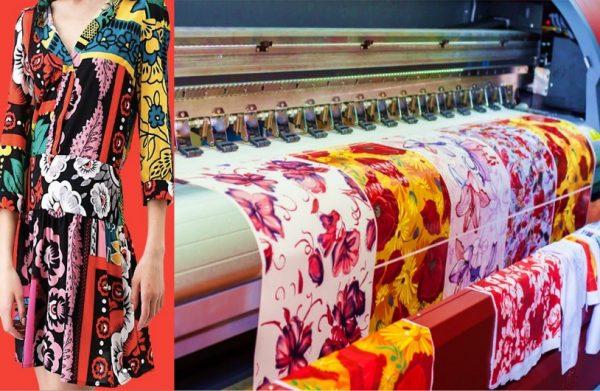
Digital printing on fabric is a textile printing technique in which digital artwork is transferred directly onto fabric using specialized inkjet printers. Unlike traditional screen printing, the process does not require physical screens for individual colors. The printer receives a digital file and applies controlled amounts of ink to create the required image or pattern.
The growing use of digital printing on fabric has given textile manufacturers and designers more control over design development and production. Detailed patterns, photographs, gradients, personalized graphics, and small design variations can be produced without rebuilding the printing setup for every new artwork. The method is now used in fashion, home textiles, sportswear, advertising materials, and customized products.
What Is Digital Printing on Fabric?
Digital fabric works on a principle similar to desktop inkjet printing, but the machinery is designed specifically for textile materials. Computer-controlled printheads place microscopic droplets of ink at precise positions on the fabric.
The complete production system involves more than the printer itself. Fabric preparation, ink selection, pretreatment, color management, drying, and fixation all influence the final result. Different textile fibers also require different ink technologies.
For example, cotton is commonly printed with reactive or pigment systems, while polyester is frequently printed with disperse technology. Silk and nylon can be suitable for acid inks. Selecting an appropriate combination is essential for achieving good color strength and durability.
How Does Digital Fabric Printing Work?
1. Preparing the Digital Design
Production starts with a digital artwork file. The design may be a repeating pattern, illustration, photograph, logo, or custom graphic.
Before printing, the file is checked for dimensions, resolution, color settings, and repeat alignment. If the design is intended to cover a large roll of fabric, the repeat must be carefully constructed so that visible breaks do not appear between sections.
2. Preparing the Fabric
The textile needs to be clean and properly prepared before entering the printer. Depending on the printing system, pretreatment may be necessary.
Pretreatment helps control ink absorption and improves interaction between the ink and fabric. Uneven application can produce differences in color, sharpness, or coverage across the material.
3. Applying the Ink
The prepared fabric passes through the digital printer while printheads deposit ink according to the digital artwork.
The printer can control the placement and quantity of ink at individual points. This enables fine details, smooth gradients, and complex color combinations without requiring separate physical screens.
4. Fixing the Print
After printing, the ink must be properly dried or fixed. The required method depends on the ink chemistry.
Reactive dye prints may require steaming followed by washing. Pigment prints commonly require heat curing. Some polyester printing systems use controlled heat to fix the color into the synthetic fiber.
The finishing stage is important because printing without proper fixation can result in weak color or poor resistance to washing and rubbing.
Main Types of Digital Fabric Printing
Reactive Digital Printing
Reactive printing is widely used for cotton and other suitable cellulose-based fabrics. The dye reacts chemically with the fiber during fixation.
It can provide strong colors, good wash durability, and a soft fabric feel. This makes it suitable for garments, bedding, scarves, and other products that require frequent washing.
Pigment Digital Printing
Pigment printing uses colored particles held on the fabric by a binder. It can be used on a wide variety of textiles and can simplify the production process because certain pigment systems require less post-print washing than reactive systems.
Curing is critical. If the binder does not cure correctly, the print may have inadequate durability.
Acid Digital Printing
Acid inks are commonly used for silk, wool, nylon, and related fibers. They can produce vibrant colors and detailed images.
This method is frequently associated with fashion fabrics, scarves, ties, and decorative textiles where color quality is important.
Disperse Digital Printing
Disperse printing is primarily used for polyester and other suitable synthetic fibers. Heat is used to help the colorant become incorporated into the synthetic material.
This technology is widely used for sportswear, polyester apparel, flags, soft signage, and performance fabrics.
Benefits of Digital Printing on Fabric
High Design Accuracy
Digital printing can reproduce fine lines, detailed illustrations, photographs, and subtle tonal changes. Designers have greater freedom when working with complex artwork.
Easy Customization
A different design can be printed for each item or production section. Personalized names, numbers, images, and patterns are therefore easier to produce.
This feature is valuable for custom clothing, interior decoration, promotional products, and limited collections.
Lower Setup Requirements
Traditional printing often requires physical screens or other preparation for each design. Digital printing transfers the artwork electronically, reducing some setup requirements.
This is particularly useful when a manufacturer produces multiple designs in small quantities.
Faster Sampling
Designers can print samples without committing to a large production order. If the colors or pattern need modification, the digital artwork can be adjusted and printed again.
This makes digital printing useful during product development and collection planning.
Suitable for Short Production Runs
Digital printing can be economical for samples and short runs because there is little need for expensive physical setup. It allows businesses to test market demand before producing larger quantities.
Practical Tips for Better Results
Fabric selection should come before printer selection. Identify the fiber content, fabric construction, weight, and intended use. Then choose an ink system designed for that material.
Always test the complete process on the actual fabric. A printer specification alone cannot guarantee the desired result because surface treatment and fabric construction can affect ink behavior.
Color management should also be standardized. Calibrated monitors, appropriate profiles, consistent ink settings, and controlled lighting can help reduce differences between digital artwork and printed fabric.
Keep production records as well. Recording fabric batches, pretreatment settings, ink configurations, curing conditions, and finishing procedures makes successful results easier to reproduce.
Common Challenges and Considerations
Color Matching
Colors can appear different on a monitor, proof, and final textile. Fabric color, ink chemistry, lighting, and finishing conditions all affect the final appearance.
For important orders, a physical sample is more reliable than judging the result only on a computer display.
Fabric Shrinkage
Heat, steam, and washing can change the dimensions of certain fabrics. If shrinkage occurs after printing, the design may no longer have the expected measurements.
Pretesting helps identify dimensional changes before full production.
Ink and Fabric Compatibility
Using the wrong ink system can result in poor adhesion, weak colors, bleeding, or insufficient durability. The fabric, ink, printer, pretreatment, and finishing method must work together.
Production Economics
Digital printing can offer significant advantages for small and medium orders, but it is not automatically the cheapest method for every application. Ink consumption, machine investment, maintenance, labor, pretreatment, energy, and finishing costs all contribute to the final price.
For very large orders using one simple repeating design, conventional printing may remain more economical.
Applications of Digital Fabric Printing
Digital fabric printing is used in many textile sectors. Fashion companies use it for dresses, shirts, skirts, scarves, jackets, and limited-edition collections.
Home textile manufacturers print designs for curtains, cushions, bedding, upholstery, table coverings, and decorative fabrics. Sportswear producers use digital techniques for polyester garments and customized team apparel.
The technology is also used for flags, banners, event displays, promotional fabrics, wall coverings, and personalized textile products.
Key Insights for Businesses
Businesses considering digital printing should evaluate the entire production workflow rather than focusing only on printer speed or resolution.
The most important factors include fabric compatibility, ink technology, print quality, finishing requirements, production volume, maintenance needs, and operating costs.
A business producing many designs in small quantities may benefit greatly from digital printing. A manufacturer producing millions of meters of one basic pattern may find another technology more suitable.
Frequently Asked Questions
1. What is digital printing on fabric?
It is a textile printing process that uses digital artwork and specialized inkjet printers to apply ink directly onto fabric.
2. Which fabrics can be digitally printed?
Many fabrics can be digitally printed, including cotton, polyester, silk, nylon, linen, and certain blends. The appropriate ink and finishing method depend on the fiber.
3. Is digital fabric printing washable?
Yes. Properly printed and finished textiles can have good wash durability. Performance depends on the ink system, fabric, fixation process, and care conditions.
4. Is digital printing suitable for small orders?
Yes. Short runs, samples, personalized products, and limited collections are among the applications where digital printing can be particularly useful.
5. How can print quality be improved?
Use the correct ink for the fabric, prepare the textile properly, manage color accurately, maintain the printer, and test drying or fixation conditions before large-scale production.
Conclusion
Digital printing on fabric provides a flexible approach to modern textile production. It allows manufacturers and designers to create detailed patterns, photographic artwork, customized products, and short production runs without relying on traditional screen preparation for every design.
Its success depends on the complete production system. Choosing the correct fabric and ink, preparing the material properly, controlling color, and applying suitable finishing procedures are essential for consistent results.
For businesses that value design variety, customization, rapid sampling, and production flexibility, digital fabric printing can be an effective solution. Careful testing and process control help ensure that the finished textile meets the required standards for appearance, durability, and performance.

 English
 Arabic
 French
 Spanish
 Portuguese
 Deutsch
 Turkish
 Dutch
Dutch
 Italiano
 Russian
 Portuguese (Brazil)
 Greek
Greek
 ไทย
ไทย