


A Guide to CNC Machining Tools and Their Industrial Applications
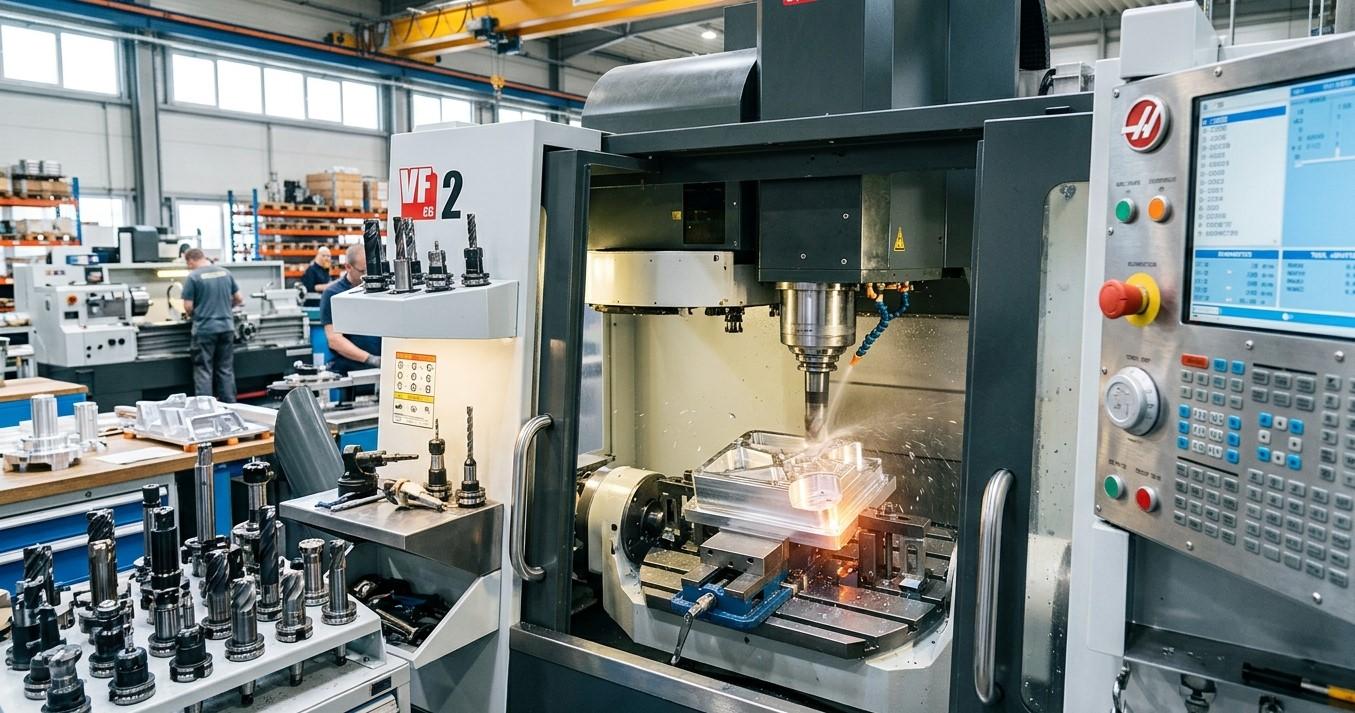
CNC machining has become an essential part of modern manufacturing because it allows businesses to produce complex components with high levels of accuracy, repeatability, and efficiency. However, the performance of a CNC machine depends heavily on the cutting tools and accessories used with it. Selecting the correct CNC machining tools can improve surface finish, dimensional accuracy, tool life, productivity, and overall production costs.
From end mills and drills to turning inserts, threading tools, reamers, and boring tools, each type of CNC tool is designed for a specific machining operation. Understanding these tools and their industrial applications can help manufacturers and engineering workshops make better tooling decisions.
For companies searching for an Industrial Tools Supplier in Dubai, selecting tools according to the machine, material, application, and production requirements is essential. Khokhawala Trading LLC, an Industrial Tools Supplier in Dubai, provides industrial and engineering tooling solutions for machining, manufacturing, maintenance, and workshop applications.
This guide explores the most common CNC machining tools, their uses, and the factors to consider when selecting them.
What Are CNC Machining Tools?
CNC machining tools are cutting and supporting tools used with computer numerical control machines to remove material from a workpiece and create a desired shape or dimension.
CNC machines can perform operations such as:
- Milling
- Drilling
- Turning
- Boring
- Reaming
- Threading
- Grooving
- Facing
- Profiling
- Chamfering
The cutting tool interacts directly with the workpiece, while the CNC machine controls its movement according to programmed instructions.
The choice of tool can significantly influence machining performance. An unsuitable tool may result in excessive vibration, poor surface finish, premature wear, or dimensional inaccuracies.
Why CNC Tool Selection Is Important
CNC machining often involves demanding production requirements where consistency and accuracy are critical. The right tooling can help manufacturers achieve predictable results across multiple components.
Appropriate CNC tools can help:
- Improve dimensional accuracy
- Increase material removal rates
- Extend tool life
- Improve surface finish
- Reduce machining time
- Minimize tool changes
- Reduce production waste
- Improve machine utilization
- Lower tooling costs per component
Tool selection should therefore be treated as part of the machining strategy rather than simply a purchasing decision.
1. CNC End Mills
End mills are among the most commonly used tools in CNC milling. They are designed to cut material using the end and, depending on the design, the sides of the tool.
Different end mill configurations are available, including:
- Square end mills
- Ball nose end mills
- Corner-radius end mills
- Roughing end mills
- High-performance end mills
- Multi-flute end mills
Industrial Applications of End Mills
End mills can be used for:
- Slotting
- Pocketing
- Profiling
- Contouring
- Shoulder milling
- Surface machining
- 3D machining
Ball nose end mills are particularly useful for curved surfaces and three-dimensional machining, while square end mills are commonly used for flat-bottomed pockets and general milling operations.
2. CNC Drills
CNC drills are used to create holes in a wide range of engineering materials. Hole-making is one of the most common machining operations across manufacturing industries.
Common drill types include:
- Twist drills
- Carbide drills
- Indexable drills
- Step drills
- Center drills
- Specialized deep-hole drills
Industrial Applications
CNC drills are used in:
- Automotive manufacturing
- Aerospace components
- Machinery production
- General engineering
- Fabrication
- Industrial equipment manufacturing
The drill should be selected according to the workpiece material, hole diameter, depth, tolerance, machine capability, and required production speed.
3. Carbide Cutting Tools
Carbide cutting tools are widely used in modern CNC machining because carbide offers high hardness and wear resistance.
Carbide tools are available for different machining operations, including:
- Milling
- Drilling
- Turning
- Grooving
- Threading
- Reaming
They can be particularly useful for applications requiring higher cutting speeds and longer tool life when the tool grade and machining conditions are properly selected.
Benefits of Carbide Tools
Some advantages include:
- High wear resistance
- Good hardness
- High-temperature resistance
- Suitable for high-speed machining
- Consistent cutting performance
- Availability in specialized grades and geometries
However, carbide tools are generally more brittle than some tougher tool materials, so machine rigidity, tool overhang, workholding, and cutting conditions must be considered.
4. CNC Turning Tools and Inserts
CNC turning tools are used primarily on CNC lathes to remove material from rotating workpieces.
Common turning operations include:
- Facing
- External turning
- Internal turning
- Grooving
- Threading
- Profiling
- Chamfering
Many modern CNC turning systems use replaceable carbide inserts. Inserts are available in different shapes, grades, chip breakers, and geometries.
Why Inserts Are Useful
Replaceable inserts can offer:
- Multiple cutting edges
- Quick replacement
- Consistent tool geometry
- Reduced tool-change time
- Different grades for different materials
The correct insert should be selected according to workpiece material, cutting conditions, machining operation, and desired surface finish.
5. CNC Threading Tools
Threading is an important machining operation for producing components that must connect using threaded fasteners or fittings.
CNC threading tools include:
- Threading inserts
- Thread mills
- Taps
- Dies
- Threading holders
Threading inserts are commonly used for external and internal threads on CNC lathes, while thread mills can be used with CNC milling machines.
Industrial Applications
CNC threading tools are used in:
- Automotive components
- Machinery parts
- Oil and gas equipment
- Industrial fittings
- Aerospace components
- Engineering assemblies
Correct thread geometry and cutting parameters are important for producing accurate and functional threads.
6. Reamers
Reamers are finishing tools used to improve the dimensional accuracy and surface finish of existing holes.
A typical machining process may involve drilling a hole slightly undersize and then using a reamer to achieve the required final dimension.
Reamers can be used when tighter hole tolerances and improved surface quality are required.
They are commonly used in precision engineering and component manufacturing where accurate hole dimensions are important.
7. Boring Tools
Boring tools enlarge or finish existing holes with controlled material removal.
CNC boring tools can be used for:
- Enlarging holes
- Improving hole accuracy
- Correcting alignment
- Achieving specific internal dimensions
- Finishing internal cylindrical surfaces
Boring is especially useful when a drilled hole needs to meet tighter dimensional or positional requirements.
8. Face Mills
Face mills are designed primarily for machining large flat surfaces.
They can remove material efficiently from the top surface of a workpiece and are commonly used during the initial machining stages.
Face mills may use replaceable carbide inserts, making them suitable for production machining where efficient material removal is important.
Applications
Face milling is commonly performed on:
- Steel components
- Aluminum parts
- Cast iron components
- Machinery bases
- Industrial plates
- Fabricated components
The cutter diameter, insert geometry, tool grade, and machine capability should be considered before selecting a face mill.
9. Grooving and Parting Tools
Grooving tools are designed to create grooves, channels, and recesses in components. Parting tools are used to separate a finished component from the remaining material during turning.
These tools are particularly common in CNC lathe applications.
Applications include:
- Internal grooves
- External grooves
- Retaining-ring grooves
- Parting operations
- Precision channels
Tool width, insert geometry, material grade, and workpiece diameter should be considered when selecting grooving and parting tools.
10. Countersinking and Counterboring Tools
Some components require holes with additional features to accommodate fasteners.
Countersinking creates a conical recess, while counterboring produces a cylindrical recess.
These operations are commonly used in manufacturing components where screws or bolts need to sit flush or below the workpiece surface.
CNC countersinking and counterboring tools help manufacturers produce consistent hole features across multiple components.
CNC Tool Coatings
Tool coatings can play an important role in cutting performance. Depending on the tool and application, coatings can improve wear resistance, reduce friction, and increase tool life.
The appropriate coating depends on factors such as:
- Workpiece material
- Cutting speed
- Machining temperature
- Tool material
- Production volume
- Coolant conditions
A coating designed for one application may not be appropriate for another. Therefore, coating selection should always be considered together with tool geometry and workpiece material.
Selecting CNC Tools According to Workpiece Material
The material being machined is one of the most important factors in CNC tool selection.
Steel
Steel machining may require tooling designed for wear resistance, stability, and appropriate chip control.
Stainless Steel
Stainless steel can generate heat and may be challenging to machine. Appropriate geometry, coating, coolant, and cutting parameters are important.
Aluminum
Aluminum machining often benefits from sharp cutting edges and effective chip evacuation.
Cast Iron
Cast iron can be abrasive, requiring tooling with suitable wear resistance.
Titanium and High-Temperature Alloys
These materials can generate substantial heat and cutting forces, requiring specialized tooling and carefully controlled machining parameters.
Factors to Consider Before Buying CNC Machining Tools
Choosing CNC tools involves more than selecting the correct diameter.
Machine Compatibility
Check spindle speed, machine power, tool holder type, available coolant, and overall machine rigidity.
Tool Geometry
Consider flute count, helix angle, rake angle, clearance, nose radius, and cutting-edge design.
Tool Diameter and Length
Choose dimensions appropriate for the component while avoiding unnecessary tool overhang.
Cutting Parameters
Check recommended cutting speed, feed rate, depth of cut, and radial engagement.
Tool Life
Consider how long the tool can operate effectively before replacement or reconditioning is required.
Production Volume
High-volume production may justify specialized tooling designed for productivity and extended tool life.
Surface Finish
Finishing operations may require different tool geometry from roughing operations.
The Role of Precision Measuring Tools in CNC Machining
Cutting tools produce the component, but precision measuring tools verify whether the component meets specifications.
Common measuring equipment includes:
- Digital calipers
- Vernier calipers
- Micrometers
- Dial indicators
- Bore gauges
- Height gauges
- Thread gauges
Regular inspection can help identify tool wear and dimensional changes during production.
For businesses searching for a Precision Measuring Tools Supplier in Dubai, selecting appropriate instruments for the required tolerance and measurement range is essential.
Maintenance of CNC Machining Tools
Proper maintenance can help maximize tool performance and reduce unexpected downtime.
Workshops should:
- Inspect tools regularly
- Replace worn inserts
- Keep cutting edges protected
- Store tools properly
- Clean tool holders
- Check tool runout
- Monitor tool wear
- Follow manufacturer recommendations
Tool holders and machine interfaces should also be kept clean because contamination can increase runout and reduce machining accuracy.
Common CNC Tool Selection Mistakes
Several mistakes can negatively affect machining performance.
Choosing Tools Based Only on Price
A low-cost tool may have a shorter working life and increase replacement costs.
Ignoring the Workpiece Material
Different materials require different grades and geometries.
Using Excessive Tool Overhang
Long tool overhang can increase vibration and reduce stability.
Ignoring Cutting Parameters
Incorrect speeds and feeds can cause excessive heat, premature wear, and poor surface finish.
Neglecting Tool Inspection
Worn tools can produce dimensional inconsistencies and increase scrap.
Choosing an Industrial Tools Supplier
Selecting a reliable supplier can simplify CNC tooling procurement. Businesses should look for suppliers that provide appropriate product specifications and tooling solutions for different applications.
Companies searching for an Industrial Tools Supplier UAE should consider product quality, availability, technical information, application knowledge, and compatibility with existing machines.
For businesses looking for an Engineering Tools Supplier in Dubai, it is also useful to consider the supplier's range of cutting tools, measuring equipment, threading tools, and other industrial tooling solutions.
Khokhawala Trading LLC supplies industrial and engineering tools for machining, manufacturing, maintenance, and workshop applications. Businesses can assess their machine specifications, workpiece materials, production volume, and machining requirements before selecting suitable tooling.
Conclusion
CNC machining tools are fundamental to modern manufacturing and precision engineering. End mills, drills, carbide cutting tools, turning inserts, threading tools, reamers, boring tools, face mills, grooving tools, and specialized cutters each have specific applications.
Selecting the right CNC tool requires careful consideration of the workpiece material, machining operation, tool geometry, coating, machine capability, cutting parameters, required surface finish, and production volume. Proper tool maintenance and dimensional inspection are equally important for achieving consistent results.
For businesses looking for an Industrial Tools Supplier in Dubai, Industrial Tools Supplier UAE, or Engineering Tools Supplier in Dubai, Khokhawala Trading LLC provides industrial and engineering tooling solutions for a range of professional applications.
A carefully planned CNC tooling strategy can help manufacturers improve machining accuracy, extend tool life, reduce downtime, and achieve more consistent production results.

 English
 Arabic
 Spanish
 Portuguese
 Deutsch
 Turkish
 Dutch
Dutch
 Italiano
 Russian
 Romaian
 Portuguese (Brazil)
 Greek
Greek
 ไทย
ไทย