
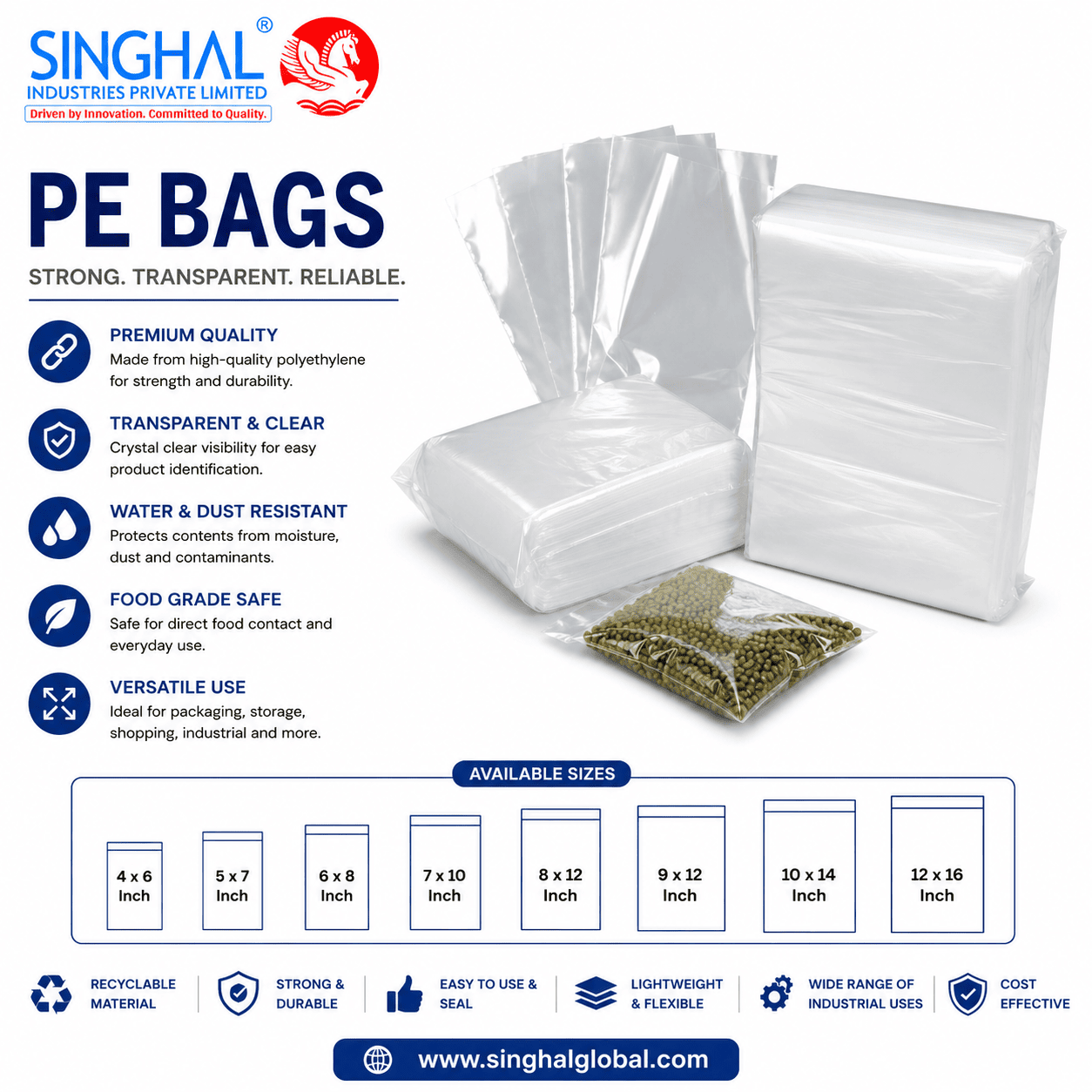

PE Bags (also known as Polyethylene Bags) are one of the most widely used forms of plastic packaging across the globe. PE Bags are used in many different industries such as Retail, Agricultural, Food Processing, Chemical, Pharmaceutical, Construction and Logistics. An experienced PE Bags Manufacturer will be able to assist you in choosing the appropriate type of bag for your specific application.
PE bags, also known as polyethylene bags, are a crucial element in contemporary farming practices. PE bags can be utilized for packaging, storing and/or transporting agricultural products such as seeds, fertilizers, grain, feed for animals and produce from the farm. A reputable PE Bag Supplier can aid the grower, trader or agricultural business with selecting the correct bags.
What are PE bags?
PE bags are made with polyethylene, a type of plastic that is both flexible and strong. There are many versions of this type of bag including flat, gusseted, liners, and shrink wrap. These bags may be transparent, colored, and/or printed depending upon the version of polyethylene that was used to make them.
Are they only plastic bags? Yes, in one respect. However, in other ways, they are so much more. When you choose the proper PE bag, you will protect your product from moisture, dirt and other potential harm during storage or transit.
Advantages of PE Bags
One of the benefits of using polyethylene (PE) bags is that they are very versatile. Depending upon the item to be packaged, PE bags may be manufactured in various shapes, dimensions, and thicknesses.
PE bags have a low weight, which makes them very affordable to ship and/or store. Although PE bags are light, they can be made strong enough to hold up under the pressure of holding several items at once (such as foods, fertilizers, and building materials).
Applications in Agriculture
There are many ways that PE bags can be used within the farming industry. For instance, farmers/suppliers use PE bags to keep their seeds, fertilizers, animal feed, and soil conditioner safe from moisture, dirt, and insects.
Bags made from PE (polyethylene) are employed to store products such as grains, cereals, and pulses. The PE lining provides protection for the product contained within the bag by keeping it dry and free of potential contaminants.
Application in Food Processing
Polyethylene bags can be used for packaging various types of raw material (sugar, flour, spices, etc.) as well as processed food. These bags will prevent the contents from spoiling or becoming contaminated. They are also used to make ice bags and ice cube boxes.
Let's be honest though, not every single PE bag used for food packaging can be considered safe for food contact. There are many PE bags which contain certain additives that could pose a risk to the quality of the food. It is therefore critical that the food manufacturer verifies whether a PE bag is food-grade prior to using it.
Applications in Chemicals and Pharmaceuticals
PE bags are used in the chemical industry for packaging granular materials, powders, resins, and some types of liquid products. These bags need to be strong enough to withstand handling, as well as prevent spills during transportation.
The pharmaceutical industry uses polyethylene (PE) bags to store bulk medications, intermediates and excipients. To ensure that these materials remain free from contamination and meet quality requirements, they must be manufactured according to high standards of hygiene and quality. Therefore, a reputable PE bag manufacturer would produce such bags.
Construction and Textile Applications
The use of PE bags is widespread within the construction industry to transport cement, cement admixtures, gypsum and many other chemical products used during the process of building. In addition to providing protection from moisture to the contents, they also assist in the ease of handling.
PE bags can be used to protect textiles and clothing from being damaged by moisture, dirt, etc., while they are being transported. Additionally, PE bags can be used as a way to pack small parts made of metal such as screws and nuts.
Selecting the Appropriate PE Bag
The type of PE bag you choose will depend upon several factors including the material used to create the bag, its thickness, physical size, and how it can be closed. When choosing a PE bag, keep these considerations in mind. For example, if you select a PE bag that is too thin, it may tear easily. However, if you choose a PE bag that is too thick, you are likely wasting material and the bag will be more difficult to handle.
Singhal Industries Private Limited is a top-rated PE Bags India manufacturer that produces PE bags and liners. PE bags and liners produced by Singhal Industries Private Limited can be used in both commercial and industrial settings.
Price and Sustainability
Cheapness is a common characteristic of polyethylene (PE) bags, however, this varies based upon the type of raw material being utilized and other variables including the amount of customization that has occurred. It is necessary for buyers to evaluate cost versus quality in order to receive the greatest benefit from their purchase.
Buyers should also take into account how sustainable the PE bags they select will be. Some types of PE bags can be recycled, while other types of PE bags may be biodegradable.
Conclusion
PE bags are extremely flexible and useful options for many different industries. They provide protection to the products from water, dust, and other types of damage. Whatever your needs are, PE bags can be customized to fit them perfectly. It does not matter what industry you are in, whether it be agricultural, food processing, chemical, pharmaceutical, construction, or textile; selecting the correct type of PE bag could be beneficial for you. Singhal Industries Private Limited offers PE bags and liners for all of those mentioned industries.
The application of PE bags is extensive within the field of agricultural packaging. PE bags protect seeds, fertilizer, grain, animal feed, and the harvested crops themselves from moisture, dirt, and potential damage. A good PE bag can be a major asset for both the small-scale farmer and the large-scale agriculture-based business. We provide PE bags and PE liners that are designed specifically for use in agricultural packaging.
FAQ
Q1. Who is the largest exporter of PE bags?
The largest exporter of PE bags varies greatly from time to time. This variation can be due to changes in a nation's trade balance, the types of products being produced, the amount of PE bags manufactured, etc. One of the top producers, suppliers and exporters of PE bags in India is Singhal Industries Private Limited.
Q1. Where are PE bags used?
PE bags have many uses such as packing and protecting products in various industries including retail, agriculture, food processing, chemical, pharmaceutical, construction, and logistical.
Q2. Are PE bags safe for packaging foods?
When selecting PE bags, it is critical that they meet the appropriate safety standards for direct contact with food. Therefore, when choosing a bag for packaging your products, it will be essential to verify that the manufacturer has met all applicable safety requirements.
Q3. Is it possible to recycle PE bags?
Yes, many types of polyethylene (PE) bags may be recycled. However, customers should determine what is available for recycling in their area, and ensure that the bags are clean and dry prior to being thrown away.
Q4. Can PE bags withstand heavy loads?
PE bags can be manufactured at different thicknesses depending on how much weight the bags will need to hold, such as when they are holding heavy items like grain, fertilizer, or construction supplies. The correct thickness depends on the type of product that is being stored in the bag and the environment where the bag is being used.


