
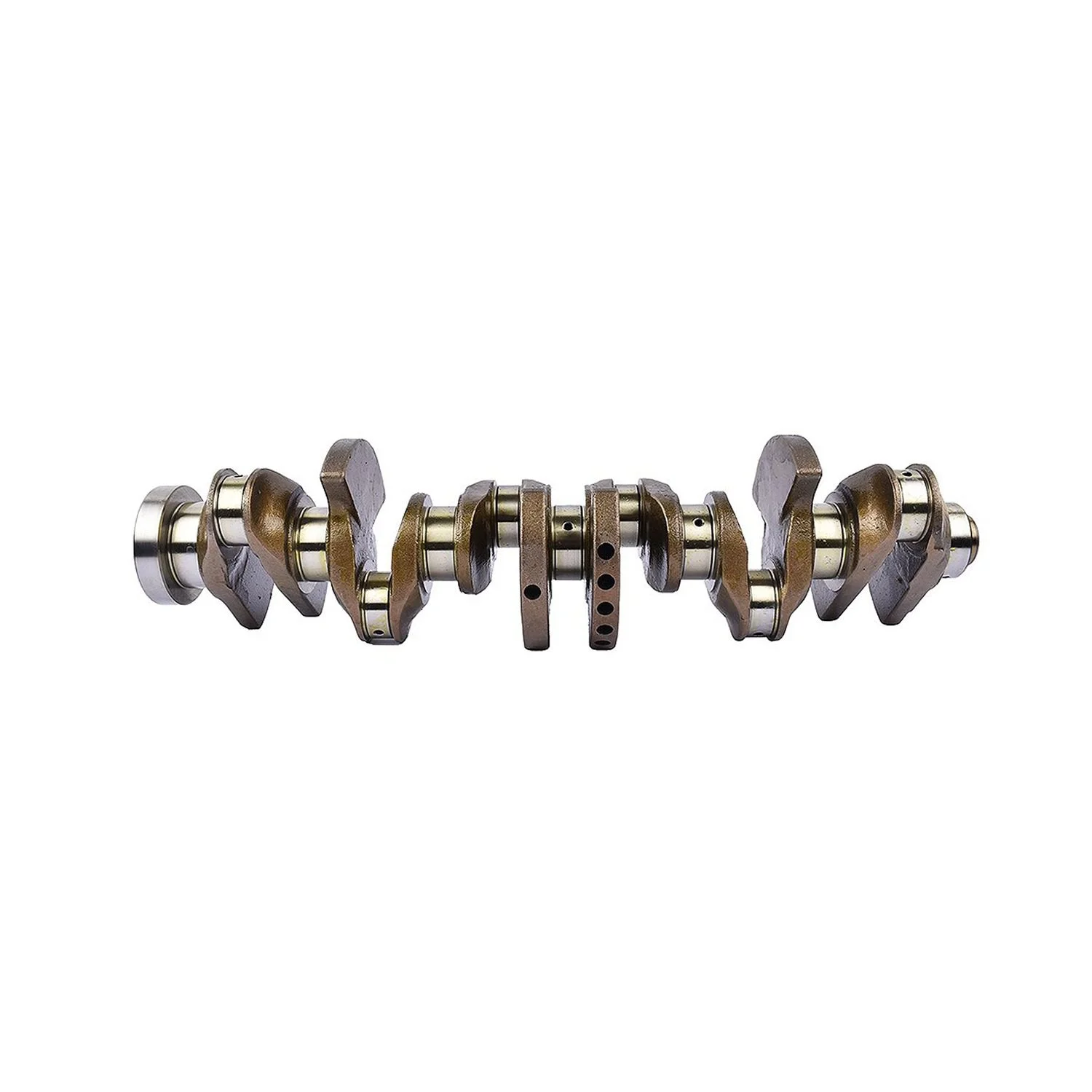
Iveco 3.0 HPI F1C Crankshaft Guide: Commercial Van Bottom-End Wear Causes & Rebuild Steps

Quick Answer: An iveco 3.0 hpi f1c crankshaft replacement is required when high-mileage commercial duty, oil starvation, or spun connecting rod bearings score the crankshaft journals beyond safe regrinding tolerances on 3.0-litre F1C diesel engines fitted to the Iveco Daily, Fiat Ducato, Peugeot Boxer, and Citroen Relay. Common warning signs include a deep metallic knocking sound under load, metallic debris in the oil filter, and low hot-idle oil pressure warnings. A reliable commercial engine overhaul pairs a new alloy steel crankshaft with fresh main and rod bearings, a new oil pump, timing chain components, and thoroughly flushed oil galleries.
The 3.0-litre F1C four-cylinder turbo-diesel engine (sold as the 3.0 HPI in Iveco Daily vans and 3.0 HDi / Multijet in Citroen Relay, Peugeot Boxer, and Fiat Ducato models) is renowned for heavy-duty pulling power across courier fleets, recovery trucks, and motorhomes. However, relentless stop-start delivery cycles and heavy payloads eventually wear down bottom-end lubrication components. Fitting a precision-ground Iveco F1C alloy steel crankshaft rather than attempting to salvage a heat-scored original crank ensures fleet vehicles return to service with dependable long-term durability.
Why Does the 3.0 HPI F1C Diesel Engine Suffer Crankshaft and Bearing Wear?
Crankshaft failure on the 3.0-litre F1C engine rarely stems from a casting flaw in the crank itself—instead, it almost always starts with hydrodynamic oil film breakdown at the big-end connecting rod bearings. Once metal-to-metal friction occurs under high diesel combustion pressure, localized temperatures spike rapidly and score the journal surface.
Several real-world commercial operating factors accelerate F1C bottom-end wear:
-
Extended Fleet Oil Service Intervals: Stretching oil changes beyond 10,000 miles on heavily loaded vans allows soot accumulation and diesel fuel dilution from DPF regeneration cycles to degrade oil viscosity and protective film strength.
-
Oil Pump Pressure Loss & Blocked Strainers: High-mileage oil pumps gradually lose internal rotor tolerance, while carbon sludge or broken timing chain guide fragments can restrict flow at the sump pickup strainer.
-
Heavy Towing & Low-RPM Lugging: Pulling maximum gross vehicle weight up steep inclines in high gears places extreme peak cylinder loads directly onto the connecting rod bearing shells.
-
Cold-Start Boost on Delivery Routes: Accelerating hard immediately after cold morning starts restricts oil flow through narrow bearing clearances before engine oil reaches operating temperature.
How Can You Tell If Your Iveco F1C Crankshaft or Bearings Are Damaged?
Catching bottom-end wear early prevents a spun connecting rod from damaging the cast-iron cylinder block or cracking the upper bedplate:
-
Deep Rhythmic Knocking From the Lower Block: A heavy metallic knock that increases in speed with engine RPM—most noticeable under moderate throttle between 1,400 and 2,400 RPM.
-
Metallic Glitter in the Engine Oil Filter: Inspecting the oil filter media reveals copper, bronze, or silver bearing material suspended in the folds.
-
Low Oil Pressure Warning at Hot Idle: Oil pressure alerts flickering or staying illuminated once the engine reaches full operating temperature after a long motorway run.
-
Excessive Connecting Rod Big-End Play: Once the sump and ladder frame are removed, noticeable side-to-side or vertical play on one or more connecting rods.
Should You Regrind a Scored F1C Crankshaft or Fit a New Alloy Steel Replacement?
Engine machinists strongly advise against regrinding a spun or heat-discoloured F1C crankshaft, making a new iveco 3.0 hpi f1c crankshaft the safest commercial repair:
-
Full Surface Hardness Retained: F1C crankshaft journals rely on a controlled surface-hardened outer zone to handle continuous commercial torque. Grinding away deep scoring often cuts through that hardened layer, leaving softer underlying steel that wears quickly against new bearings.
-
No Hidden Thermal Micro-Cracks: When a rod bearing spins, intense friction heat alters the temper of the steel and creates microscopic cracks beneath the journal surface that can propagate under heavy payload stress.
-
Exact OEM Journal Geometry: A brand-new alloy steel replacement matching OEM part numbers
504041684,504200166, and504303544restores true journal roundness so standard-size OEM or tri-metal bearing shells achieve exact oil clearances.
Fitment Verification Tip: Before ordering, confirm your stamped engine code (
F1C/F1CE0481/F1CE3481), cross-reference your OEM crankshaft part number (504041684,504200166, or504303544), and verify compatibility using your 17-digit VIN or UK vehicle registration.
Which Components Must Be Replaced With a New Iveco F1C Crankshaft?
Installing a new crankshaft into an engine block contaminated with old bearing shavings will ruin the fresh bearing shells within minutes of startup. A professional F1C bottom-end rebuild replaces every connected lubrication, timing, and sealing part together:
-
Main Bearings, Connecting Rod Bearings & Thrust Washers: Install brand-new standard-size bearings and measure oil clearances across every journal using Plastigauge before final torque.
-
New Oil Pump & Pickup Strainer: Never reuse an oil pump after rod bearing failure; fine metal debris lodges inside the pump gears and circulates directly into the new crankshaft journals.
-
Oil Cooler / Heat Exchanger: Flush or replace the oil cooler whenever bearing glitter is found, as metallic particles become trapped inside its narrow internal cooling passages.
-
Dual-Chain Timing Drive Assembly: Because the F1C uses a twin timing chain system under the front cover, engine disassembly is the ideal time to fit OEM timing chain and belt kits along with fresh guide rails and hydraulic tensioners.
-
Complete Gaskets, Oil Seals & Torque-to-Yield Bolts: Fit new front and rear crankshaft seals, sump and ladder-frame sealants, head gasket, and single-use stretch bolts.
How Do You Protect a Rebuilt 3.0 F1C Engine for High-Mileage Commercial Use?
Once your rebuilt F1C engine is back in service, simple fleet maintenance habits protect the new crankshaft and bearings for well over 150,000 miles:
-
Shorten Oil Change Intervals: Change engine oil and filter every 6,000 to 8,000 miles on stop-start delivery vans rather than waiting for extended commercial service intervals.
-
Use Exact Spec Low-SAPS Synthetic Oil: Always fill with manufacturer-approved 5W-30 fully synthetic low-SAPS oil suited to DPF-equipped Euro 5 and Euro 6 F1C engines.
-
Prime Oil Pressure Before First Startup: Disable fuel injection after assembly and crank the engine until clean oil pressure builds at the filter housing before firing the cylinders.
For commercial workshops, fleet operators, and engine builders sourcing verified parts in the UK and worldwide, BMS Automotive supplies OEM-spec crankshafts, timing kits, bearings, and rebuild gaskets backed by pre-dispatch VIN and registration fitment checks.
Frequently Asked Questions About Iveco 3.0 HPI F1C Crankshafts
Which vans use the 3.0-litre F1C diesel crankshaft?
The 3.0-litre F1C crankshaft (504041684 / 504200166 / 504303544) fits Iveco Daily 3.0 HPI models as well as Citroen Relay (Jumper), Peugeot Boxer, and Fiat Ducato 3.0 HDi / Multijet commercial vehicles equipped with the F1C engine family.
Why is regrinding a spun F1C crankshaft not recommended for commercial vans?
Commercial vans operate under sustained high torque and payload stress. Grinding a scored crankshaft removes the surface-hardened outer journal layer and risks leaving heat-induced micro-cracks, significantly increasing the chance of repeat bearing failure.
How can I verify the right F1C crankshaft before ordering?
Confirm your engine code is F1C, match one of the OEM part numbers (504041684, 504200166, or 504303544) stamped on your original crank, and share your UK registration or 17-digit VIN with your parts supplier for a pre-dispatch check.


