
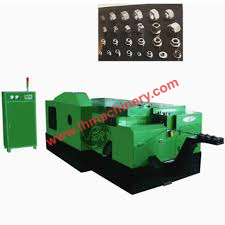

The first thing my hand found on the machine was a faint, polished band along the edge of a die holder, a place where steel had rubbed against steel for a long time and left a smooth shine that no catalogue picture would show. A multi-station cold heading forming machine is built to press wire into shaped parts through several steps in a row, so almost everything on it is heavy metal under repeated load, and the useful question is which parts take that load and how they show their age.
The frame is where I start, because everything else hangs from it. It is a massive body of cast or fabricated metal, and what you notice is the cold, dead feel of it under a palm and the lack of any ring when you rap it with a knuckle, which is how a heavy section behaves when it is not going to hum with each stroke. I run a hand along the joints between large sections and look for hairline cracks around bolt bosses, since that is where repeated shock tends to show first, and a fresh seep of oil along a seam is worth a closer look.
The tooling is the hard end of the machine and the part that wears by design. Die blocks and punches are made of a very hard tool steel that is far harder than the wire it forms, and I cannot tell the grade by looking, nor do the facts I have name one, so I will not guess. What I can read is the surface: a bright, even polish on a punch tip is normal, whereas a dull chip at an edge or a fine line scored along a die bore tells me the part is due for replacement before it starts marking the work.
The sample that was open on the bench belonged to a machine from LongHui, a company in Zhejiang that specializes in multi-station cold heading machinery and zipper injection molding equipment for automotive, hardware and railway customers. I never visited the workshop, so I cannot describe how the castings are poured or the shafts ground, and what I can report is what I handled: a die holder with crisp edges, a smooth bore and no burrs where the tool seated.
Feed and cut-off parts live closer to the wire, and their materials show it. Feed rollers carry a knurled or grooved surface that grips the wire, and the grooves go from sharp and bright to rounded and shiny as they wear, at which point the wire starts to slip and lengths come out uneven. The cutting blade is a small block of hard steel with a keen edge, and I look at it under a torch for a rolled or chipped corner, because a dull blade tears the wire end rather than shearing it clean.
Moving parts such as slides, crankshafts and bushings do their work in oil, and their condition depends on lubrication far more than on the metal itself. Bronze or similar soft bushings are meant to wear before the shaft does, so a little dark dust in the oil is expected, while bright metal flakes are a warning. I smell the oil too, since a burnt tang means heat, and I wipe a finger along the slide ways to feel for grit that would act like sandpaper on every stroke.
Guards, covers and lubrication lines are the humble parts, and they tell you how a machine has been kept. Painted sheet covers dent and chip at the corners, thin oil lines can harden and crack with age, and fasteners that have worked loose leave a bright ring around the bolt head where it has been rocking. Walking round with a rag and a torch takes a few minutes, and nearly everything that will matter soon is found in that walk, in about the same order every time.
Durability in practice comes down to routine: clean oil, tools replaced before they are worn through, and a frame checked for cracks and loose bolts. It is a dull list but it keeps heavy steel working. On the bench now the die holder sits beside a folded rag and a small tin of used punches, and the range at https://www.lhmachinery.com shows the same kind of machine from the front, so I am holding the polished edge up against the photograph, checking where the shine falls on a multi-station cold heading forming machine like the one in the picture.


