
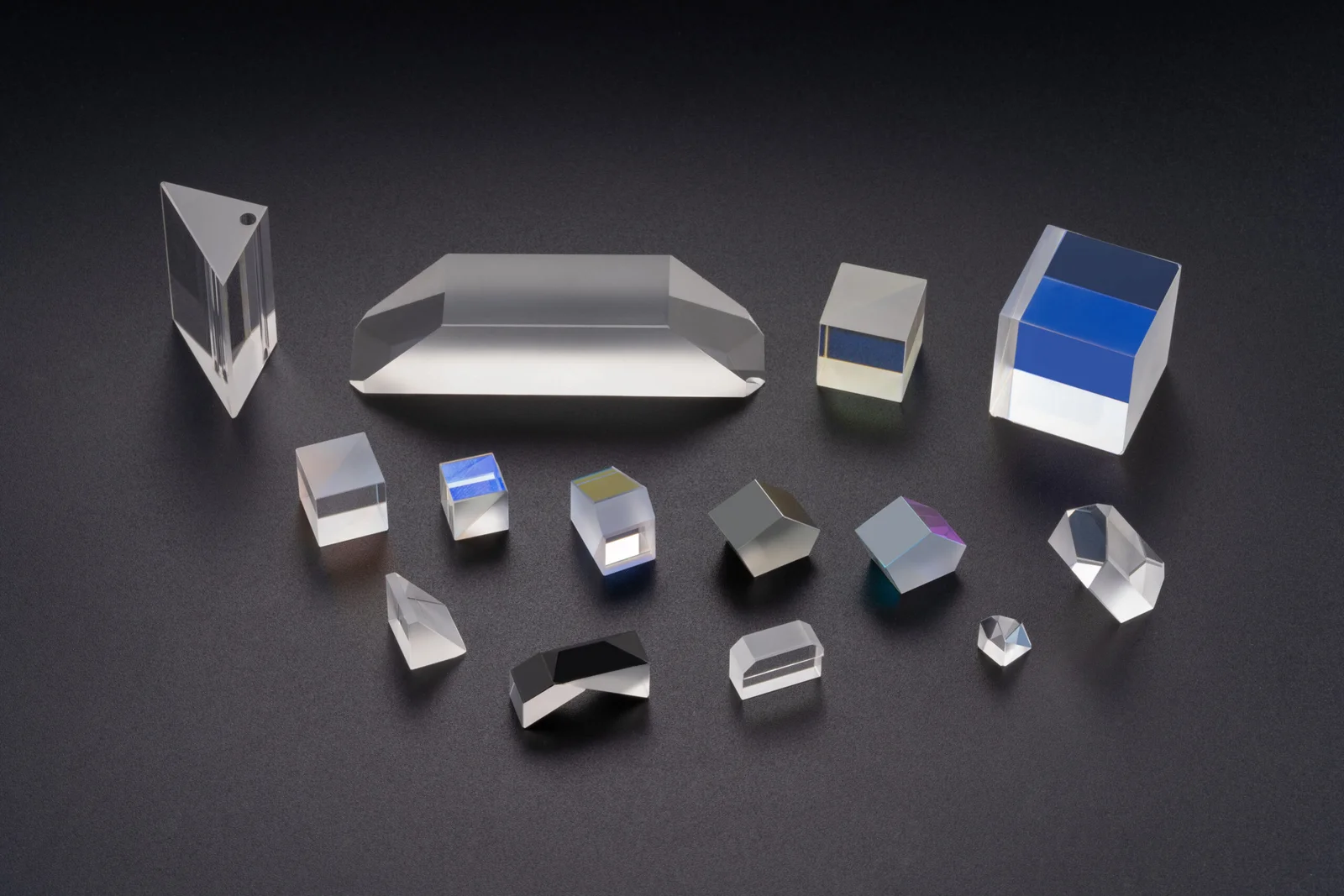
Beyond Reflection: How Precision Prisms Shape the Future of Optical Technology

Light plays a fundamental role in technologies used for imaging, measurement, communication, and visual displays. However, controlling light accurately requires specialized optical components. One of the most important elements in this field is the Prism, an optical component designed to redirect light through reflection, refraction, or a combination of both.
Prisms are widely used in optical instruments because they can change the direction of light, separate wavelengths, and help create specific optical paths. Their precise construction makes them valuable in applications where accuracy, clarity, and consistent performance are essential.
Understanding How Optical Prisms Work
An optical prism is generally made from a transparent material with carefully designed surfaces. When light enters the prism, it changes direction as it passes between materials with different refractive indices. This process is known as refraction.
Depending on its geometry and material, a prism can also use internal reflection to redirect light along a different path. Some prism designs separate white light into different colors because individual wavelengths refract by different amounts.
The final optical behavior depends on several factors, including the prism's shape, refractive index, surface quality, and the angle at which light enters.
Different Types of Optical Prisms
Prisms are available in several configurations, each developed for particular optical functions. Understanding these designs helps engineers select suitable components for different systems.
-
Right-angle prisms: Commonly used to redirect light by approximately 90 degrees through internal reflection.
-
Equilateral prisms: Often associated with light dispersion and wavelength separation.
-
Dove prisms: Used in certain optical arrangements to rotate images.
-
Porro prisms: Found in optical instruments such as binoculars, where they help fold the optical path.
-
Pellin-Broca prisms: Specialized designs used for applications involving wavelength separation and beam deviation.
Each configuration has specific optical characteristics, making design selection an important part of system development.
Applications Across Modern Industries
Optical prisms contribute to a wide range of technologies. Their ability to redirect and manipulate light makes them useful in both traditional instruments and advanced optical equipment.
Imaging and Photography
Prisms are used in optical imaging systems to redirect light toward sensors or viewing components. They can help designers create compact optical paths while maintaining the intended image orientation and functionality.
AR and VR Devices
Augmented reality and virtual reality equipment relies on sophisticated optical arrangements to deliver visual information to users. Depending on the system architecture, prism-based elements can support light routing and image presentation.
Scientific Instruments
Laboratory instruments use prisms for tasks such as wavelength separation, optical alignment, and light analysis. Spectroscopic systems, for example, may use prism dispersion to distinguish different wavelengths.
Industrial Measurement
Precision optical components are also relevant to inspection and measurement equipment. Their ability to control light paths supports instruments that require consistent optical alignment and reliable readings.
Why Material Selection Matters
The material used to manufacture an optical prism directly affects its performance. Different optical glasses and transparent materials have different refractive indices, dispersion characteristics, transmission properties, and thermal behavior.
Engineers must select materials according to the requirements of the intended application. For example, a system designed to separate wavelengths may require specific dispersion characteristics, while an imaging application may prioritize clarity and low optical distortion.
Material consistency is equally important. Variations in optical properties can affect the behavior of light as it passes through the component.
Precision Manufacturing and Surface Quality
A prism's performance depends not only on its shape but also on manufacturing accuracy. Its optical surfaces must be produced with suitable flatness, smoothness, and angular precision.
Even small manufacturing errors can influence beam direction, image quality, or alignment within an optical assembly. For this reason, precision grinding, polishing, coating, and inspection are important stages in optical component production.
Protective or functional coatings may also be applied when the application requires particular reflection or transmission characteristics. The correct coating depends on the operating wavelength and intended optical function.
Factors to Consider When Selecting a Prism
Selecting an optical prism requires a clear understanding of the system's technical requirements. Important considerations include:
-
Optical geometry: The prism shape should match the required light path.
-
Refractive index: Material properties influence how light travels through the component.
-
Dispersion: Wavelength-dependent behavior matters in color separation applications.
-
Surface accuracy: Precision surfaces help maintain predictable optical performance.
-
Coating requirements: Specialized coatings can improve reflection or transmission for selected wavelengths.
-
Operating environment: Temperature, humidity, and mechanical conditions may influence material selection.
Evaluating these factors helps manufacturers integrate suitable optical components into their products.
The Continuing Development of Optical Components
As imaging, display, sensing, and measurement technologies become more sophisticated, the demand for reliable optical components continues to grow. Prisms remain valuable because they provide practical ways to redirect, separate, and manage light within complex systems.
Ongoing improvements in optical materials, precision processing, and surface treatments are creating new possibilities for specialized applications. By combining suitable prism geometry with careful manufacturing and quality control, optical engineers can develop components that meet increasingly demanding technical requirements.
For businesses and engineers exploring precision optical solutions, selecting a suitable Prism is an important step toward building accurate and dependable optical systems.


