
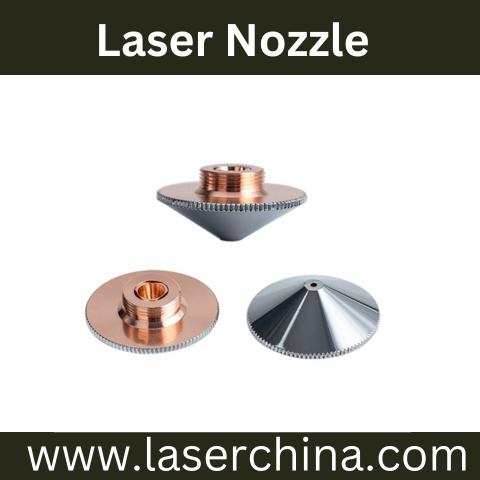
Laser cutting technology has become an essential part of modern manufacturing, helping industries process different materials with accuracy and consistency. Alongside the laser source and cutting head, small components also play an important role in achieving reliable cutting results. One such component is the Laser Nozzle, which helps control the flow of assist gas and supports the cutting process.
What Is a Laser Nozzle?
A laser nozzle is a specially designed component attached to the cutting head of a laser cutting machine. It directs assist gas toward the cutting area while the laser beam melts or vaporizes the material. The gas helps remove molten metal and other particles from the cutting path, allowing the machine to produce cleaner edges.
Nozzles are manufactured in different shapes, sizes, and opening diameters to match specific cutting requirements. Their design and dimensions are selected according to the material type, thickness, cutting speed, and operating conditions.
How Does a Laser Nozzle Work?
During laser cutting, the laser beam focuses on a small area of the material to create intense heat. At the same time, assist gas passes through the nozzle and reaches the cutting zone. This gas flow helps clear molten material from the cut and maintains a suitable cutting environment.
The nozzle also helps maintain the correct distance and alignment between the cutting head and the workpiece. Proper gas flow and positioning are important for achieving consistent cutting performance.
Different Types of Laser Nozzles
Laser cutting applications require different nozzle designs depending on the machine setup and production requirements.
Single-Layer Nozzles: These are commonly used for general cutting operations and are suitable for various standard applications.
Double-Layer Nozzles: These nozzles feature an additional internal structure and are often used in applications requiring specific gas-flow conditions.
Conical Nozzles: Their tapered design helps direct the assist gas toward the cutting area and supports different cutting operations.
Specialized Nozzles: Some applications require specially designed nozzles for particular materials, thicknesses, or cutting conditions.
Choosing the Right Nozzle for Your Machine
Selecting the correct nozzle requires attention to several technical factors. The nozzle opening diameter should match the cutting parameters and assist gas requirements. Material thickness, gas pressure, laser power, and cutting head compatibility should also be considered.
Operators should always follow the machine manufacturer's recommendations when selecting replacement components. Using a compatible Laser Nozzle helps maintain proper gas flow and supports stable cutting operations.
Maintenance and Replacement
Regular inspection is necessary to keep laser cutting equipment operating properly. Dust, metal particles, and spatter can accumulate around the nozzle opening and affect gas distribution. Operators should inspect the nozzle for visible damage, deformation, or blockages.
Cleaning should be performed using suitable tools and procedures recommended by the equipment manufacturer. If the nozzle becomes damaged or its opening is no longer in the correct condition, replacement may be necessary.
Why Nozzle Quality Matters in Industrial Cutting
In industrial manufacturing, consistent cutting quality depends on several components working together. A properly manufactured nozzle helps maintain the intended gas-flow pattern and supports accurate cutting operations. Even small variations in nozzle dimensions or alignment can influence the cutting process.
For this reason, manufacturers should consider material quality, dimensional accuracy, and compatibility when sourcing replacement parts. Choosing a suitable Laser Nozzle is an important part of maintaining a reliable laser cutting setup.
Final Thoughts
Laser cutting machines depend on carefully designed components to achieve consistent production results. The nozzle may be a small part of the cutting head, but its role in directing assist gas and clearing molten material is essential. Understanding nozzle types, selecting compatible sizes, and following regular maintenance practices can help manufacturers maintain their equipment and achieve dependable cutting results.


