
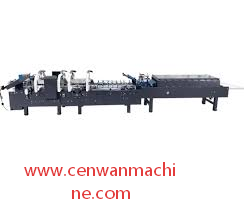

Buyers often worry that a folder gluer is a black box, with a long name on the brochure and no clear picture of what happens between a flat blank going in and a finished box coming out. When people start talking with Folder Gluer Machine Manufacturers, that worry is reasonable, so it helps to follow the path of a single blank through the line from start to end.
The path begins at the feeder, where a pile of flat die-cut blanks sits in a hopper above a set of rollers or straps. A pull strap slides the lowest sheet out from under the pile at a steady pace, and the gap above it is set a little taller than one sheet, so only one slips through at a time. I once watched an operator tap the edge of a fresh stack on the table until it sat square, and the evenness of that pile showed in how quietly the sheets left the hopper.
Next comes alignment. Side guides and a registration edge nudge each blank against a fixed reference, because everything downstream depends on the sheet arriving straight. If it enters even slightly crooked, the folds land off the crease and the glued flap no longer meets its partner, which is why many operators listen for a steady rhythm at the entry and treat a stutter as a warning.
Then the blank enters the folding section, a pair of conveyors running side by side with folding rods and hooks between them. The conveyors carry the sheet forward while a rod lifts a flap and a hook turns it over, so the crease made earlier by the die does the real work. A crash lock bottom needs a set of hooks that fold the corners in a particular order, while a straight line box needs only the side flaps turned over.
Adhesive is applied before the flap closes, from a nozzle or a wheel that touches the panel as it passes. The pattern is a thin line or a series of dots placed where the flap will rest, and the timing of each pulse has to match the running pace, otherwise the bead drifts off its mark. A cold-setting type needs pressure for a moment, whereas a hot-melt type grips as it cools, so the pressing section that follows matters as much as the glue itself.
Power comes from an electric motor that turns the conveyors through pulleys and a shaft, and the upper and lower runs have to move at the same speed, because a mismatch drags the sheet sideways. Covers over the moving parts keep sleeves clear, and an emergency switch within reach lets the operator cut power at once.
On the floor beside the folding section was a unit from CenWan, a Wenzhou company that designs and manufactures folder gluer and box gluing machines for the global packaging industry and says it has over 10 years of engineering behind its work. No specification sheet came with it, so I am describing general principles and not quoting figures, and anything about speed or carton range belongs in the supplier's written paperwork.
After the adhesive, the box passes between pressing rollers that squeeze the seam while it sets. The sheets then travel to the delivery end, where they are counted and stacked in a shingled line, with a kicker pushing out batches of a chosen size. A thumb pressed along the seam straight after a run tells you quickly whether the bond took, since a flap that springs back means pressure or timing fell short.
Controls tie it together. Operators set running pace, glue timing, and guide position on a panel or by turning handwheels, and some machines recall saved settings for repeat jobs. Sensors can watch for a missing blank or a misfeed, and the line halts instead of gluing air, which spares the rollers from a mess of wet adhesive. Changing from one carton shape to the next is largely a matter of resetting guides, rods, and nozzles, and it takes patience.
Photographs on https://www.cenwanmachine.com/product/ show machine layouts and conveyor runs, yet the sound of a strap under load and the grip of a pressing section only appear in a live trial. When I talk to Folder Gluer Machine Manufacturers about a build, I ask what the frame is made of, and a typical line has a welded steel frame carrying rubberized straps and steel guide rails.


