
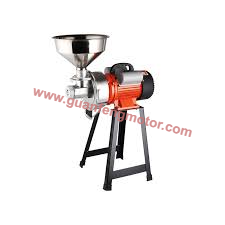

A grain grinding machine can look fairly simple when it is standing still, yet the visible casing tells only part of the story. The important activity takes place after material enters the working area and meets the grinding mechanism. A High-Power Grinding Machine is generally understood through this relationship between material movement, mechanical contact, and the drive that supplies motion. Its purpose is to reduce grain into smaller particles for a subsequent use, although the actual result depends on the machine's design and the material being processed. Looking at the equipment as a working system, rather than just a housing with an inlet, makes its basic functions easier to understand.
The process begins when grain is fed into the machine. From there, the internal working arrangement guides the material toward the grinding area, where mechanical force acts on individual kernels. Depending on the design, grinding may involve contact between moving and stationary components, repeated impact, or another form of mechanical action. These are general principles used in grain processing equipment; the precise arrangement should be confirmed from the specific model's documentation. The important point is that the machine has to control the path from entry to processing, since material cannot be reduced consistently if its movement through the working chamber is irregular.
Inside the grinding area, the change in particle size comes from physical action rather than a chemical process. Grain is subjected to force until its structure breaks into smaller pieces, and the working components determine how that action takes place. The shape and condition of the grain also have a role. A dry kernel behaves differently from material with a different moisture condition, so operating instructions for the intended feedstock matter. It would be inaccurate to assume that every machine handles every grain in the same way. The equipment's stated application and operating guidance provide the proper reference for understanding its intended processing range.
The drive system is another central part of the machine's function. Grinding requires mechanical movement, and an electric motor supplies the power that drives the working components. The motor and processing section therefore need to be considered as connected parts of one piece of equipment. Wenling Guanfeng Electromechanical Co., Ltd. manufactures electric motors, grain grinding machines, and mechanical parts, with motor offerings that include single-phase and three-phase asynchronous types for agricultural and industrial applications. This combination of product categories reflects the relationship between a machine's mechanical work and the electric drive used in its operation.
Power transmission deserves attention because the motor's rotation has to reach the grinding mechanism through the machine's drive arrangement. The exact configuration can vary by model, and it should not be inferred from the external appearance. A buyer or operator examining a unit can look for the motor position, the connection between drive and working section, and any guards surrounding moving components. Those visible details help explain how the machine is assembled, but they do not replace a technical drawing or operating manual. In particular, the rated information for the motor should be read alongside the requirements of the grinding equipment rather than treated as an isolated specification.
Material flow continues to matter after the grinding action. Processed particles need a route away from the working area, whether the design uses an outlet, a collection arrangement, or another discharge method. The details depend on the individual machine, so it is sensible to consult the model description before assuming how finished material is gathered. In a workshop, a small amount of grain dust around an outlet can make the direction of discharge visible, while residue around an access cover may indicate where cleaning is required. Such observations are useful during routine inspection, provided the equipment has been stopped and made safe before anyone approaches its internal parts.
Maintenance access is closely related to the way the equipment performs its basic task. Grinding components are exposed to repeated contact with the processed material, and their condition can affect the working action over time. Operators should follow the manufacturer's instructions for inspection, cleaning, and replacement of service parts. The same principle applies to the electric drive: its nameplate information, wiring arrangements, and maintenance requirements belong in the machine's technical records. A grinding unit may be described by its general purpose, but safe operation depends on the specific construction and instructions supplied for that model.
On a grain-processing floor, the sound of the motor and the movement of material through the feed opening are two separate things to observe. One relates to the electric drive, while the other shows how grain enters the working section. Product information associated with https://www.guanfengmotor.com/ covers manufacturing that includes grain grinding machines alongside electric motors and mechanical parts. When examining a High-Power Grinding Machine, the feed opening is worth noticing closely: its position and shape show where the material begins its passage into the processing chamber.


