
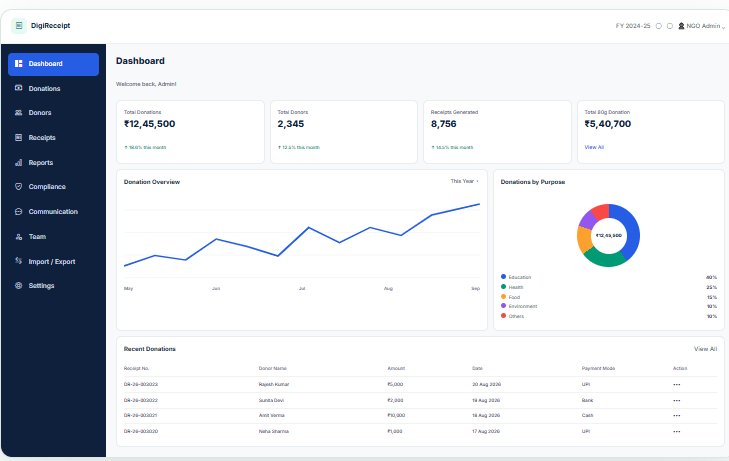

Donating to a charitable organisation is a meaningful way to support people, communities, and social causes. Whether you contribute towards education, healthcare, women’s empowerment, environmental protection, or poverty relief, your donation can help create a positive impact. Along with making a contribution, it is important to keep a proper record of it. An NGO donation receipt serves as official proof that a donor has contributed money to a non-governmental organisation.
For donors, this receipt is useful for maintaining financial records and checking eligibility for tax benefits. For NGOs, issuing receipts helps maintain transparency, build trust, and manage donation records. Understanding the purpose and details of an NGO donation receipt makes the donation process easier for everyone.
What Is an NGO Donation Receipt?
An NGO donation receipt is an official document issued by a non-governmental organisation after receiving a donation from an individual, company, or other donor. It confirms that the organisation has received a specific amount for its charitable activities.
The receipt generally includes the NGO's name, address, registration details, donation amount, date of contribution, and donor information. It may also mention the payment method and transaction reference number. When applicable, it can include details of the organisation's eligibility for tax deductions under Section 80G of the Income Tax Act.
A donation receipt is more than just a payment confirmation. It provides a documented record of the contribution and helps donors understand how their financial support is acknowledged by the organisation.
Why Is an NGO Donation Receipt Important?
An NGO donation receipt is important because it creates a formal record of charitable contributions. Donors can keep these documents for personal financial records and refer to them whenever they need to verify a past donation.
For organisations, issuing receipts demonstrates accountability. It assures donors that their contributions have been properly recorded and helps NGOs maintain organised financial documentation. This can strengthen relationships with existing supporters and encourage people to contribute again.
Receipts are also useful when donors want to check whether their contributions qualify for tax benefits. However, receiving a donation receipt does not automatically mean that the donation is eligible for a deduction. Donors should verify the NGO's applicable approval and follow the current tax rules.
Important Details Included in an NGO Donation Receipt
A properly prepared NGO donation receipt should contain clear and accurate information. The organisation's registered name and address help identify the recipient. Its registration number and relevant approval details may also be included where applicable.
The donor's name, donation date, amount, and payment method are other important details. If the contribution is made digitally, the receipt may include a transaction ID or payment reference number. These details make it easier to match the receipt with bank statements or online payment records.
If the NGO is approved to provide eligible donations under Section 80G, the receipt should include the relevant information required by applicable rules. Donors should check that the details are correct and request a corrected receipt if they notice any mistakes.
How to Get an NGO Donation Receipt Online
Getting an NGO donation receipt online is usually a simple process. Many charitable organisations provide digital donation facilities through their official websites. Donors can visit the website, select a cause, enter the required details, and complete the payment using an available payment method.
After a successful transaction, the NGO may send an electronic receipt to the registered email address or make it available for download. Some organisations also provide donation history through a donor account, allowing contributors to access previous receipts.
If the receipt is not received, donors can check their email's spam or promotions folder. They can also contact the NGO's support team with the transaction reference number and request a copy. Always make donations through verified channels and retain the payment confirmation until the official receipt is received.
NGO Donation Receipt and Section 80G Tax Benefits
In India, eligible donations to approved charitable organisations may qualify for deductions under Section 80G of the Income Tax Act, subject to applicable conditions. The deduction amount depends on the organisation's approval category and the relevant provisions of tax law.
Before claiming a deduction, donors should confirm that the NGO has valid 80G approval for the relevant period. They should also check whether the donation type and payment method meet the requirements. Cash donations exceeding ₹2,000 are not eligible for deduction under Section 80G, and other restrictions may apply.
Donors should preserve their NGO donation receipt and any supporting payment records. They may also need the organisation's prescribed donation reporting details, such as Form 10BE, where applicable. It is advisable to check the latest income tax rules or consult a tax professional before claiming a deduction.
Benefits of Keeping Donation Receipts
Keeping donation receipts helps donors maintain an organised record of their charitable activities. These documents make it easier to review how much has been contributed to different causes throughout the year. They can also help resolve payment-related questions if a transaction needs to be verified.
For regular donors, maintaining digital copies is a convenient option. Receipts can be stored in a dedicated folder on a computer or cloud account and organised by organisation or financial year. This reduces the risk of losing important documents and makes them easier to find when required.
NGOs also benefit from maintaining proper receipt records. Accurate documentation supports financial management, reporting, audits, and donor communication. It helps organisations demonstrate responsible handling of contributions and build long-term credibility.
How NGOs Can Maintain Transparent Donation Records
NGOs should follow a consistent process for issuing and storing donation receipts. Every contribution should be recorded with accurate donor and transaction details. Digital receipt systems can reduce manual errors and help organisations send acknowledgements more efficiently.
Organisations should also ensure that their registration and tax-related information is updated wherever required. Donors should receive clear information about the purpose of fundraising and the organisation's activities. Transparency in communication and financial records can help build confidence among supporters.
Conclusion
An NGO donation receipt is an essential document for both donors and charitable organisations. It confirms that a contribution has been received, supports financial record-keeping, and may help donors establish eligibility for tax benefits when the applicable conditions are met. By collecting and safely storing donation receipts, contributors can manage their records more effectively. NGOs can strengthen donor trust by issuing accurate receipts and maintaining transparent financial practices.
Frequently Asked Questions
1. What is an NGO donation receipt?
It is an official document issued by an NGO to confirm that it has received a donation from a donor.
2. Why should I collect a donation receipt?
It provides proof of your contribution and helps you maintain financial records.
3. Can I get an NGO donation receipt online?
Yes. Many NGOs send digital receipts to donors after successful online payments.
4. Does every NGO donation qualify for tax benefits?
No. Tax deductions depend on the NGO's eligibility, approval status, donation type, and applicable tax rules.
5. What details should an NGO donation receipt contain?
It generally includes the NGO's name, donor details, donation amount, date, payment method, and relevant registration or approval information.
6. What should I do if I do not receive my receipt?
Contact the NGO with your payment confirmation or transaction reference number and request the receipt.
7. How should I store my NGO donation receipts?
Keep digital or printed copies in an organised place so you can access them whenever required.


