
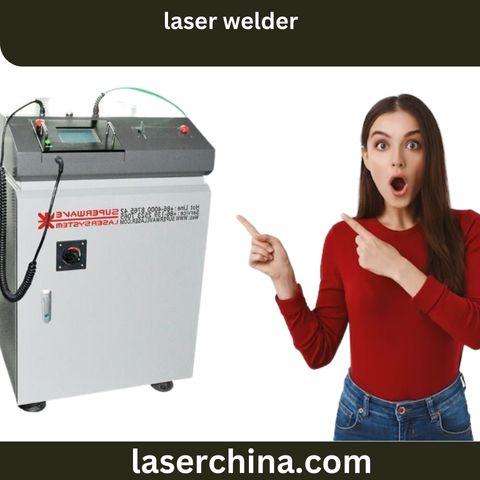
Chinese Laser Welder: Precision Welding Solutions for Modern Manufacturing

Modern manufacturing requires reliable, accurate, and efficient welding solutions to meet increasing production demands. Laser welding technology has become an important part of industrial fabrication, metal processing, automotive production, and many other industries. Businesses looking for advanced welding equipment often consider a chinese laser welder because of its manufacturing capabilities, technical options, and availability for different industrial applications.
With the development of fiber laser technology, manufacturers can now work with various metals, produce consistent welds, and improve their production processes. Choosing the right welding machine can help businesses meet their project requirements while maintaining quality and productivity.
Understanding Laser Welding Technology
Laser welding uses a concentrated beam of light to generate heat and join metal materials. Unlike conventional welding methods that rely on an electric arc or other heat sources, laser systems direct energy precisely toward the welding area. This makes the technology suitable for applications requiring controlled heat input and accurate weld formation.
Laser welding machines are commonly used for stainless steel, carbon steel, aluminum, and other metal materials. Depending on the machine configuration, they can support different thicknesses, welding speeds, and production requirements.
Industrial workshops, fabrication facilities, and manufacturing businesses can use laser welding systems for both small-scale projects and larger production operations.
Applications Across Different Industries
Laser welding technology is used in several industrial sectors where precision and consistency are important. Automotive manufacturers use laser welding for components, brackets, and metal assemblies. Metal fabrication companies use it for sheet metal processing, structural components, and custom manufacturing projects.
The technology is also relevant to furniture production, kitchen equipment manufacturing, machinery fabrication, and electrical enclosure production. Its versatility allows businesses to explore different applications without relying exclusively on traditional welding processes.
A chinese laser welder may be configured for different industrial tasks, depending on its laser power, cooling system, welding head, and operating requirements. Understanding the intended applications before purchasing equipment helps businesses select a suitable system.
What to Consider Before Purchasing a Laser Welding Machine
Selecting industrial welding equipment requires careful evaluation. Buyers should consider the type of metals they regularly process, the thickness of their materials, and the production volume they expect to handle.
Laser power is an important factor because different materials and thicknesses require different welding parameters. Machine configuration, cooling requirements, operating software, and workspace conditions should also be considered.
Businesses should evaluate technical support, warranty coverage, operator training, spare parts availability, and safety documentation. Laser welding involves high-intensity laser radiation, so appropriate protective equipment, safety enclosures, and operating procedures are essential.
Comparing equipment specifications and discussing application requirements with suppliers can help buyers make informed decisions.
Improving Workshop Productivity
Introducing laser welding technology into a workshop requires more than purchasing a machine. Operators need proper training, suitable working conditions, and a clear understanding of material preparation and welding parameters.
Regular maintenance, cleaning, and inspection can help maintain machine performance. Businesses should also establish consistent operating procedures to reduce unnecessary downtime and support repeatable production quality.
For manufacturers planning to expand their fabrication capabilities, a chinese laser welder can be an option worth evaluating when comparing equipment specifications, manufacturing requirements, and supplier support.
Final Thoughts
Laser welding technology continues to transform modern metal fabrication by offering precise and controlled welding processes for a wide range of industrial applications. From automotive components to customized metal products, these systems provide manufacturers with new opportunities to improve production methods and meet customer expectations.
Before investing in a chinese laser welder, businesses should carefully assess their materials, production requirements, machine specifications, and safety needs. A well-informed purchasing decision can help create a more efficient and reliable welding operation for the long term.


