
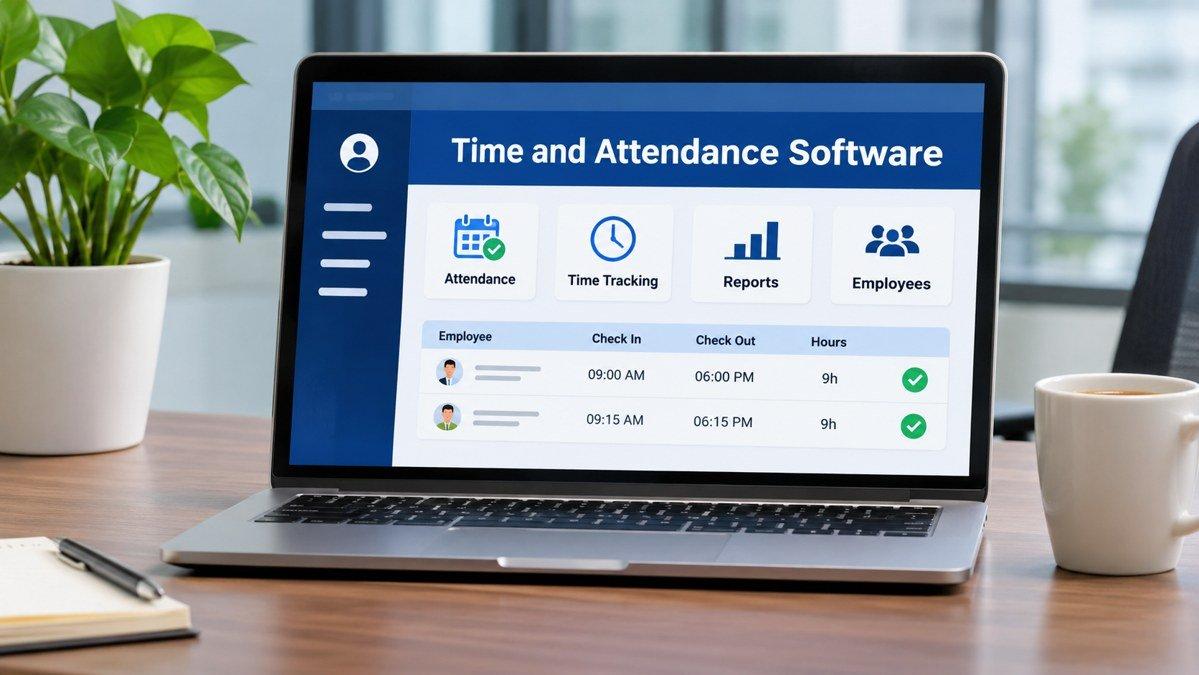

Managing employee attendance, working hours, and payroll can become challenging when businesses rely on spreadsheets or manual records. Inaccurate entries, missed clock-ins, and administrative delays can affect both productivity and operational efficiency. Time and attendance software helps businesses overcome these challenges by simplifying workforce management and maintaining accurate employee records.
Office Punch recognizes the importance of organized attendance management in modern workplaces. Whether you manage a small business, a growing agency, or a remote workforce, digital attendance management can help improve accountability, reduce administrative workloads, and establish a more transparent working environment.
Understanding Time and Attendance Software
Time and attendance software is a digital solution designed to record, manage, and monitor employee working hours, attendance, breaks, overtime, and absences.
Instead of relying on paper-based timesheets or manually updated spreadsheets, businesses can maintain employee attendance information through a centralized system.
Depending on the software, common features include:
-
Employee clock-in and clock-out
-
Automated attendance records
-
Working hours tracking
-
Break and overtime management
-
Employee timesheet management
-
Attendance reports and analytics
-
Remote workforce attendance monitoring
-
Payroll preparation
These features help managers maintain organized records while allowing employees to focus on their daily responsibilities.
Why Time and Attendance Tracking Matters for Businesses
Employee attendance directly influences operational efficiency, labour expenses, workforce planning, and payroll accuracy. Without reliable attendance records, businesses may struggle to understand how working hours are being utilized.
Effective time and attendance tracking gives managers better visibility into employee schedules and working patterns.
For example, a digital marketing agency managing multiple departments may need to monitor employee availability, project hours, and overtime. Centralized attendance records can help managers allocate responsibilities more effectively without repeatedly requesting manual updates.
Accurate attendance information also helps businesses identify scheduling issues before they become recurring operational problems.
Key Benefits of Time and Attendance Software
1. Improved Attendance Accuracy
Manual attendance systems are vulnerable to incorrect entries, forgotten clock-ins, and calculation mistakes.
Digital attendance systems automatically record employee attendance information when employees clock in and out. This reduces the possibility of human error and makes attendance verification easier.
Reliable records also help resolve discrepancies between employees and management.
2. Simplified Payroll Management
Payroll preparation requires accurate information about employee working hours, overtime, and absences.
Time attendance software helps businesses organize this information in a structured format, reducing the need for repetitive manual calculations.
HR teams can review attendance records, identify missing entries, and approve timesheets before processing payroll.
3. Increased Employee Accountability
Clear attendance records encourage employees to take responsibility for their schedules and working hours.
When employees understand how attendance is recorded, they are more likely to follow established workplace policies.
However, businesses should communicate attendance expectations clearly and use tracking information fairly rather than creating unnecessary pressure.
4. Reduced Administrative Workload
HR professionals and managers often spend considerable time collecting, reviewing, and correcting attendance records.
Automated attendance management reduces repetitive administrative tasks and allows management teams to focus on employee development, recruitment, and workforce planning.
5. Better Workforce Visibility
A centralized attendance system provides managers with a clearer understanding of employee availability.
This information supports better scheduling, workload distribution, and resource allocation, particularly for businesses managing multiple departments or flexible working arrangements.
6. Support for Remote and Hybrid Teams
Traditional attendance methods may not meet the requirements of distributed workforces.
Digital attendance tools allow businesses to maintain consistent attendance records across office-based, remote, and hybrid teams without requiring employees to be physically present at one location.
Essential Features to Look for in Time Attendance Software
Choosing the right software requires understanding your business requirements. A reliable attendance management system should offer practical features that support everyday operations.
Automated Time Tracking
Automated recording of working hours helps reduce manual data entry and provides more consistent attendance records.
Centralized Dashboard
An organized dashboard allows managers to review employee attendance, working hours, and relevant workforce information from one location.
Break and Overtime Management
Businesses should be able to record employee breaks and overtime accurately while maintaining alignment with applicable employment requirements.
Detailed Reporting
Attendance reports help managers identify recurring absences, scheduling difficulties, and unusual overtime patterns.
User-Friendly Interface
Employees and managers should be able to navigate the software without extensive technical training. A complicated system can discourage adoption and increase administrative difficulties.
Data Security and Privacy
Attendance records contain sensitive employee information. Businesses should prioritize appropriate access controls, secure data storage, and transparent data collection policies.
How to Implement Time and Attendance Software Effectively
Introducing a digital attendance system requires more than simply installing software. A structured implementation process helps businesses achieve better results.
Step 1: Identify Attendance Challenges
Review your current attendance management process and identify common problems, such as inaccurate timesheets, missing records, or payroll delays.
Understanding these challenges helps determine which software features are necessary.
Step 2: Establish Clear Attendance Policies
Define working hours, break schedules, overtime approval procedures, and attendance correction processes.
Employees should understand these expectations before the new system is introduced.
Step 3: Train Employees and Managers
Provide practical training covering clock-ins, clock-outs, timesheet reviews, and attendance corrections.
Simple instructions can prevent confusion and improve employee adoption.
Step 4: Review Attendance Records Regularly
Managers should review attendance information throughout the month rather than waiting until payroll processing.
Regular reviews make it easier to identify discrepancies and resolve them promptly.
Step 5: Use Attendance Data Responsibly
Attendance information should support informed decisions rather than serve as the sole measure of employee performance.
Working hours do not always reflect work quality, creativity, or overall contribution.
Common Attendance Management Mistakes to Avoid
Even with reliable time and attendance software, businesses can experience difficulties if their internal processes are poorly organized.
Common mistakes include:
-
Failing to establish clear attendance policies.
-
Ignoring missing or incorrect clock-in records.
-
Overlooking employee privacy concerns.
-
Relying entirely on attendance data to evaluate performance.
-
Failing to review overtime regularly.
-
Providing insufficient employee training.
-
Neglecting applicable employment standards.
Businesses should combine digital attendance management with fair workplace policies and consistent communication.
Why Choosing the Right Attendance Software Matters
Every organization has different workforce requirements. A small business may primarily need accurate attendance records, while a larger organization may require detailed reporting, department management, and flexible scheduling.
The right solution should simplify existing workflows rather than introduce unnecessary complexity.
Businesses should consider usability, scalability, reporting capabilities, data protection, and administrative requirements before selecting software.
A well-planned attendance management system can support business growth while maintaining consistent and organized workforce records.
Frequently Asked Questions
What is time and attendance software used for?
It is used to record employee working hours, attendance, breaks, overtime, and absences while simplifying workforce administration.
Can attendance software improve payroll accuracy?
Yes. Accurate attendance records can reduce manual calculation errors and help HR teams prepare payroll more efficiently.
Is time attendance software suitable for small businesses?
Yes. Small businesses can benefit from simplified attendance management, organized records, and reduced administrative workloads.
Can attendance software manage remote employees?
Depending on its features, attendance software can record working hours and attendance for remote, hybrid, and office-based employees.
Does attendance tracking improve employee productivity?
Attendance tracking supports accountability and workforce planning. However, productivity should also be evaluated through work quality, outcomes, and individual contributions.
Conclusion
Effective workforce management begins with accurate attendance records, clear policies, and efficient administrative processes. Time and attendance software helps businesses simplify employee attendance management, improve payroll accuracy, reduce manual workloads, and make informed workforce decisions.
By prioritizing transparency, employee privacy, and consistent attendance practices, organizations can create a more organized and accountable workplace. Office Punch supports a smarter approach to workforce management, helping businesses move towards efficient, structured, and sustainable attendance management practices.


