
Beyond Traditional Metalworking: How Modern Steel Bending Shapes Industrial Progress

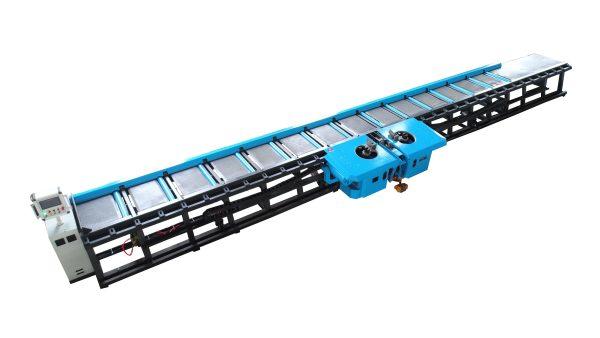
Steel fabrication is an essential part of modern construction, infrastructure development, and industrial manufacturing. From reinforced concrete structures to customized metal components, accurately shaped steel supports the strength and reliability of countless projects. As production requirements become more demanding, manufacturers are increasingly adopting advanced equipment to improve consistency and reduce manual workloads. A modern steel bending machine helps transform straight steel bars into precise shapes while supporting efficient and repeatable fabrication processes.
Why Accurate Steel Bending Matters
Steel components are frequently used in applications where dimensions and structural performance must meet specific requirements. Even small variations in bending angles or measurements can affect how individual components fit together during assembly.
Accurate bending helps manufacturers produce components that match project specifications. It also reduces unnecessary adjustments, material waste, and delays during fabrication. For construction companies, consistent steel processing can contribute to smoother reinforcement preparation and more predictable project schedules.
The Challenges of Traditional Bending Methods
Manual steel bending has long been used in workshops and construction environments. Although it can be suitable for smaller tasks, traditional methods may become difficult to manage when production volumes increase.
Common challenges include:
-
Inconsistent results: Manual operations can produce variations between individual components.
-
High labour requirements: Workers may spend considerable time measuring, positioning, and bending steel.
-
Production limitations: Large orders can place pressure on workshop schedules and available labour.
-
Material waste: Incorrect bends or measurements may require components to be adjusted or replaced.
-
Operator fatigue: Repetitive physical work can affect productivity during extended production periods.
These challenges encourage manufacturers to explore equipment that provides greater control over the bending process.
How Modern Bending Equipment Improves Production
Modern steel processing equipment is designed to make bending operations more controlled and repeatable. Depending on the machine configuration, operators can work with different steel dimensions, bending angles, and production requirements.
Mechanical systems support the physical bending process, while digital controls and programmable settings on advanced models can help maintain consistency between production runs.
Several advantages make modern bending equipment valuable in industrial environments.
Improved Dimensional Consistency
Producing components with consistent measurements is important when steel parts must fit into larger assemblies. Controlled bending operations help reduce variations and support more predictable fabrication results.
Greater Production Efficiency
Automated functions can reduce repetitive manual tasks and help workshops process larger quantities of material. This allows employees to focus on machine operation, quality checks, material preparation, and other important activities.
Better Material Utilisation
Accurate measurements and controlled operations can help minimise errors during fabrication. Reducing rejected components and unnecessary adjustments may improve material utilisation and lower avoidable production costs.
Flexible Manufacturing Applications
Different projects require different bending shapes and specifications. Depending on its design and capacity, suitable equipment can support a range of steel fabrication requirements, making it useful across multiple industrial applications.
Industries That Depend on Steel Bending
Steel bending technology serves a wide range of sectors because shaped steel components are needed in many types of products and structures.
Construction and Infrastructure: Reinforcement bars, structural supports, and fabricated steel components are used in buildings, bridges, roads, and other infrastructure projects.
Metal Fabrication Workshops: Fabricators use bending equipment to produce customised components for machinery, frames, equipment, and industrial assemblies.
Manufacturing Facilities: Industrial manufacturers rely on accurately shaped metal parts when producing equipment, structural products, and specialised components.
Engineering Projects: Custom steel fabrication supports projects that require specific dimensions, angles, and component configurations.
Each application has different technical requirements, so selecting appropriate machinery is important for achieving dependable production results.
Important Factors When Selecting Bending Equipment
Choosing suitable machinery requires more than comparing purchase prices. Manufacturers should evaluate their production needs and consider how equipment will perform over time.
Important factors include:
-
Material compatibility: Confirm that the machine can process the steel types and dimensions required for regular production.
-
Bending capacity: Review the maximum material size and bending specifications supported by the equipment.
-
Control system: Consider whether manual, semi-automatic, or programmable operation is appropriate for the workshop.
-
Production volume: Match machine capacity with current workloads and expected future demand.
-
Operating safety: Check protective features, emergency controls, and operator requirements.
-
Maintenance support: Evaluate accessibility of replacement parts, technical assistance, and routine servicing requirements.
A careful assessment helps businesses select equipment that matches their operational goals rather than investing in unnecessary capacity.
The Growing Importance of Automation in Metal Fabrication
Industrial manufacturing continues to move toward more efficient and controlled production systems. Automation is playing an increasingly important role in this transition by reducing repetitive manual activities and improving process consistency.
In steel fabrication, automated controls can help operators repeat established bending specifications with greater accuracy. When integrated into a well-organised workflow, modern equipment can also improve coordination between material preparation, bending, inspection, and final assembly.
However, technology alone does not guarantee successful production. Proper machine selection, operator training, routine maintenance, and quality control remain essential. Businesses that combine suitable equipment with skilled personnel are better positioned to maintain dependable manufacturing standards.
Building More Reliable Fabrication Workflows
Steel bending is much more than shaping metal. It is a critical manufacturing process that influences component accuracy, material efficiency, production schedules, and the quality of finished structures.
As construction and industrial requirements continue to evolve, investing in appropriate bending technology can help businesses improve their fabrication capabilities. By considering material specifications, production capacity, operational safety, and long-term maintenance, manufacturers can build more efficient workflows and prepare for changing market demands.
For businesses exploring modern steel processing solutions, selecting equipment that supports precise and consistent fabrication is an important step toward stronger production performance. A well-planned investment in the right steel bending machine can help manufacturers meet demanding project requirements while supporting long-term operational efficiency.


