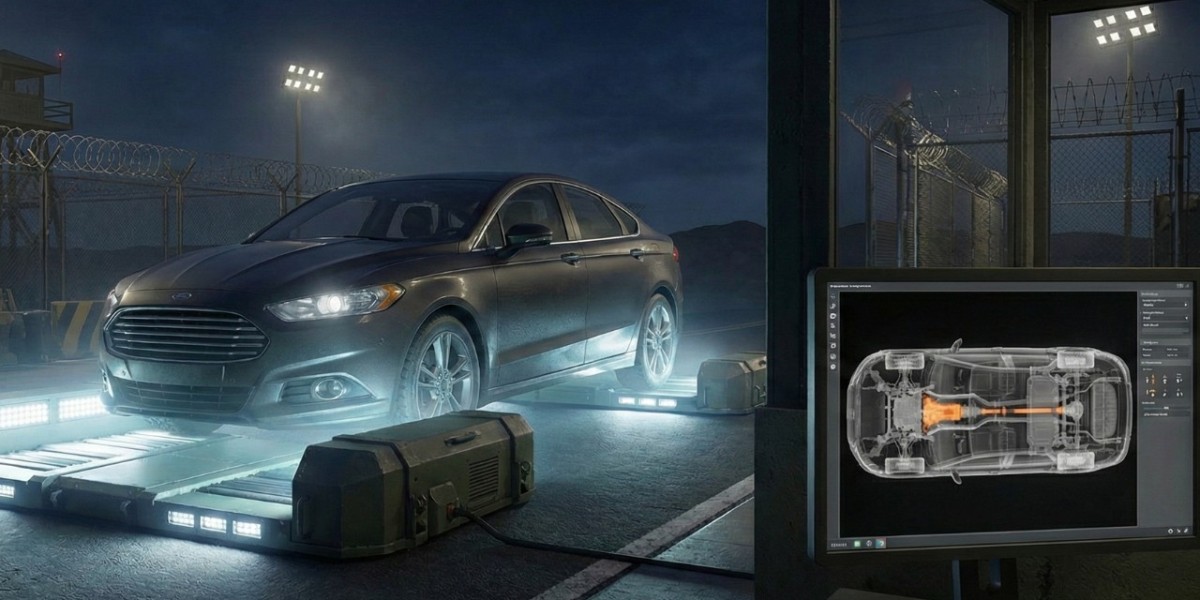
Modern security demands precision, speed, and reliability especially at vehicle entry points where unauthorized access can lead to major risks. Traditional manual screening methods, though still used in many facilities, struggle to maintain consistent accuracy in high-pressure environments. Human operators may miss anomalies due to fatigue, workload, or limited visibility. This is where automated threat detection technologies bring transformative advantages. By leveraging intelligent imaging, analytics, and real-time alerts, automated systems significantly strengthen accuracy and boost overall operational efficiency.
The Growing Need for Automation in Vehicle Screening
As threats become more covert and adversaries more sophisticated, vehicle entry points must evolve beyond basic visual checks. Security personnel face multiple limitations: inconsistent lighting conditions, busy traffic flow, and the challenge of identifying hidden threats within seconds. Manual inspection largely depends on human judgment, which can vary from one operator to another.
Automation addresses these gaps by providing:
Consistent and repeatable inspection results
High-speed analysis of vehicle components
Real-time alert generation for suspicious objects
Comprehensive monitoring without reliance on human intuition
With automated systems, every vehicle is screened with the same level of detail, regardless of traffic volume or environmental conditions.
How Automated Threat Detection Works
Automated threat detection technologies combine advanced imaging equipment, AI-driven analytics, and integrated software to evaluate a vehicle's external and undercarriage areas. These systems are designed to identify anomalies that may indicate a concealed threat, such as background irregularities, foreign objects, tampering, or modification.
Key components include:
1. High-Resolution Imaging
Automated systems use high-resolution cameras to capture clear, distortion-free images of the vehicle undercarriage, chassis, and exterior. The clarity of the images allows for granular inspection, something impossible with conventional manual viewing.
2. Image Comparison Algorithms
Smart comparison tools match real-time images with previously recorded baselines. If discrepancies appear—such as unfamiliar objects or irregular patterns—the system flags them immediately.
3. AI-Based Anomaly Detection
AI algorithms analyze image data to detect shapes, shadows, or elements that do not belong. This dramatically reduces the risk of overlooking subtle indicators of tampering.
4. Automated Alerts and Reporting
When the system detects a potential threat, it sends instant notifications to security personnel through an integrated dashboard. This enables rapid decision-making and faster threat response.
Enhancing Accuracy at High-Traffic Access Points
Vehicle entry points at government buildings, industrial facilities, airports, and border checkpoints experience high traffic throughout the day. During peak hours, human operators may struggle to maintain the same level of accuracy during inspections.
Automated threat detection supports accuracy by:
Eliminating subjective judgments
Providing uniform scrutiny to every vehicle
Operating continuously without fatigue
Capturing and analyzing data in milliseconds
These benefits ensure that even during rush hours, no vehicle bypasses screening or receives reduced attention.
The Role of Smart Surveillance Integration
When automated threat detection is integrated with wider security infrastructure, accuracy improves even further. Access control systems, license plate recognition tools, and digital logs work together to create a holistic, data-driven workflow.
Systems like the Under Vehicle Surveillance System can be integrated seamlessly with automated threat detection tools to deliver deeper visibility and real-time anomaly recognition. Such integration makes it possible to track vehicle movement, history, and repeat entries, ensuring no suspicious change goes unnoticed.
Reducing Human Error Through Intelligent Automation
Human error remains one of the biggest vulnerabilities in vehicle screening. Common mistakes include:
Misinterpreting shadows or reflections
Overlooking small foreign objects
Inconsistent inspection patterns
Losing focus during long shifts
Automated systems are immune to these challenges.
Automation reduces human error by:
Offering precise, repeatable image analysis
Minimizing operator workload
Presenting clear alerts that guide security teams
Removing guesswork from vehicle inspection
By turning complex evaluation tasks into automated workflows, facilities can maintain higher accuracy without significantly increasing manpower.
Data Logging and Compliance Support
Automated threat detection also enhances compliance with modern security standards. Organizations need structured data records that can be reviewed during audits or investigations. Automated systems provide:
Time-stamped inspection records
Stored undercarriage images for comparison
Digital audit trails for transparency
Comprehensive logs of every alert
These capabilities not only improve accountability but also support regulatory compliance, especially in critical infrastructure and defense applications.
Faster Response Times With Real-Time Processing
Speed is a crucial factor in preventing operational delays at entry points. Manual checks often require extended vehicle stoppage, which can cause traffic buildup. In contrast, automated detection processes visual data instantly while the vehicle is in motion or moving slowly through the checkpoint.
This enables:
Faster throughput
Shorter queues
High-efficiency security processing
Most importantly, speed does not compromise accuracy because the system is consistently analyzing images and detecting anomalies.
Conclusion
Automated threat detection is transforming the way vehicle entry points are secured. By delivering continuous monitoring, high-resolution imaging, AI-driven anomaly detection, and fast alerts, automated systems significantly enhance accuracy and reliability. They eliminate inconsistencies common in manual inspections, reduce human error, and ensure that every vehicle undergoes thorough, unbiased scrutiny. When integrated with wider surveillance tools and access control systems, automated threat detection creates a powerful security framework suitable for high-security environments. As threats continue to evolve, facilities that adopt intelligent automation will stand better prepared to protect their perimeters and maintain robust operational security.