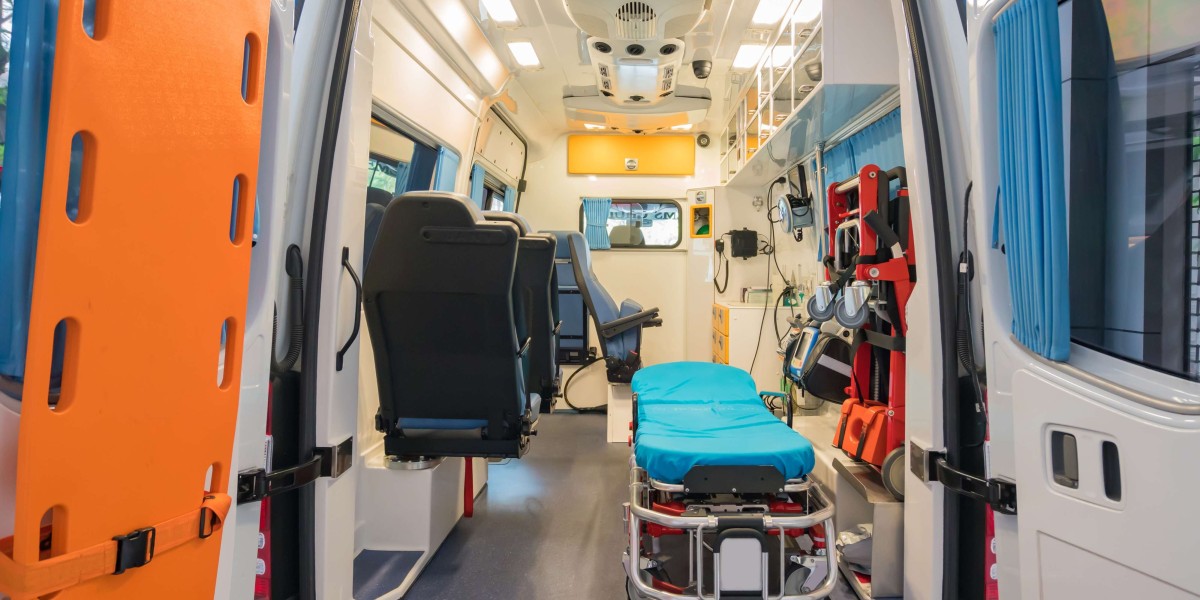
In medical emergencies, every second counts. An ambulance is more than just a transport vehicle—it is a mobile lifesaving unit equipped to provide immediate medical care. A standard ambulance equipment list is designed to support patients from the moment help arrives until they reach a healthcare facility. These medical tools vary based on the different types of ambulances, but all aim to provide timely and effective patient care.
Basic Life Support (BLS) Ambulance Equipment
Basic Life Support ambulances handle non-critical emergencies and patient transfers while ensuring essential medical support.
Airway and Breathing Equipment
Oxygen cylinder with regulator
Oxygen masks (adult & pediatric)
Bag Valve Mask (Ambu bag)
Portable suction machine
Oropharyngeal and nasopharyngeal airways
Patient Monitoring & Assessment
Blood pressure monitor
Stethoscope
Pulse oximeter
Digital thermometer
Immobilization & Patient Handling
Stretcher with safety belts
Spine board
Cervical collars
Wheelchair
First Aid & Trauma Care
Sterile bandages and dressings
Antiseptic solutions
Splints
Burn care kit
Trauma scissors
Advanced Life Support (ALS) Ambulance Equipment
Advanced Life Support (ALS) ambulances are equipped to manage life-threatening emergencies and are operated by trained paramedics or medical professionals.
Advanced Airway Management
Endotracheal tubes
Laryngoscope
Portable ventilator
Nebulizer
Cardiac Care & Monitoring
Defibrillator (AED or manual)
ECG monitor
Cardiac monitor
Emergency Medications & IV Access
IV fluids and infusion sets
Emergency medicines
Syringes, cannulas, and catheters
Advanced Monitoring Equipment
Capnography
Glucometer
Automated BP monitor
Additional Essential Ambulance Equipment
Two-way communication system
Emergency lights and sirens
Fire extinguisher
Backup power supply
GPS navigation system
Why a Standard Ambulance Equipment List Matters
Having standardized equipment ensures:
Faster emergency response
Safe patient stabilization
Effective treatment during transit
Better patient survival outcomes
Conclusion
A well-maintained ambulance equipped with both als and bls tools plays a vital role in emergency healthcare. Adhering to a standard ambulance equipment list ensures readiness for every situation and guarantees quality care during emergencies. Regular equipment checks and trained medical staff are essential for delivering reliable ambulance services at all times.