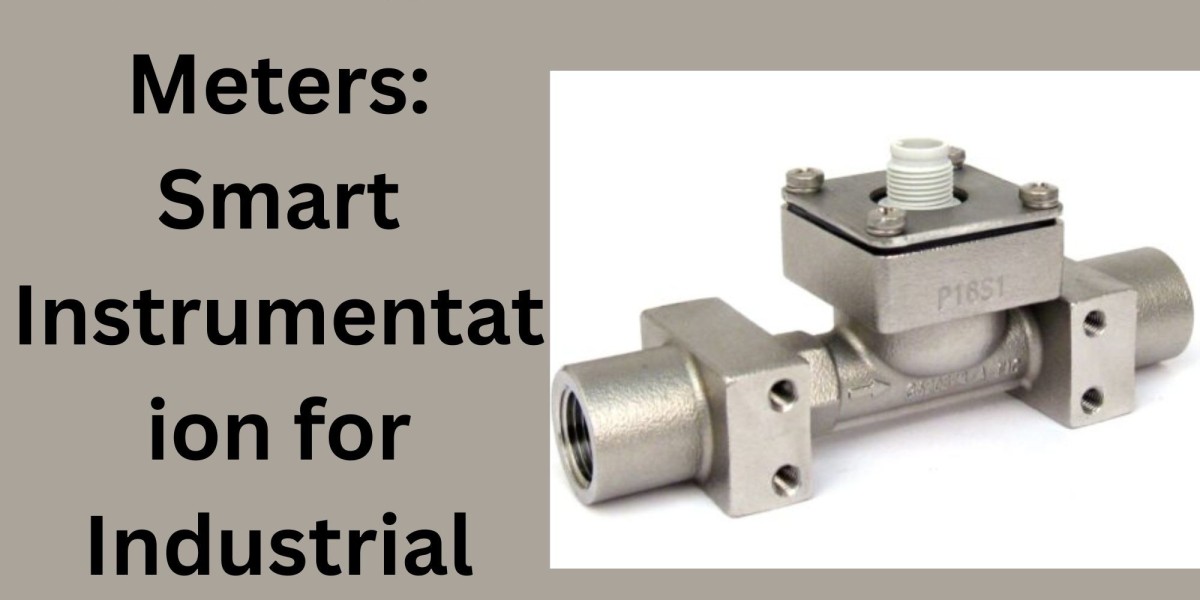
Industrial pipelines require dependable instruments to ensure stable and accurate flow monitoring across various operating conditions. These systems must handle continuous operation, pressure variations, and different fluid types without performance loss.
In modern pipeline infrastructure, vortex flow meters play an important role by offering consistent measurement through advanced sensing techniques. Their design supports long-term reliability, making them suitable for demanding industrial environments.
1. Working Principle Behind Vortex Flow Measurement
Vortex flow measurement is based on the formation of alternating vortices generated when fluid passes an obstruction within the pipeline. The frequency of these vortices corresponds directly to the flow velocity.
Sensors detect the vortex pattern and convert it into measurable signals. This method allows accurate flow determination without relying on moving mechanical components.
2. Key Components of a Vortex Flow Meter System
A typical vortex flow meter system includes a bluff body positioned in the flow path to create vortices. This component is essential for initiating the vortex shedding process.
Additional elements such as sensors, transmitters, and signal processors work together to capture and interpret flow data. Each component contributes to reliable measurement and data output.
3. Accuracy and Performance in Pipeline Applications
Vortex flow meters provide stable performance over a wide range of flow rates. Their accuracy remains consistent even in challenging pipeline conditions involving pressure and temperature changes.
Because measurement is based on frequency detection rather than mechanical movement, performance degradation is minimal. This ensures dependable data for process control and monitoring.
4. Advantages of Using Vortex Flow Meters
One key advantage is their durability, as the absence of moving parts reduces mechanical wear. This design supports long service life with minimal maintenance.
They also offer flexibility by measuring liquids, gases, and steam. This versatility makes them suitable for diverse pipeline systems across multiple industries.
5. Common Industrial Uses and Pipeline Environments
Vortex flow meters are widely used in industries such as power generation, chemical processing, and oil and gas. These sectors require accurate flow measurement under high-temperature and high-pressure conditions.
They are commonly installed in steam lines, compressed air systems, and liquid transport pipelines. Their adaptability allows effective operation in varied industrial settings.
6. Installation Considerations and Maintenance Needs
Proper installation is essential to ensure measurement accuracy. Adequate straight pipe lengths upstream and downstream help stabilize flow before it reaches the meter.
Maintenance requirements are generally low due to the robust construction. Periodic inspections help maintain long-term reliability and consistent performance.
7. Conclusion: Why Vortex Flow Meters Are a Smart Choice
Vortex flow meters offer a practical balance of accuracy, durability, and versatility for industrial pipeline applications. Their design supports reliable measurement without complex mechanical systems.
By providing consistent performance across various operating conditions, they remain a smart instrumentation choice for modern industrial pipelines focused on efficiency and control.