Introduction
India has strict quality and safety regulations to protect consumers and ensure that products sold in the market meet defined standards. One of the most important quality approvals in India is the BIS Certificate. Many manufacturers and importers often ask, what is BIS certificate and why is it mandatory?
The BIS certificate is issued by the Bureau of Indian Standards and is required for manufacturing, importing, and selling certain products in India. Along with understanding what is BIS certificate, knowing the BIS application process is equally important for smooth compliance. This blog explains everything in detail in a simple and easy-to-understand manner.
What is BIS Certificate?
To understand what is BIS certificate, it is essential to know the role of BIS. The Bureau of Indian Standards (BIS) is the national standards body of India responsible for ensuring quality, safety, and reliability of products.
A BIS Certificate is an official approval that confirms a product complies with Indian Standards (IS). It allows manufacturers or importers to use the ISI Mark or registration number on their products, proving that the product meets prescribed quality norms.
Without a BIS certificate, many products cannot be legally sold or imported into India.
Why is BIS Certificate Required?
The BIS certificate is mandatory for several reasons:
- To ensure consumer safety and product quality
- To prevent the sale of substandard or unsafe products
- To regulate manufacturing and import activities
- To build trust among customers and authorities
- To comply with Indian laws and regulations
Products without BIS certification may face penalties, seizure, or import restrictions.
Types of BIS Certification Schemes
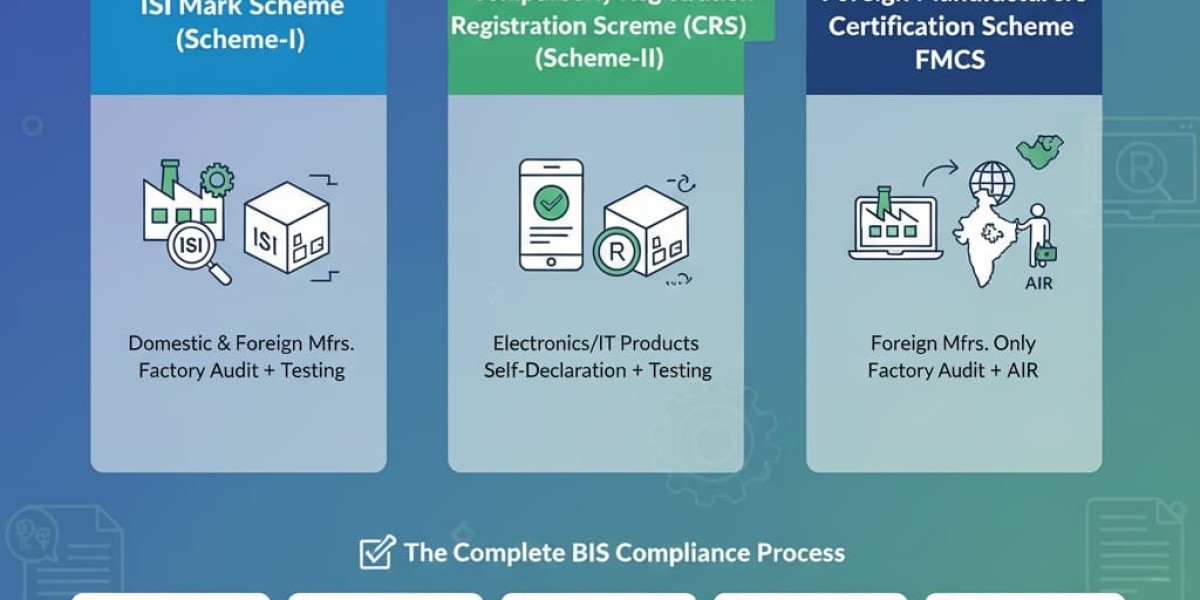
Depending on the product and manufacturer location, BIS certification is issued under different schemes:
- ISI Certification Scheme – For manufacturers located in India
- BIS Registration Scheme (CRS) – Mainly for electronics and IT products
- BIS FMCS – For foreign manufacturers
Understanding what is BIS certificate also includes knowing which scheme applies to your product.
What is BIS Application?
The BIS application is the formal process of applying for BIS certification. It involves submitting product details, documents, test reports, and complying with BIS guidelines.
The BIS application process ensures that only quality-compliant products receive certification.
BIS Application Process Step by Step
The BIS application process generally includes the following steps:
- Identify Applicable Standard
Determine the Indian Standard (IS) applicable to your product. - Product Testing
Product samples are tested in BIS-recognized laboratories. - BIS Application Submission
Submit the application along with required documents and test reports. - Document Verification
BIS reviews documents and test results for accuracy. - Factory Inspection (if applicable)
BIS officials may inspect the manufacturing unit. - Grant of BIS Certificate
Once compliance is confirmed, the BIS certificate is issued.
Documents Required for BIS Application
Common documents required include:
- Business or manufacturing license
- Product test reports
- Factory layout and process flow
- Quality control details
- Authorization letter
- Brand or trademark details
Accurate documentation plays a key role in successful BIS application approval.
Products Covered Under BIS Certification
Some common product categories requiring BIS certification are:
- Electrical appliances
- Electronic and IT products
- Steel and cement products
- Household goods
- Automotive components
The list is regularly updated, making it important to check compliance before applying.
Validity and Renewal of BIS Certificate
A BIS certificate is generally valid for 1 to 2 years, depending on the scheme. Renewal must be done before expiry by submitting a renewal BIS application along with updated documents and fees.
Failure to renew may lead to suspension or cancellation of the certificate.
Benefits of BIS Certificate
Obtaining a BIS certificate offers multiple benefits:
- Legal permission to sell products in India
- Increased consumer trust and brand value
- Compliance with government regulations
- Better market acceptance
- Reduced risk of penalties or product rejection
Understanding what is BIS certificate helps businesses plan compliance effectively.
Common Challenges in BIS Application
Applicants often face issues such as:
- Incorrect documentation
- Product test failure
- Delays in application processing
- Lack of understanding of Indian standards
Professional guidance can help avoid these challenges and speed up approval.
Conclusion
Now that you clearly understand sunconsultants.co.in, , it is evident that BIS certification is not just a legal requirement but also a mark of quality and trust. The BIS application process ensures that products sold in India meet strict safety and performance standards. Whether you are a manufacturer or importer, obtaining a BIS certificate is essential for long-term success in the Indian market.