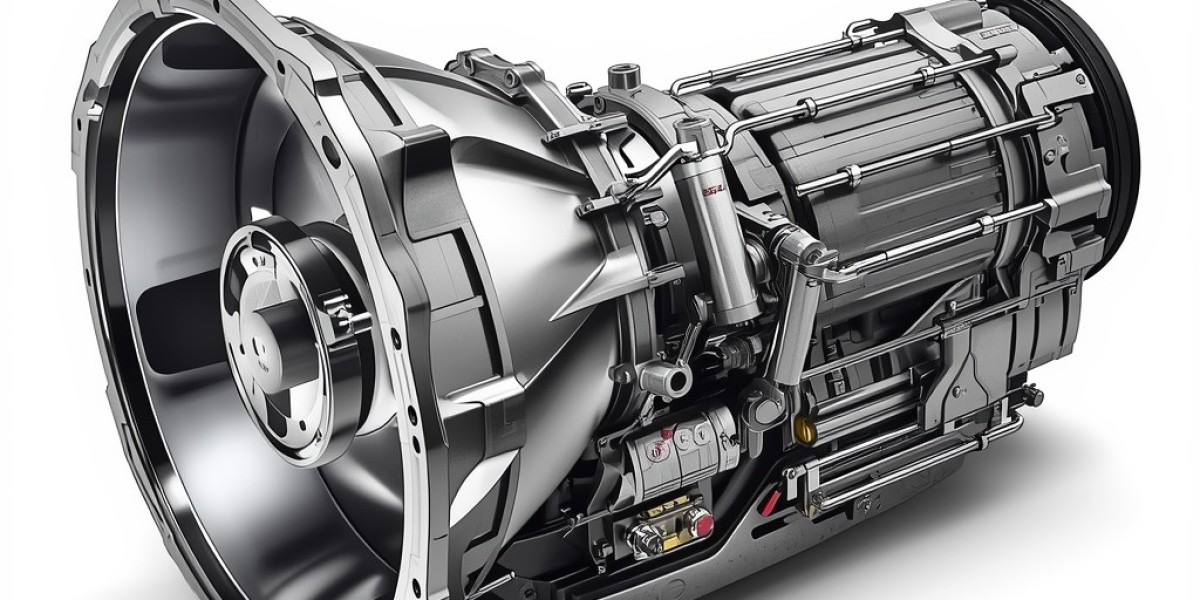
The GM 6L80 transmission stands as a pivotal evolution in modern drivetrain engineering, merging raw mechanical strength with digitally enhanced finesse. Introduced around 2006, it was designed to complement GM’s high-displacement V8 engines and to operate confidently in demanding environments—full-size trucks, SUVs, and performance-oriented vehicles. Rather than functioning as a simple six-speed automatic, the 6L80 operates as a coordinated system of electronically commanded hydraulics, sophisticated clutch-to-clutch shifting, and adaptive control logic that continuously refines driving behavior in real time.
At its core lies a complex architecture: multiple planetary gearsets, a durable torque converter, and dual rotating clutch assemblies working in concert. A built-in output speed sensor allows the transmission to interact with its TCM at high frequency, giving it a near-intelligent capability to optimize shifts for throttle input, load conditions, and driving style. This intelligence makes the 6L80 notably smoother than earlier transmissions, eliminating harsh band-based shifts in favor of fluid, overlapping transitions.
Despite its strength—handling over 600 lb-ft of torque—the 6L80 isn’t without vulnerabilities. Common wear points include torque converter clutch issues, valve-body degradation, and delayed engagement. However, a vast aftermarket ecosystem has emerged to reinforce its weaknesses, offering upgraded internals, cooling enhancements, and recalibrated shift kits that extend life far beyond original design expectations.
Its adaptability has made it a favorite among enthusiasts and professional builders. The integrated TCM simplifies swaps, enabling the 6L80 to find new life in resto-mods, LS conversions, and high-horsepower projects. This flexibility, combined with a robust remanufacturing industry, has cemented its longevity as older OEM units age.
Proper maintenance—particularly timely fluid changes and improved cooling—remains essential to preserving its performance. Although once believed to be “filled for life,” experience proves that attentive fluid management is vital for long-term reliability.
More than a mechanical component, the 6L80 represents GM’s shift toward combining analog torque with digital intelligence. Its presence in modern automotive culture is undeniable, celebrated for both its dependability and its technological sophistication. It remains not just a gearbox but a symbol of durable, adaptive engineering.