
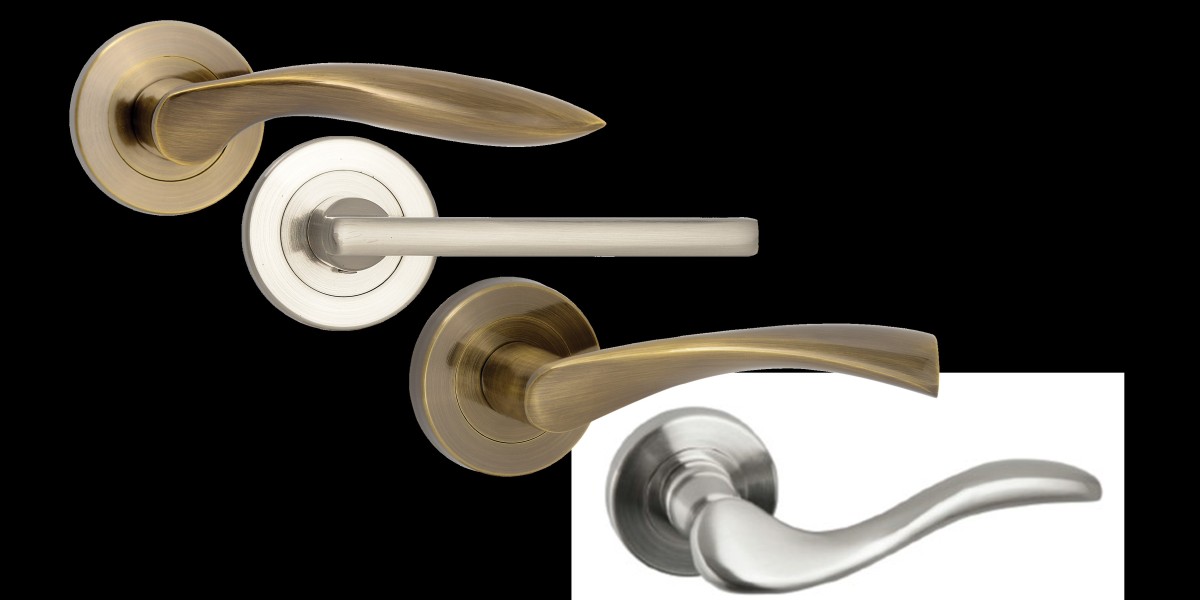
Aluminium door handles are a common feature in residential, commercial, and industrial buildings, valued for their durability, lightweight nature, corrosion resistance, and modern aesthetic appeal. While they may appear simple at first glance, aluminium door handles are the result of a carefully engineered manufacturing process that combines material science, precision engineering, and surface finishing technologies.
Understanding how these everyday components are made provides insight into their performance, longevity, and design versatility. This article explores the complete manufacturing journey of aluminium door handles, from raw material selection to final quality inspection.
1. Raw Material Selection and Preparation
The manufacturing process begins with the selection of aluminium, typically in the form of primary aluminium ingots or recycled aluminium scrap. Aluminium is favored because it offers an excellent strength-to-weight ratio, is naturally resistant to corrosion, and can be easily shaped into complex forms.
In many cases, manufacturers use aluminium alloys—most commonly from the 6000 series—which contain small amounts of magnesium and silicon. These alloying elements improve strength, machinability, and surface finish without significantly increasing weight.
Before production starts, the aluminium is inspected for purity and consistency. When recycled aluminium is used, it is carefully sorted and cleaned to remove contaminants such as coatings, plastics, or other metals. This step is critical, as impurities can weaken the final product or cause defects during casting and extrusion.
2. Melting and Alloying
Once prepared, the aluminium is melted in industrial furnaces at temperatures of around 660°C (1220°F). During this stage, alloying elements are added in precise proportions to achieve the desired mechanical and chemical properties. The molten aluminium is thoroughly mixed to ensure uniform composition throughout the batch.
Quality control plays a key role during melting. Samples may be taken to analyze chemical composition, ensuring the alloy meets strict specifications. Any slag or impurities that rise to the surface are removed before the molten metal is transferred to the next stage of production.
3. Forming: Extrusion, Casting, or Forging
Aluminium door handles can be formed using several different methods, depending on the design, strength requirements, and production volume.
Extrusion
Extrusion is one of the most common methods used for manufacturing door handles. In this process, heated aluminium billets are forced through a shaped die under high pressure, producing long profiles with a consistent cross-section. These profiles are then cut into handle-length sections. Extrusion allows for precise dimensional control and is ideal for sleek, modern handle designs.
Die Casting
For more complex or decorative designs, die casting is often used. Molten aluminium is injected into a steel mold under high pressure, allowing intricate shapes and fine details to be formed in a single step. Die casting is well suited for large-scale production and ensures excellent surface quality and dimensional accuracy.
Forging
In high-end or heavy-duty applications, forging may be employed. This process involves shaping heated aluminium by compressive forces, resulting in a dense internal structure and superior mechanical strength. Forged aluminium handles are particularly resistant to impact and wear, making them suitable for high-traffic environments.
4. Machining and Precision Shaping
After the initial forming process, aluminium door handles typically undergo machining to achieve precise dimensions and functional features. Computer Numerical Control (CNC) machines are widely used for drilling holes, cutting threads, shaping mounting points, and refining contours.
Machining ensures that each handle fits accurately with its corresponding hardware, such as spindles, screws, and locking mechanisms. Tight tolerances are essential, especially in commercial and architectural applications where performance and safety standards must be met.
5. Heat Treatment
To enhance mechanical properties, door handles may undergo heat treatment. Processes such as solution heat treatment and artificial aging increase strength and hardness by altering the alloy’s microstructure. Heat treatment is particularly important for extruded and forged components, as it improves their resistance to bending, fatigue, and long-term wear.
This stage must be carefully controlled, as improper heat treatment can lead to warping, brittleness, or reduced corrosion resistance.
6. Surface Finishing
Surface finishing is one of the most critical stages in the manufacturing process, as it determines both the appearance and durability of the door handle.
Anodizing
Anodizing is a popular finishing technique that enhances corrosion resistance and creates a hard, protective oxide layer on the surface. It also allows for a wide range of colors, from natural silver to black, bronze, or gold tones. Anodized finishes are highly durable and well suited for both indoor and outdoor use.
Powder Coating
Powder coating involves applying a dry powder to the handle’s surface and curing it under heat. This method provides a uniform, attractive finish and excellent resistance to chipping, scratching, and fading. Powder-coated aluminium handles are available in countless colors and textures.
Polishing and Brushing
For a premium aesthetic, handles may be polished or brushed to achieve a smooth or satin finish. These techniques highlight the natural look of aluminium and are often combined with clear protective coatings to maintain appearance over time.
7. Assembly and Integration
Once finishing is complete, the door handle components are assembled. This may include attaching internal mechanisms, springs, return systems, or decorative elements. Assembly can be manual or automated, depending on production scale.
At this stage, manufacturers also ensure compatibility with various door types and standards, such as residential doors, fire-rated doors, or commercial access systems.
8. Quality Control and Testing
Before leaving the factory, door handles undergo rigorous quality control checks. These may include dimensional inspections, surface finish evaluations, corrosion resistance testing, and mechanical strength tests. Handles are often tested for repeated use to simulate years of opening and closing cycles.
Compliance with international standards and building regulations is essential, particularly for products used in public or commercial spaces.
9. Packaging and Distribution
Finally, the finished door handles are carefully packaged to prevent damage during transportation. Protective wraps, foam inserts, and labeled cartons ensure the products reach distributors and end users in perfect condition.
Conclusion
The manufacturing process behind aluminium door handles is a sophisticated combination of material selection, advanced forming techniques, precision machining, and high-quality surface finishing. Each stage plays a vital role in ensuring the final product is durable, functional, and visually appealing.
As architectural trends continue to evolve and demand for sustainable materials grows, door handles remain a popular choice, thanks to their recyclability, versatility, and long-lasting performance.